Introduction: Why Technology Is Becoming the Foundation of Business Success in 2026
The business world is changing rapidly. In 2026, Indian entrepreneurs are operating in an environment where digital payments, artificial intelligence, cloud computing, automated accounting and real-time financial information are increasingly important.
For small and medium businesses, technology is no longer simply an additional convenience. It has become an essential part of managing operations efficiently, maintaining accurate records and responding to customer expectations.
A wholesale trader may receive hundreds of orders every week. A manufacturer must monitor raw materials, production costs and finished goods. A retailer needs accurate stock information, faster billing and reliable customer payment records.
Managing these activities through handwritten registers or disconnected spreadsheets can create unnecessary delays and errors.
Modern business technology helps organizations organize information, automate repetitive tasks and make decisions using reliable data.
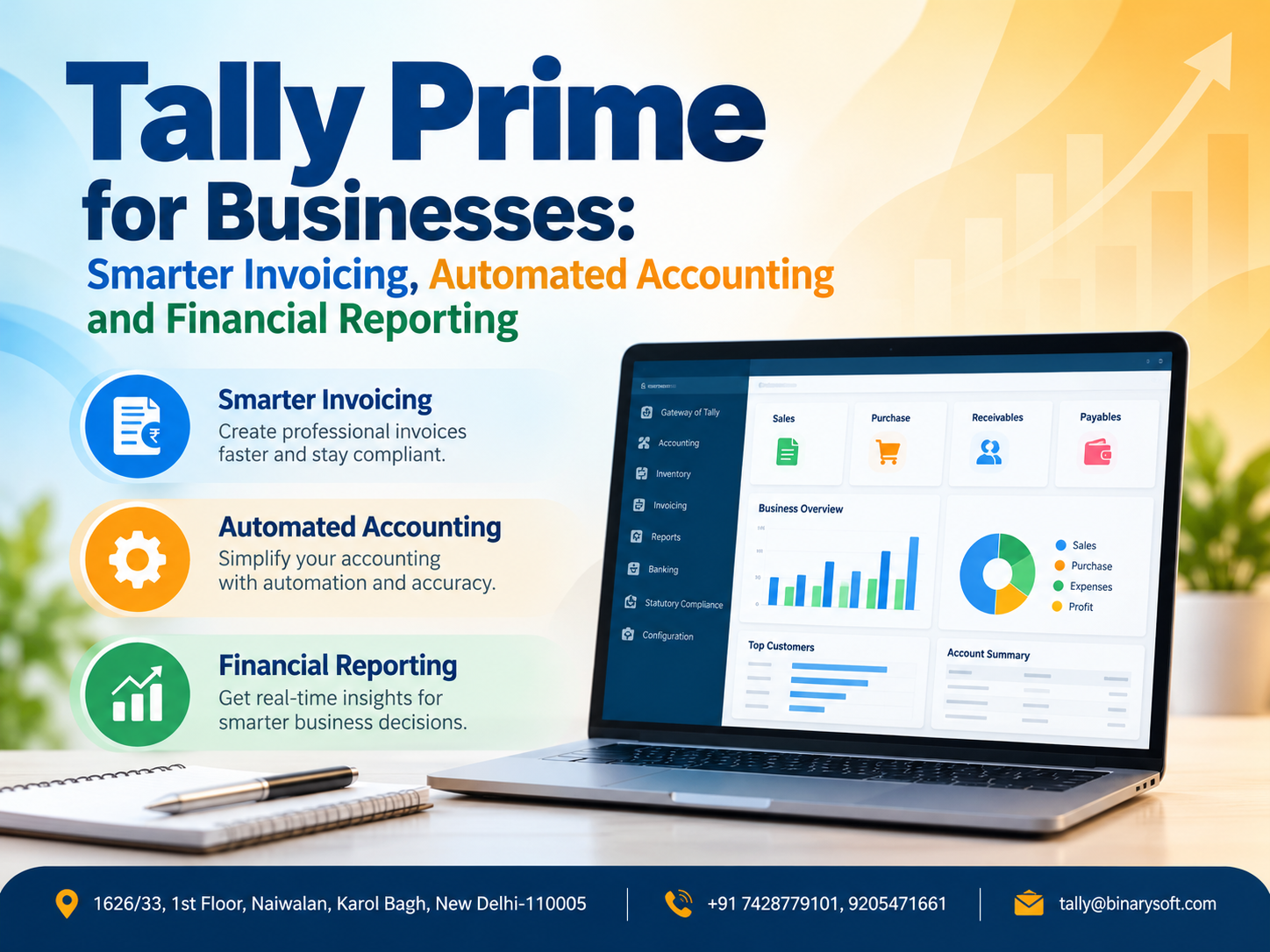
Solutions such as TallyPrime support this transformation by connecting accounting, GST-related processes, inventory management, banking and financial reporting within a structured business environment.
However, successful digital transformation is not about adopting every new technology. It is about choosing practical solutions that address genuine business challenges.
This guide explains the major technology trends influencing Indian businesses, how organizations can adopt them responsibly and how TallyPrime can support everyday operations and long-term growth.
1. Understanding Digital Transformation for Indian MSMEs
Digital transformation means improving business processes through technology, organized information and better operational practices.
It is not limited to purchasing computers or installing accounting software.
A business becomes digitally stronger when employees can access reliable information, transactions are recorded consistently and management can identify problems without unnecessary delays.
Consider a distributor managing customer orders, stock availability and supplier payments.
If the sales team uses spreadsheets, the warehouse maintains handwritten registers and the accounts department operates separately, information may become inconsistent.
Digital transformation aims to reduce these gaps.
Important components of digital transformation
-
Digital accounting and transaction recording.
-
Automated invoicing and GST-related workflows.
-
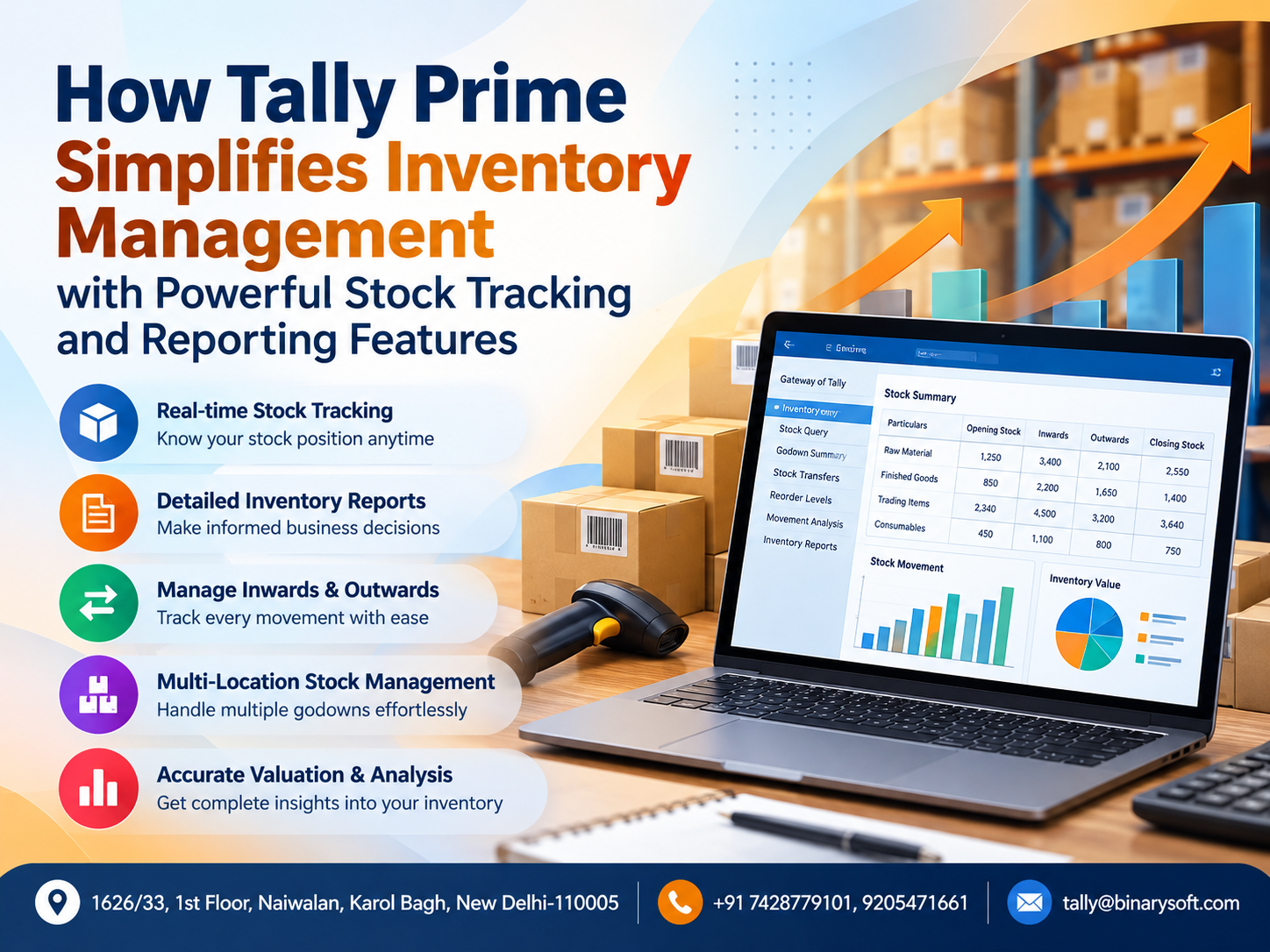
Inventory and warehouse management.
-
Cloud-enabled business access.
-
Banking integration and reconciliation.
-
Data security and access controls.
-
Financial reporting and analytics.
-
Responsible use of artificial intelligence.
-
Employee training and process improvement.
Businesses should introduce these capabilities according to their operational requirements and available resources.
A smaller organization may begin with accurate accounting and digital invoicing before investing in advanced automation.
2. An Emotional Story: The Business That Almost Lost Its Future
At 11:15 PM, Sandeep was sitting alone inside his family-owned electrical goods shop in Delhi.
His father had started the business more than twenty years earlier with a small investment and a determination to provide a better future for his children.
Sandeep had expanded the shop into a wholesale operation supplying retailers across the city.
Sales had increased, but the business was becoming difficult to manage.
Customer payments were delayed. Inventory records were unreliable. His accountant spent several days preparing monthly reports.
One morning, an important customer requested 200 units of a popular electrical product.
The handwritten stock register showed sufficient inventory.
Sandeep promised immediate delivery.
When his warehouse employee checked the shelves, only 75 units were available.
The customer cancelled the order.
That evening, Sandeep's father noticed his frustration and asked, "We built this business with hard work. Why does managing it feel harder every year?"
Sandeep realized that the business had grown, but its management systems had not.
He decided to modernize operations.
The company introduced structured accounting through TallyPrime, organized stock records and implemented regular outstanding payment reviews.
Employees received training, and management established clear procedures for recording purchases, sales and stock movements.
Over time, the company developed more reliable financial and inventory information.
Sandeep could identify stock shortages earlier and discuss customer payments using accurate records.
One evening, his father watched him close the office on time.
For the first time in months, Sandeep was smiling.
Technology had not replaced their years of experience. It had helped protect the business they had built together.
This is an illustrative fictional story inspired by common challenges experienced by Indian family-owned businesses.
3. Artificial Intelligence: Making Business Operations More Intelligent
Artificial intelligence is becoming an important part of modern business technology.
AI-based systems can assist with document processing, information classification, forecasting, customer communication and data analysis.
For businesses, the objective should be reducing repetitive work and improving decision-making rather than replacing necessary human judgment.
Practical AI applications
Document processing: AI-assisted tools can extract information from invoices and other business documents, reducing manual entry requirements.
Demand forecasting: Historical sales data can support predictions about future product requirements.
Customer support: AI-assisted communication tools can help answer routine questions and organize customer requests.
Financial analysis: Analytical systems can identify unusual expenditure patterns and highlight information requiring investigation.
Inventory planning: Demand analysis can help businesses evaluate replenishment requirements.
How TallyPrime fits into AI-enabled operations
TallyPrime maintains structured accounting and inventory information that can support authorized analytics and automation workflows.
Where supported in the installed release, document-assistance features may help reduce manual bookkeeping effort.
Businesses should verify feature availability before implementation.
AI-generated information must be reviewed carefully, particularly when it affects GST treatment, financial statements or customer balances.
Reliable data and human verification remain essential.
4. Cloud Computing: Flexible Access to Business Information
Cloud computing allows organizations to use computing infrastructure, storage and applications through remotely hosted environments.
For growing businesses, cloud technology can provide flexibility when employees work across multiple locations.
A business owner may need to review accounts while travelling, while an accountant requires access from another office.
A properly configured hosted environment can support these requirements.
Benefits of cloud adoption
Cloud services can reduce dependence on individual office computers and support centralized infrastructure management.
They may also simplify remote collaboration and provide flexible computing resources.
However, actual performance and reliability depend on network connectivity, hosting arrangements and technical configuration.
TallyPrime on Cloud
TallyPrime can operate in suitable hosted environments, enabling authorized users to access the desktop application remotely.
This approach is useful for organizations with distributed teams, subject to licensing and hosting conditions.
Before adopting cloud hosting, businesses should examine security controls, backup procedures, restoration capabilities, access permissions and recurring costs.
Cloud hosting should be treated as an infrastructure decision, not an automatic guarantee of data protection.
5. Business Process Automation: Reducing Repetitive Work
Automation helps organizations complete repetitive activities with less manual intervention.
Common examples include importing structured transaction data, generating reports, reconciling records and processing standardized documents.
Automation becomes particularly valuable when transaction volumes increase.
A retailer processing hundreds of invoices every day may benefit from standardized billing procedures and data import capabilities.
TallyPrime automation opportunities
TallyPrime supports several import, export and integration mechanisms, including suitable Excel and XML workflows.
Developers can also use Tally Definition Language (TDL) and supported integration technologies to extend functionality for specific business requirements.
For example, a business may implement a validated process for importing sales transactions from an external application.
Automation should include duplicate checks, error reporting and reconciliation controls.
Poorly configured automation can multiply mistakes instead of eliminating them.
6. Cybersecurity: Protecting Financial and Customer Information
As businesses adopt digital systems, cybersecurity becomes increasingly important.
Accounting records may contain confidential customer information, supplier balances, bank details and commercially sensitive financial data.
Unauthorized access, ransomware, phishing and accidental deletion can disrupt operations.
Essential cybersecurity practices
Businesses should use strong authentication, restrict access according to employee responsibilities and maintain updated systems.
Regular backups should be stored securely and tested periodically.
Employees should receive training to identify suspicious emails, malicious attachments and fraudulent payment requests.
Security features in TallyPrime
TallyPrime provides user access controls and security-related configuration options.
Businesses can assign permissions according to employee responsibilities and restrict access to selected functions.
TallyVault encryption is available for protecting company data in appropriate configurations.
These features should be combined with operating system security, secure networks, endpoint protection and tested backup procedures.
7. Data Analytics: Turning Business Records into Better Decisions
Business data becomes valuable when management uses it to understand performance.
Sales figures alone do not reveal whether a business is financially healthy.
Owners must also examine profitability, outstanding payments, inventory investment and operating expenses.
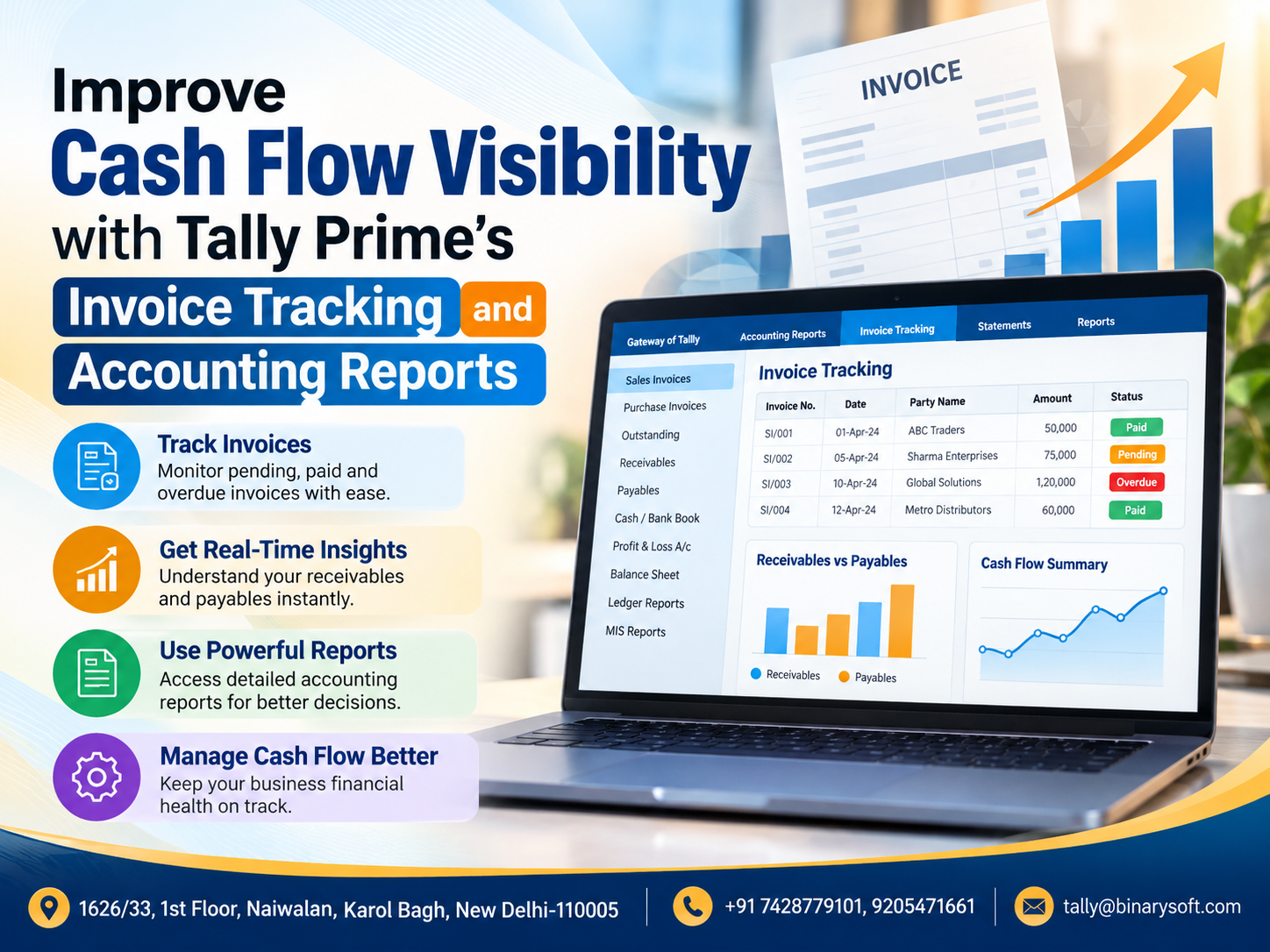
TallyPrime provides financial and inventory reports that support this analysis.
|
Business report
|
Management purpose
|
|---|
|
Profit & Loss Account
|
Understand income and profitability
|
|
Balance Sheet
|
Review assets and liabilities
|
|
Cash Flow
|
Evaluate cash movement
|
|
Stock Summary
|
Monitor inventory quantities and valuation
|
|
Outstanding Receivables
|
Identify customer collection requirements
|
|
Outstanding Payables
|
Plan supplier payments
|
|
Cost Centre Reports
|
Analyze allocated expenses
|
|
Sales and Purchase Registers
|
Review transaction activity
|
These reports help entrepreneurs identify trends and investigate unusual changes.
For example, rising sales accompanied by declining margins may indicate increasing purchase costs or excessive discounts.
Management can then review pricing, procurement and operating expenses before making expansion decisions.