Call CA Tally HelpDesk
+91 9205471661,
7428779101

Introduction: Why Wholesale Traders Are Moving Towards TallyPrime on Cloud in 2026
In 2026, wholesale traders across India are facing increasing pressure to manage GST compliance, inventory movement, customer credit, supplier payments and business profitability without delays. Traditional accounting systems installed on a single office computer often create operational difficulties when business owners need financial information outside their premises. A delayed invoice, an incorrect stock balance or an overlooked customer payment can directly affect working capital and customer relationships.
TallyPrime on Cloud offers a practical approach by allowing businesses to access their accounting environment through a remotely hosted system, subject to the hosting provider's infrastructure and security arrangements. From wholesale textile markets and electrical distribution businesses to pharmaceutical suppliers and FMCG wholesalers, cloud-based accounting can improve accessibility, coordination and operational control.
However, choosing the right cloud solution requires understanding more than the monthly hosting charge. Traders must evaluate software licensing, user requirements, security, backup facilities, performance and ongoing support before making an investment.
1. Understanding TallyPrime on Cloud for Wholesale Businesses
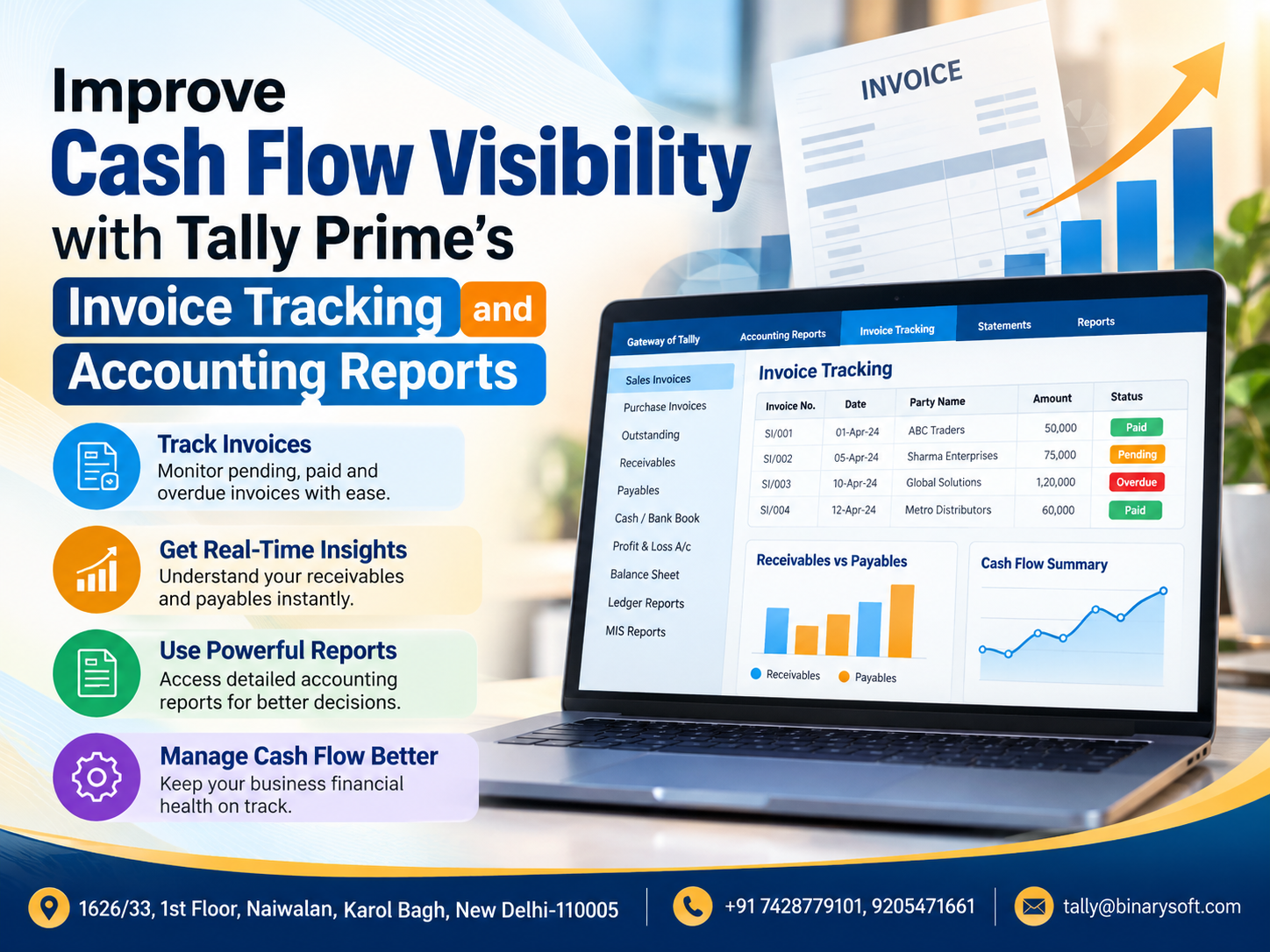
TallyPrime on Cloud is a hosting arrangement in which the TallyPrime application and business data operate on a remotely accessible computer or server instead of relying exclusively on a local office desktop.
Authorized users can connect to the hosted environment through supported remote-access technology, provided they have suitable devices, internet connectivity and access permissions.
For wholesale traders, this approach can help coordinate activities across warehouses, billing counters, accounts departments and management locations.
Consider a wholesale distributor operating from Karol Bagh with a warehouse in another part of Delhi. Its accounting staff prepares invoices, warehouse personnel monitor stock movement and the business owner travels frequently to meet suppliers.
With a properly configured cloud environment, authorized staff can access relevant business information without depending on one physical office computer.
Key benefits for wholesale traders
-
Centralized accounting and financial records.
-
Access to accounting information from different locations.
-
Better coordination between billing, inventory and finance teams.
-
Reduced dependence on one office computer.
-
Centralized backup and recovery arrangements.
-
Easier monitoring of receivables and payables.
-
Improved visibility of stock and business performance.
-
Scalable hosting resources as operational requirements grow.
Cloud hosting does not automatically replace a valid TallyPrime licence or guarantee unlimited simultaneous users. The applicable software edition, licensing terms and hosting configuration must support the intended usage.
2. TallyPrime Cloud Pricing in India: What Wholesale Traders Should Know
Cloud pricing is one of the most important considerations for businesses planning to modernize their accounting infrastructure.
The overall expense depends on the number of users, server configuration, data storage, backup arrangements, security requirements and service support.
Unlike a traditional desktop installation, cloud hosting generally introduces a recurring infrastructure charge.
Main components of TallyPrime cloud pricing
|
Pricing component
|
What it covers
|
|---|
|
TallyPrime software licence
|
Applicable software edition and licensing
|
|
Cloud hosting
|
Remote server or hosted desktop infrastructure
|
|
User requirements
|
Simultaneous users and system resources
|
|
Storage
|
Company data, supporting files and available capacity
|
|
Backup services
|
Scheduled backups and retention
|
|
Security
|
Access restrictions and infrastructure protection
|
|
Technical support
|
Hosting assistance and troubleshooting
|
|
Additional services
|
Migration, customization and disaster recovery
|
Illustrative cloud hosting budget
The following figures are hypothetical budgeting examples, not verified quotations or advertised Binarysoft prices.
|
Wholesale business requirement
|
Illustrative monthly hosting budget
|
|---|
|
Small business, basic hosted environment
|
₹800–₹1,500
|
|
Growing wholesaler, moderate resource needs
|
₹1,500–₹3,500
|
|
Multi-user wholesale operation
|
₹3,500–₹7,000
|
|
Larger distribution operation with advanced infrastructure
|
₹7,000+
|
Actual quotations can vary substantially. Software licence costs, GST, setup charges, storage, backup, user access and support may be billed separately.
The lowest-priced plan is not necessarily the most economical choice. An inexpensive server that performs poorly during peak billing hours may create more business losses than the hosting savings.
A wholesale trader should therefore compare the total cost of ownership rather than choosing solely on monthly price.
3. How to Calculate the Total Cost of TallyPrime Cloud
Wholesale traders should calculate the complete annual expense before selecting a hosting package.
For example, consider a business requiring three cloud users with an illustrative hosting charge of ₹1,500 per month.
|
Expense
|
Illustrative amount
|
|---|
|
Monthly cloud hosting
|
₹1,500
|
|
Annual hosting before GST
|
₹18,000
|
|
GST on hosting at 18%
|
₹3,240
|
|
Annual hosting including GST
|
₹21,240
|
|
Software licensing
|
Additional, if required
|
|
Setup and migration
|
As quoted
|
|
Additional backup or storage
|
If applicable
|
This calculation shows why separating hosting expenses from software licensing is essential.
A trader already using a valid TallyPrime licence may be able to deploy that licence in a compatible cloud environment, subject to licensing conditions.
For a new business, the initial budget should also include software procurement, configuration, migration and employee training.
Before purchasing, ask for a written quotation specifying the billing period, user limits, storage, backup retention, renewal charges and cancellation terms.
4. GST Accounting with TallyPrime on Cloud
GST accounting is a major responsibility for wholesale businesses handling frequent purchases, bulk sales, discounts, returns and interstate transactions.
Incorrect GST classifications or invoice details can create reconciliation differences, compliance difficulties and unnecessary administrative work.
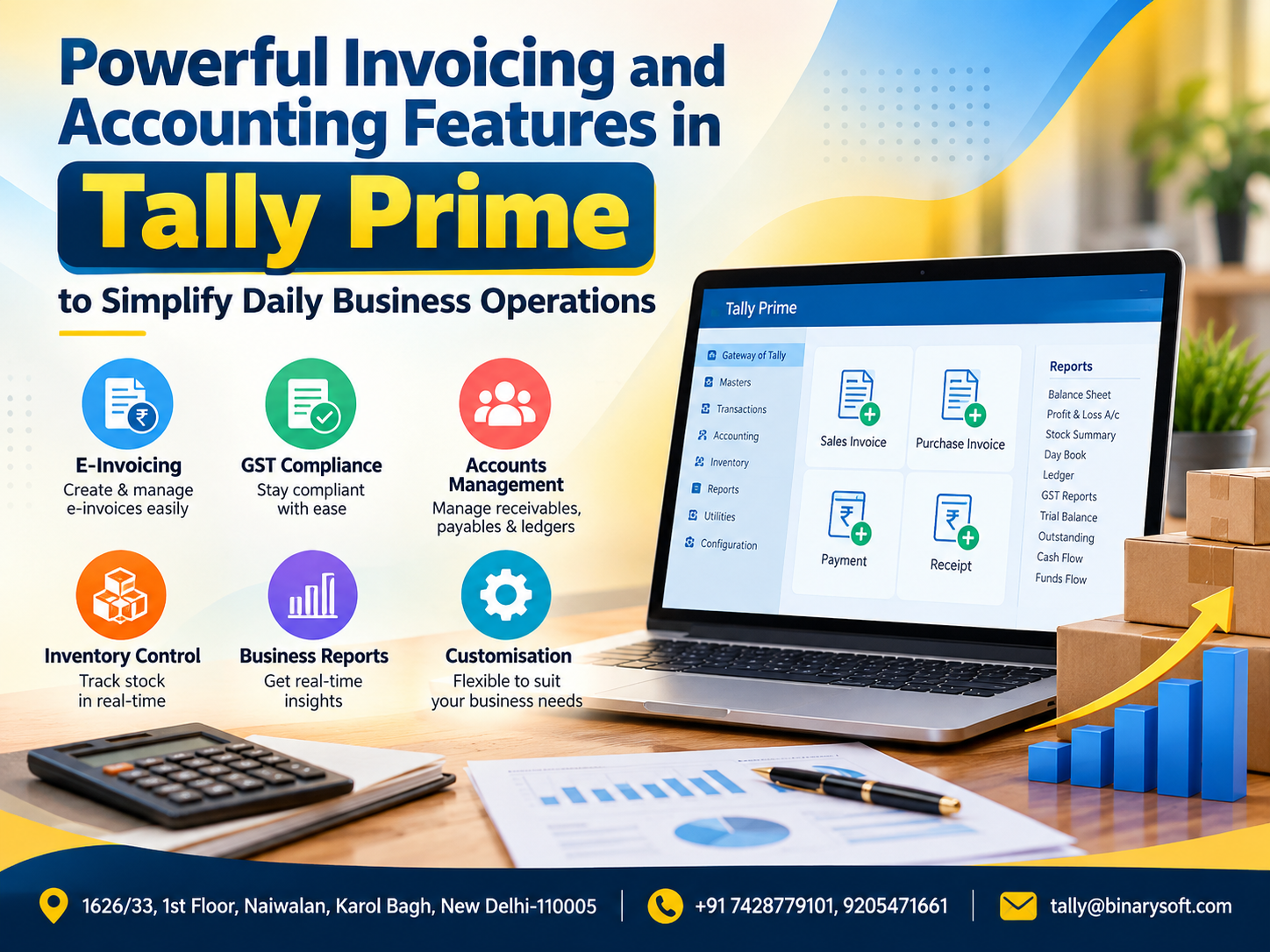
TallyPrime helps wholesalers organize GST-related accounting information within their regular transaction workflows.
GST features useful for wholesalers
GST-compliant invoicing: Businesses can create tax invoices containing applicable GST information, customer details, product descriptions and tax calculations.
Purchase accounting: Supplier invoices can be recorded with relevant GST classifications, helping businesses maintain purchase and input-tax records.
GST reports: Businesses can review GST-related transaction summaries, identify exceptions and prepare information required for return filing.
Debit and credit notes: Sales returns, purchase returns and price adjustments can be recorded through appropriate accounting vouchers.
E-invoicing and e-way bills: Eligible businesses can use supported features and connected services, subject to applicable rules, configuration and service availability.
GST reconciliation: Available reconciliation tools help identify differences between accounting records and relevant portal information.
For example, an electrical wholesaler selling goods to dealers across Delhi, Haryana and Uttar Pradesh may need to manage intrastate and interstate supplies.
With properly configured tax ledgers, customer GSTINs and stock masters, TallyPrime can help the accounts team record the applicable GST treatment consistently.
Cloud access allows authorized accountants to perform this work from approved remote locations.
However, cloud hosting itself does not determine GST liability or guarantee statutory compliance. Correct master data, appropriate tax treatment and timely review remain essential.
5. Inventory Management for Wholesale Traders
Inventory is often the largest working-capital investment in a wholesale trading business.
Excess stock increases storage costs, while insufficient stock can result in missed orders and dissatisfied customers.
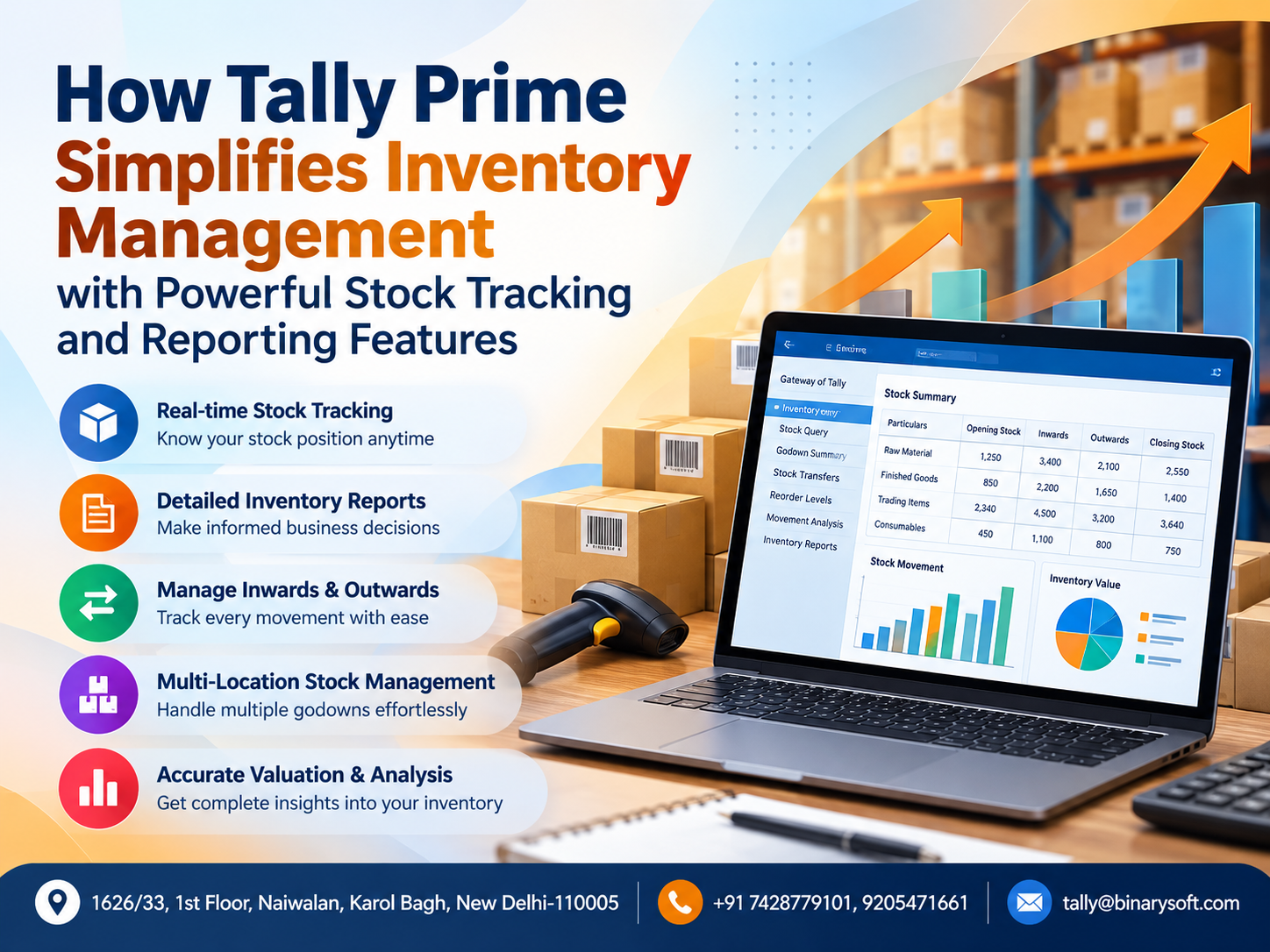
TallyPrime provides inventory management capabilities that can help wholesalers monitor quantities, stock valuation and goods movement.
Stock item management
Businesses can create individual stock items with relevant units of measurement, descriptions and classifications.
A wholesale electrical supplier may maintain separate items for switches, cables, circuit breakers, lighting products and accessories.
Multiple godown management
Wholesale businesses operating from more than one warehouse can configure stock locations and record relevant transfers.
This is particularly useful for distributors maintaining a central warehouse alongside smaller dispatch locations.
Batch-wise tracking
Where applicable, batch tracking helps businesses monitor products by batch, expiry information or other relevant identifiers.
This can be valuable for pharmaceutical, food and certain FMCG distribution operations.
Stock valuation
TallyPrime supports inventory valuation methods that help businesses assess the financial value of their stock.
The selected valuation method should remain consistent with applicable accounting requirements and business policies.
Reorder planning
By reviewing stock availability and reorder requirements, businesses can identify products that need replenishment.
A wholesaler can use stock reports to recognize slow-moving items and avoid unnecessary purchases.
Inventory reporting
Useful reports include stock summaries, movement information, location-wise availability and inventory-related profitability analysis where configured.
With cloud hosting, authorized users can review updated stock information without being physically present at the warehouse.
6. Remote Working and Multi-Location Business Management
Wholesale traders frequently need to make business decisions while visiting suppliers, customers or warehouses.
Traditional desktop-based accounting may require them to contact office employees for every outstanding balance, stock figure or sales report.
Cloud hosting can reduce this dependency.
A business owner attending a supplier meeting may connect to the hosted accounting environment and review purchase balances before approving another order.
Similarly, a manager working from another branch can access permitted reports and accounting information.
Important advantages
-
Access from supported locations with reliable internet connectivity.
-
Centralized accounting information for approved users.
-
Better coordination across branches and warehouses.
-
Reduced need to exchange multiple accounting data copies.
-
Easier management oversight during business travel.
-
More flexibility when office computers require maintenance.
Businesses should select a software licence and cloud package that support their required concurrent users.
A single-user licence should not be treated as a multi-user licence merely because the software is hosted remotely.
7. Cloud Security and Data Protection
Wholesale accounting records contain commercially sensitive information, including customer balances, supplier pricing, sales margins and bank transactions.
Protecting these records should be a major consideration when selecting a cloud hosting provider.
Important security measures
User access control: Employees should receive permissions appropriate to their responsibilities.
Strong authentication: Secure passwords and multi-factor authentication should be used wherever supported.
Encrypted connections: Remote sessions should use appropriately secured communication channels.
Backup protection: Backups should be protected against unauthorized access and accidental deletion.
Access monitoring: Administrators should periodically review user accounts and remove unnecessary permissions.
Endpoint security: Office computers and remote devices should receive security updates and appropriate malware protection.
Disaster recovery: The provider should explain how data can be restored after a server failure or security incident.
Cloud hosting can strengthen operational resilience when these controls are implemented correctly. However, no cloud environment is automatically immune to cyberattacks, human error or service interruptions.
Businesses should request details of backup frequency, retention, recovery time and data-export procedures before signing an agreement.
8. Business Reports for Better Financial Decisions
Wholesale trading depends on accurate information about sales, inventory, collections and supplier obligations.
TallyPrime offers financial and operational reports that help management evaluate business performance.
|
Business report
|
Management benefit
|
|---|
|
Sales Register
|
Review recorded sales transactions
|
|
Purchase Register
|
Monitor purchases and supplier activity
|
|
Stock Summary
|
Evaluate inventory availability and value
|
|
Receivables
|
Identify customer outstanding balances
|
|
Payables
|
Plan supplier payments
|
|
Profit & Loss Account
|
Review income, expenses and profitability
|
|
Balance Sheet
|
Assess the financial position
|
|
Cash Flow Report
|
Monitor cash movements
|
|
GST Reports
|
Review GST-related transactions
|
A wholesale trader can use these reports to identify customers with overdue balances, products generating higher sales and expenses affecting profitability.
For instance, a business may record strong monthly sales but still experience a cash shortage because customers are taking longer to pay.
Reviewing outstanding receivables alongside cash flow information helps management understand the difference between sales growth and actual cash availability.
Cloud access makes it more convenient for authorized decision-makers to review such information from outside the office.
9. A Wholesale Trader's Story: The Invoice That Nearly Cost a Customer
The following is an illustrative story created to explain a common business challenge.
Rajesh operated a wholesale electrical goods business in Delhi. For nearly fifteen years, he had built customer relationships through dependable delivery and personal attention.
His father had started the business with a small rented shop, and Rajesh had gradually expanded it into a distribution operation serving retailers across Delhi NCR.
One afternoon, Rajesh received an urgent telephone call from a long-standing customer.
The customer needed electrical materials for a commercial project, but the purchase could not proceed without an updated invoice and confirmation of available stock.
Unfortunately, Rajesh was visiting a supplier outside Delhi. His office accountant was unavailable, and the accounting software was installed on one office computer.
The customer could not wait indefinitely.
Rajesh felt helpless. The order represented more than revenue; it represented years of trust.
That evening, he began reconsidering how the business managed accounting information.
He decided to evaluate a cloud-hosted TallyPrime environment with appropriate remote access, user permissions and backup arrangements.
After implementation and employee training, authorized staff could work with centralized records, while Rajesh could review business information during supplier visits.
The biggest improvement was not simply technology.
It was the confidence that an important customer conversation would no longer depend entirely on access to one office computer.
For Rajesh, modernization meant protecting the relationships his family had spent years building.
10. Case Study One: Electrical Goods Wholesaler in Bhagirath Palace, Delhi
Illustrative case study; figures are hypothetical and do not represent verified customer results.
Business background
A wholesale electrical goods distributor operating in Bhagirath Palace handled hundreds of stock items and supplied retailers throughout Delhi NCR.
The business maintained accounting records on an office desktop and used separate spreadsheets for some warehouse activities.
Challenges
-
Delays in confirming product availability.
-
Difficulty accessing customer balances remotely.
-
Duplicate manual stock records.
-
Time-consuming GST data review.
-
Dependence on office staff for management reports.
Proposed TallyPrime cloud solution
The business evaluated a centralized cloud environment with appropriate TallyPrime licensing.
Stock items and godown details were organized, customer ledgers were reviewed, and relevant GST configurations were checked.
Authorized employees received role-based access, while the owner gained the ability to review accounting information remotely.
Illustrative operational comparison
|
Activity
|
Before
|
After implementation target
|
|---|
|
Stock confirmation
|
Multiple manual checks
|
Centralized stock report
|
|
Customer balance review
|
Office-dependent
|
Authorized remote review
|
|
GST data preparation
|
Separate manual compilation
|
Integrated accounting reports
|
|
Management reporting
|
Requested from accountant
|
Direct access to permitted reports
|
|
Data protection
|
Local backup dependency
|
Documented cloud backup process
|
Business impact
The proposed system would reduce dependence on disconnected records and help employees coordinate billing, inventory and customer account information.
The key lesson is that cloud hosting works best when supported by accurate inventory masters, trained employees and disciplined accounting procedures.
11. Case Study Two: FMCG Distributor Serving Delhi and Haryana
Illustrative case study; figures are hypothetical.
Business background
An FMCG distributor supplied packaged consumer products to supermarkets, grocery stores and smaller wholesale dealers.
Its operations involved frequent purchases, high-volume sales, customer credit and stock movement across multiple locations.
Challenges
The distributor faced difficulty monitoring overdue customer balances and comparing inventory availability across locations.
Management also needed better visibility into purchase obligations and product movement.
Proposed implementation
A cloud-hosted TallyPrime environment was planned around the company's accounting and inventory requirements.
The implementation included:
-
Customer and supplier ledger review.
-
Stock item and unit configuration.
-
Multiple inventory location setup.
-
GST configuration checks.
-
Bill-wise receivable tracking.
-
User permissions for authorized staff.
-
Scheduled backup and restoration testing.
Expected improvements
The accounts department could review customer outstanding balances more systematically.
Warehouse-related stock information could be recorded within the configured inventory system.
Management could evaluate sales, purchases and stock valuation through centralized reports.
The company could also establish regular reviews of overdue receivables to improve collection planning.
Key takeaway
For an FMCG distributor, the value of cloud accounting is not limited to remote access. Its broader benefit comes from combining financial records, inventory information and management reporting within a coordinated workflow.
12. Choosing the Right TallyPrime Cloud Plan
Every wholesale business has different operational requirements.
A small distributor with one accountant may need a relatively simple hosting environment.
A larger wholesale enterprise with several billing operators, multiple warehouses and management users may require greater computing resources and more sophisticated access arrangements.
Before selecting a cloud plan, evaluate the following:
-
Number of concurrent users: Determine how many employees must work simultaneously.
-
Data size: Review existing company data and anticipated growth.
-
Processing workload: Consider transaction volumes, reporting requirements and peak billing periods.
-
Internet connectivity: Confirm that important working locations have reliable connections.
-
Backup arrangements: Review frequency, retention and recovery procedures.
-
Support availability: Understand response times and escalation procedures.
-
Customization compatibility: Test existing TDLs, integrations and other required extensions.
-
Contract flexibility: Check upgrade, renewal, cancellation and data-export terms.
A trial or pilot implementation can help identify performance and compatibility issues before the business moves its primary accounting environment.
13. How to Implement TallyPrime on Cloud Successfully
Moving to cloud accounting requires planning rather than simply copying company data to a remote server.
Step 1: Assess the existing environment
Review the current TallyPrime version, licence, company data, customizations and employee workflows.
Identify users who require remote access and determine whether the existing software licence meets those needs.
Step 2: Select the hosting arrangement
Compare available hosting options based on computing resources, security, backup arrangements, support and total pricing.
Step 3: Back up existing data
Create a verified backup before migration.
Preserve relevant configuration files and customization components.
Step 4: Configure the cloud environment
Install or configure the supported TallyPrime environment, activate the appropriate licence and set up user access.
Step 5: Restore and validate company data
Restore the accounting data and verify important balances, stock reports, ledgers and GST information.
Step 6: Test daily operations
Test sales invoicing, purchase entries, inventory reports, printing, remote connectivity and relevant integrations.
Step 7: Train employees
Explain login procedures, user permissions, data handling and backup responsibilities.
Step 8: Monitor performance
Review system responsiveness, employee feedback, backup success and access permissions after implementation.
A structured migration reduces the risk of business disruption during the transition.
14. Cloud Hosting Versus Traditional Desktop Accounting
|
Feature
|
Traditional local installation
|
Cloud-hosted environment
|
|---|
|
Access
|
Primarily from configured local systems
|
From approved remote locations
|
|
Infrastructure
|
Business-managed local hardware
|
Hosted infrastructure
|
|
Maintenance
|
Local IT responsibility
|
Shared with hosting provider
|
|
Backup
|
Business-managed arrangements
|
Depends on selected hosting service
|
|
Remote working
|
Requires separate setup
|
Central hosting supports remote access
|
|
Internet dependency
|
Local work may continue offline
|
Remote access generally needs internet
|
|
Recurring costs
|
Local IT and maintenance expenses
|
Hosting subscription and related charges
|
|
Performance
|
Depends on local hardware
|
Depends on server resources and connectivity
|
Neither approach is universally better.
Businesses with reliable local infrastructure and limited remote-access requirements may find a conventional setup sufficient.
Cloud hosting becomes more attractive when mobility, centralized access and reduced dependence on office hardware are important priorities.
15. Why Wholesale Traders Should Work with an Authorized Tally Partner
Cloud implementation involves software licensing, data migration, configuration, employee training and ongoing technical support.
An experienced Tally partner can help businesses understand their operational requirements before selecting a hosting arrangement.
Binarysoft Technologies, an Authorized Tally Partner based in Karol Bagh, New Delhi, can assist wholesale traders with evaluating TallyPrime licensing and accounting requirements.
Areas for consultation include TallyPrime setup, GST accounting configuration, inventory workflows, cloud hosting requirements, data migration planning and employee training.
Businesses should discuss the specific scope of services, cloud provider arrangements, pricing and support commitments before proceeding.
The objective should be to implement a solution that supports everyday business operations rather than purchasing unnecessary infrastructure.
Conclusion
TallyPrime on Cloud can be a valuable option for wholesale traders seeking greater flexibility in accounting, inventory management, GST workflows and financial reporting.
However, cloud pricing should never be evaluated in isolation.
The right decision depends on the number of users, software licensing, server performance, data security, backup arrangements and the complexity of daily operations.
For wholesalers managing large inventories, customer credit and frequent transactions, centralized access to accurate business records can support faster decisions and better operational coordination.
Businesses should begin with a clear assessment of their existing accounting system, compare complete hosting costs and test the proposed environment before migration.
With appropriate planning, TallyPrime cloud hosting can become an important part of a more accessible, organized and resilient wholesale business.
Powered by Binarysoft Technologies
Authorized Tally Partner
Location: 1626/33, 1st Floor, Naiwalan, Karol Bagh, New Delhi – 110005, INDIA
Contact us: +91 7428779101, 9205471661
Email us: tally@binarysoft.com
Business Hours: 10:00 AM – 6:00 PM, Monday to Friday
Website: tallyatcloud.com
Frequently Asked Questions
What is TallyPrime on Cloud?
TallyPrime on Cloud is an arrangement that enables businesses to operate TallyPrime in a remotely hosted environment. Authorized users can access the system through supported remote connections.
What is the monthly cost of TallyPrime cloud hosting in India?
Pricing depends on the hosting provider, user requirements, server resources and included services. Some cloud-access offerings start around ₹600 per user per month before GST, while other hosting configurations may have different pricing structures. Always confirm the current quotation and exclusions.
Is the TallyPrime software licence included in cloud hosting?
Not necessarily. Cloud hosting and TallyPrime licensing are commonly separate expenses. Businesses should confirm whether their quotation includes software licensing or only hosting infrastructure.
Can multiple employees use TallyPrime on Cloud?
Yes, provided the software licence, hosting configuration and applicable user limits support concurrent access.
CA. Aditya Khatod focuses on accounting automation, taxation, and financial reporting for MSMEs. He helps businesses organize transactions, improve reconciliation processes, and maintain structured records for compliance and management purposes.