Call CA Tally HelpDesk
+91 9205471661,
7428779101
Introduction: Why Digital Bill Payment Platforms Are Becoming Essential for Businesses in 2026
In 2026, Indian businesses are increasingly managing payments through digital banking, UPI, electronic transfers and online financial platforms. For retailers, wholesalers, distributors and service providers, paying bills is no longer limited to issuing cheques or visiting a bank. Businesses must handle supplier invoices, electricity bills, rent, employee reimbursements, subscription charges and recurring operational expenses while maintaining accurate accounting records. Even a small delay in payment can affect supplier relationships, interrupt essential services or create unnecessary financial pressure. Bill payment platforms help simplify these responsibilities by providing convenient ways to initiate, schedule, monitor and confirm payments. When digital payment processes are combined with structured accounting software such as TallyPrime, businesses can improve visibility into outstanding liabilities, maintain organized financial records and reconcile payments more efficiently. Understanding how bill payment platforms work can help business owners reduce administrative effort, strengthen payment controls and make more confident financial decisions.
A Business Owner's Story: The Supplier Payment That Almost Stopped Production
Vikram operated a small packaging materials manufacturing business in Faridabad.
His company supplied cartons and packaging products to local manufacturers and wholesalers.
Business was growing, and his employees were working hard to complete customer orders.
However, the company's payment process remained largely manual.
Supplier invoices arrived through email, WhatsApp and printed documents. Payment due dates were recorded in different notebooks and spreadsheets.
One morning, Vikram received an urgent call from a major raw material supplier.
The supplier had not received payment for an invoice that was already overdue.
Unless payment was arranged, the next delivery of raw materials would be delayed.
Vikram was worried. His production team was preparing an important customer order, and a material shortage could affect the delivery commitment.
After checking the accounts, he discovered that the invoice had been approved but its payment had never been processed.
The problem was not a shortage of funds. It was poor payment coordination.
That evening, Vikram decided to improve the company's financial workflow.
His accounting team organized supplier ledgers, bill references and outstanding payment reports in TallyPrime. They also introduced a documented approval process and began using appropriate digital banking channels to settle bills.
Within a few months, the team had a clearer view of upcoming payment obligations and could identify overdue invoices more quickly.
Vikram learned an important lesson:
A business can lose valuable supplier trust not only because it lacks money, but also because it lacks an organized payment management system.
This is an illustrative story created to explain the importance of digital bill payment management.
1. What Is a Bill Payment Platform?
A bill payment platform is a digital system that enables individuals or businesses to pay bills through electronic payment channels.
Depending on the provider, these platforms may support utility payments, supplier invoices, subscription charges, loan repayments and other financial obligations.
Some platforms primarily facilitate payments, while more advanced business payment systems also offer invoice management, approval workflows, scheduling, transaction histories and reporting.
For businesses, bill payment platforms can become an important part of accounts payable management.
Instead of relying entirely on manual payment instructions, organizations can use digital systems to improve the visibility and execution of payment obligations.
However, a payment platform and accounting software serve different purposes.
A payment platform generally facilitates the movement of funds, while accounting software records the financial impact of transactions and supports financial reporting.
Using both systems together can create a more reliable financial management process.
2. How Do Bill Payment Platforms Work?
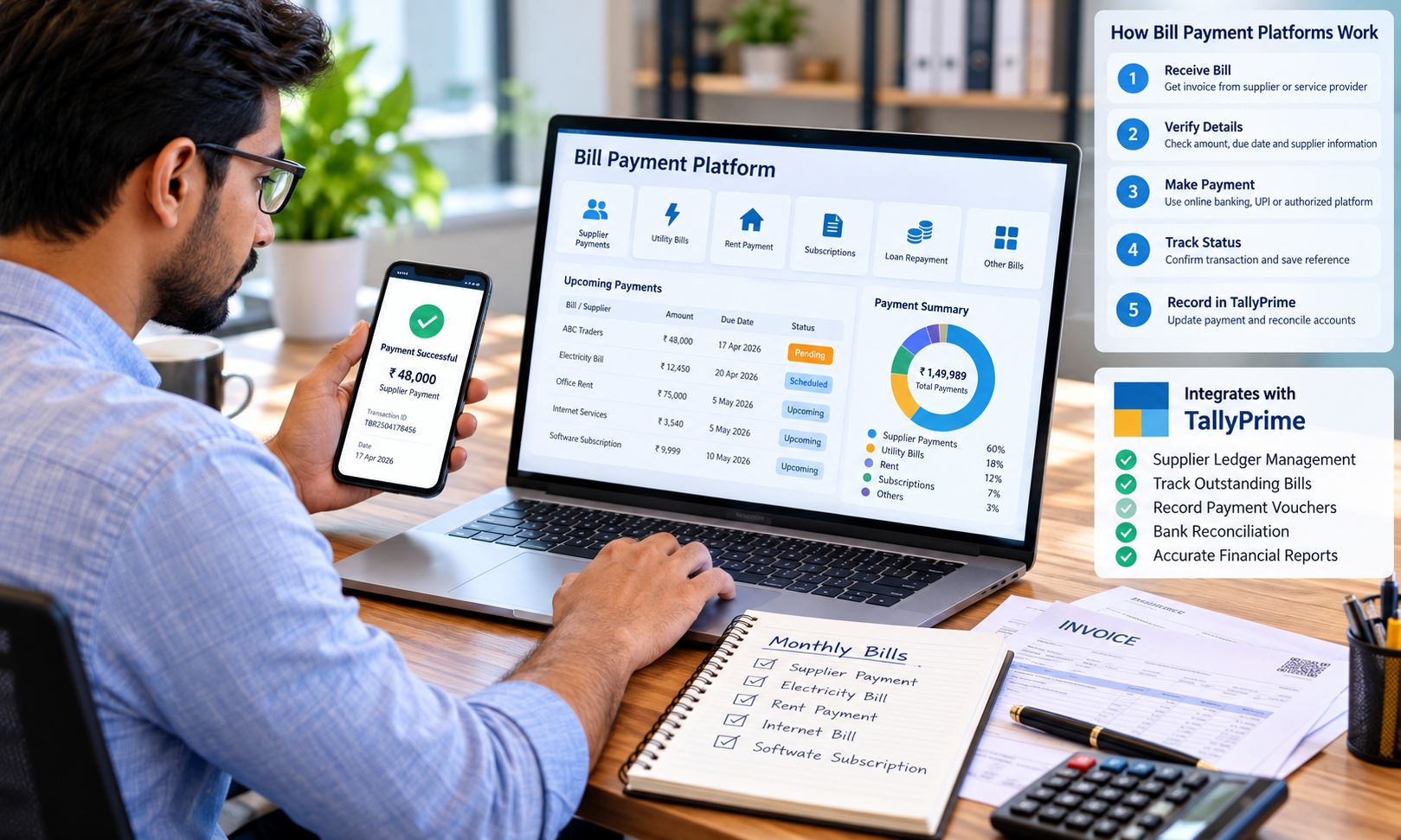
A typical bill payment process involves several stages, from identifying an outstanding obligation to confirming and recording its settlement.
Digital Bill Payment Process
Receive and verify the bill
Check supplier details, invoice amount and due date
Approve the payment
Confirm the bill is genuine and authorized
Select the payment method
Choose an available banking or digital payment channel
Initiate or schedule payment
Submit the transaction through the authorized platform
Confirm transaction status
Verify whether the payment succeeded, failed or remains pending
Record and reconcile
Match the payment with accounting records and bank statements
Step 1: Bill Generation and Receipt
A supplier or service provider issues an invoice containing details such as invoice number, amount, due date and payment instructions.
Step 2: Bill Verification
The business verifies whether the bill is accurate and corresponds to goods received or services provided.
Step 3: Payment Authorization
An authorized employee or manager approves the payment according to the company's internal policies.
Step 4: Payment Processing
The business selects an available payment method and submits the transaction.
Step 5: Transaction Confirmation
The payment platform provides a transaction status or reference number, depending on the channel used.
Step 6: Accounting and Reconciliation
The payment is recorded in the accounting system and matched with the corresponding supplier invoice and bank transaction.
3. Key Features of Modern Bill Payment Platforms
Multiple Payment Methods
Many platforms support different electronic payment methods, depending on the provider and type of bill.
Payment Scheduling
Some platforms allow users to schedule payments for future dates, helping businesses organize recurring financial obligations.
Transaction Tracking
Payment histories and transaction references help businesses monitor completed, pending and failed payments.
Digital Records
Electronic transaction records reduce dependence on paper receipts and make payment information easier to retrieve.
Approval Workflows
Business-oriented platforms may support authorization rules so that payments require approval before processing.
Notifications and Reminders
Some systems provide reminders for upcoming payment deadlines and notifications about transaction status.
Security Controls
Authentication, access permissions and transaction verification help reduce unauthorized payment risks.
Integration Capabilities
Certain platforms can connect with accounting or business management systems, depending on supported integrations and technical requirements.
4. Types of Bill Payment Platforms Used by Indian Businesses
Different platforms are designed for different payment requirements.
|
Platform type
|
Primary purpose
|
Common business use
|
|---|
|
Internet Banking
|
Electronic banking transactions
|
Supplier payments, rent and statutory payments
|
|
UPI Payment Applications
|
Digital bank-to-bank payments
|
Small business payments and collections
|
|
Bharat Connect / BBPS
|
Standardized bill payment ecosystem
|
Supported utility and recurring bill categories
|
|
Business Payment Platforms
|
Manage and execute business payments
|
Supplier invoices and approval workflows
|
|
Payment Gateways
|
Accept customer payments
|
Online sales and service collections
|
|
Accounting Software
|
Record and manage financial transactions
|
Payables, ledgers, reconciliation and reports
|
The Bharat Bill Payment System ecosystem, operating under the Bharat Connect brand, supports interoperable bill payment services across participating channels and biller categories.
Businesses should verify whether their chosen payment provider supports the relevant bill category, transaction amount and required payment features.
5. Benefits of Bill Payment Platforms for Businesses
Faster Payment Processing
Digital payment channels can reduce the administrative work involved in issuing physical cheques and manually communicating payment instructions.
Actual settlement times depend on the payment method, banking infrastructure and transaction status.
Improved Supplier Relationships
Timely payments help businesses maintain supplier confidence and may support smoother purchasing arrangements.
Reduced Administrative Work
Organized digital payment records can reduce repetitive data entry and make it easier to locate transaction details.
Better Payment Visibility
Payment dashboards and transaction histories help accounting teams identify pending obligations and completed settlements.
Lower Risk of Missed Deadlines
Scheduling features and reminders can help businesses manage recurring payments, although not every platform offers these capabilities.
Stronger Financial Controls
Approval workflows and access restrictions can help organizations reduce unauthorized or duplicate payments.
Improved Cash Flow Planning
When upcoming payment obligations are clearly visible, management can plan cash requirements more effectively.
6. Practical Example: Managing Monthly Business Bills
Consider a wholesale trading company with the following monthly payment obligations.
|
Payment category
|
Monthly amount
|
Due date
|
|---|
|
Supplier Payments
|
₹4,50,000
|
5th–20th
|
|
Warehouse Rent
|
₹75,000
|
5th
|
|
Electricity
|
₹28,000
|
12th
|
|
Internet and Communication
|
₹7,000
|
15th
|
|
Transportation
|
₹65,000
|
20th
|
|
Software Subscriptions
|
₹15,000
|
25th
|
|
Total
|
₹6,40,000
|
|
Without an organized payment process, the business may overlook invoices or approve payments without considering upcoming obligations.
By maintaining supplier balances and reviewing payment schedules, management can prioritize essential expenses and allocate funds appropriately.
However, the business must still ensure sufficient bank balances and verify each payment before execution.
7. How TallyPrime Helps Businesses Manage Bill Payments
TallyPrime supports the accounting and financial control activities surrounding business payments.
It helps organizations maintain supplier records, identify outstanding invoices, record settlements and reconcile transactions.
Supplier Ledger Management
Businesses can create individual ledgers for suppliers and service providers.
Each ledger maintains relevant accounting transactions, making it easier to review the amount payable to a particular supplier.
Bill-Wise Accounting
Bill-wise accounting allows businesses to maintain references for outstanding invoices.
When a supplier invoice is recorded, the corresponding liability can be tracked until it is settled.
Bills Payable Reports
TallyPrime provides outstanding payable reports that help businesses identify unpaid invoices and review payment obligations.
These reports are useful for preparing payment schedules.
Payment Voucher Management
Businesses can record payments through payment vouchers, maintaining details of the payment account, supplier ledger and relevant bill references.
Bank Reconciliation
TallyPrime provides bank reconciliation capabilities that help users compare accounting records with bank transactions.
Banking connectivity and automated features depend on the release, supported bank and enabled services.
Financial Reporting
Cash Book, Bank Book, Balance Sheet and other financial reports help management evaluate payment activity and overall financial position.
Cost Centre Accounting
Where applicable, businesses can allocate expenses to departments or branches.
This can help management understand which activities are responsible for particular payment obligations.
Important: TallyPrime is not a universal bill payment gateway. Recording a payment voucher does not automatically transfer money. Actual payment initiation depends on supported banking features, integrations and authorization arrangements.
8. Step-by-Step: Managing Supplier Payments in TallyPrime
The following workflow explains how a business can maintain an organized accounts payable process.
Step 1: Create a Supplier Ledger
Open TallyPrime and select the relevant company.
Navigate to the ledger creation option and create the supplier account under Sundry Creditors.
Enter the supplier's relevant information, including applicable GST details and opening balances.
Step 2: Record the Purchase Invoice
Open the Purchase Voucher using F9.
Select the supplier ledger and enter the purchase invoice details.
Choose the relevant purchase ledger, inventory items and applicable tax details.
Allocate the amount to a bill reference when bill-wise accounting is enabled.
Step 3: Review Outstanding Bills
Open the applicable Bills Payable report.
Review outstanding invoices, due dates and supplier balances.
This helps the accounting team determine which payments require attention.
Step 4: Verify and Approve the Payment
Before making a payment, confirm the invoice amount, supplier identity, bank account details and internal approval.
This is particularly important when a supplier requests a change in bank details.
Step 5: Execute the Payment
Initiate the payment using an authorized banking channel or supported banking workflow.
Confirm the transaction status through the relevant financial institution.
Step 6: Record the Payment Voucher
Open the Payment Voucher using F5.
Select the appropriate cash or bank account and supplier ledger.
Enter the payment amount and allocate it against the relevant outstanding invoice.
Record the payment reference where appropriate.
Step 7: Reconcile the Bank Transaction
Use the applicable bank reconciliation report to match the recorded payment with the bank statement.
Investigate differences, failed transactions and duplicate entries.
Step 8: Review the Updated Outstanding Balance
Check the supplier ledger and Bills Payable report.
Ensure that the payment has been allocated correctly and the outstanding balance reflects the settlement.
9. Case Study 1: Wholesale Distributor Improves Supplier Payment Management
Illustrative case study: A Delhi distributor improves supplier payment coordination through digital payments and TallyPrime.
A wholesale electrical goods distributor in Delhi worked with approximately 45 suppliers.
The company regularly purchased inventory on credit and made payments through multiple banking channels.
The Challenge
Supplier invoices were received through email, WhatsApp and printed documents.
The accounts department maintained payment due dates in spreadsheets.
As business volumes increased, the company experienced delayed payments, duplicate verification work and difficulties locating transaction references.
The Solution
The distributor introduced a structured payment management process.
Supplier invoices were recorded in TallyPrime with bill-wise references.
The accounting team reviewed outstanding reports weekly and prepared a list of payments requiring authorization.
Approved payments were processed through the company's banking channels, and the corresponding vouchers were recorded and reconciled.
Illustrative Results
|
Performance indicator
|
Before
|
After
|
|---|
|
Overdue supplier invoices
|
18
|
5
|
|
Monthly payment reconciliation effort
|
16 hours
|
7 hours
|
|
Payment review frequency
|
Irregular
|
Weekly
|
The hypothetical business reduced overdue invoices and improved the reliability of its supplier payment records.
Key takeaway: Combining digital payment execution with organized accounts payable accounting can improve payment discipline and supplier confidence.
10. Case Study 2: Service Company Simplifies Recurring Bill Payments
Illustrative case study: A professional services company improves recurring expense management.
A professional services company in Gurugram employed 35 people and operated from two offices.
Its recurring expenses included rent, internet services, software subscriptions, electricity and outsourced professional services.
The Challenge
Different employees managed different bills.
Some invoices were approved by email, while others were paid directly through internet banking.
The finance manager often struggled to determine which bills had been paid and which remained outstanding.
The Solution
The company centralized its bill records in TallyPrime and established a monthly payment review process.
Recurring obligations were recorded under appropriate expense and supplier ledgers.
The team used authorized digital payment channels and maintained payment references for reconciliation.
Illustrative Results
|
Performance indicator
|
Before
|
After
|
|---|
|
Monthly missed payment deadlines
|
4
|
0
|
|
Time spent checking payment status
|
10 hours
|
4 hours
|
|
Payment records
|
Scattered
|
Centralized
|
In this hypothetical scenario, the company improved its ability to track recurring bills and reduced administrative effort.
Key takeaway: A well-organized payment process can help service businesses reduce missed deadlines and improve financial visibility.
11. Security Risks and Precautions in Digital Bill Payments
Digital payment platforms provide convenience, but businesses must also protect financial information and prevent unauthorized transactions.
Verify Supplier Bank Details
Always confirm supplier account information through trusted communication channels, especially when payment instructions change unexpectedly.
Use Strong Authentication
Enable appropriate authentication and access controls for banking and payment platforms.
Establish Payment Approval Limits
Large payments should require approval from authorized personnel.
Avoid Duplicate Payments
Check invoice numbers, payment references and outstanding balances before processing payments.
Review Transaction Status
A payment instruction does not always mean the transaction has been completed successfully.
Confirm settlement through the relevant bank or payment provider.
Reconcile Accounts Regularly
Bank reconciliation helps identify missing entries, duplicate transactions and differences between accounting and banking records.
12. Bill Payment Platforms vs Accounting Software
Although both systems support financial management, their primary functions differ.
|
Feature
|
Bill payment platform
|
Accounting software such as TallyPrime
|
|---|
|
Initiating payments
|
Core function
|
Available only through supported banking workflows
|
|
Supplier ledger management
|
Provider-dependent
|
Yes
|
|
Outstanding invoice tracking
|
Provider-dependent
|
Yes
|
|
Financial statements
|
Usually limited
|
Yes
|
|
Bank reconciliation
|
Provider-dependent
|
Yes
|
|
Expense accounting
|
May be limited
|
Yes
|
|
Payment scheduling
|
Often available
|
Depends on connected services
|
|
GST accounting
|
Usually limited
|
Yes, with appropriate configuration
|
Businesses often benefit from combining secure digital payment channels with comprehensive accounting records.
13. How Digital Bill Payments Improve Cash Flow Management
Cash flow management involves ensuring that sufficient funds are available when payments become due.
A company may generate strong sales but face financial pressure if customer collections are delayed while supplier payments are approaching.
Bill payment platforms can help organize payment execution, while TallyPrime can help identify outstanding liabilities and monitor cash and bank balances.
Businesses should regularly prepare payment forecasts based on supplier due dates, operating expenses and expected customer receipts.
Payment prioritization should consider contractual obligations, essential services, statutory deadlines and supplier relationships.
A disciplined approach helps businesses avoid unnecessary late-payment charges and reduce operational disruptions.
14. Best Practices for Managing Business Bill Payments
An effective payment management system should combine accurate records, clear responsibility and appropriate financial controls.
Businesses should maintain updated supplier information, verify invoices before approval and review outstanding payment obligations regularly.
Payment responsibilities should be clearly assigned to authorized employees.
Large payments should follow an approval process, and changes to supplier banking details should receive additional verification.
Digital transaction references should be retained for accounting and audit purposes.
TallyPrime can support these practices through supplier ledgers, bill-wise accounting, payment vouchers, bank reconciliation and financial reporting.
The most effective approach is to maintain a clear connection between invoices received, payments authorized, transactions completed and accounting records updated.
15. The Future of Digital Bill Payment Management
Digital financial services continue to influence how businesses manage their daily operations.
Payment systems are increasingly emphasizing convenience, electronic records, security and integration with financial workflows.
For growing businesses, the important opportunity is not simply to make payments faster.
It is to build a payment process that provides accurate information, appropriate authorization and reliable accounting records.
Businesses that combine digital banking with structured accounting practices can reduce administrative complexity and improve financial decision-making.
TallyPrime can play an important role in this process by helping organizations maintain organized financial records and monitor payment obligations.
Conclusion
Bill payment platforms have become an important part of modern business financial management.
They help organizations execute payments, maintain transaction records and manage recurring financial obligations more conveniently.
For retailers, wholesalers, distributors, manufacturers and service providers, an organized payment process can improve supplier relationships, reduce administrative effort and strengthen cash flow planning.
TallyPrime complements digital payment platforms through supplier ledger management, bill-wise accounting, outstanding reports, payment vouchers and bank reconciliation.
However, effective payment management requires more than technology. Businesses must establish clear approval procedures, verify transaction details and maintain accurate financial records.
By combining secure digital payments with disciplined accounting practices, businesses can improve payment reliability, strengthen financial controls and support sustainable growth.
Powered by Binarysoft Technologies
Authorized Tally Partner
Location: 1626/33, 1st Floor, Naiwalan, Karol Bagh, New Delhi – 110005, INDIA
Contact us: +91 7428779101, 9205471661
Email us: tally@binarysoft.com
Business Hours: 10:00 AM – 6:00 PM, Monday to Friday
Website: tallyatcloud.com
Frequently Asked Questions
Why should businesses combine bill payment platforms with TallyPrime?
Why should businesses combine bill payment platforms with TallyPrime?
Can digital payments improve cash flow?
Digital payment systems can improve visibility and payment coordination. Cash flow also depends on customer collections, available funds and financial planning.
Which businesses benefit from bill payment platforms?
Retailers, wholesalers, distributors, manufacturers, professional service providers and other organizations handling regular financial obligations can benefit.
Can businesses manage recurring bills digitally?
Yes. Many digital payment platforms support recurring bill management or scheduling, depending on the provider and payment category.
Does TallyPrime automatically pay every bill?
No. Payment execution depends on the available banking services and supported workflows. Recording a payment voucher alone does not automatically transfer funds.
CA. Dhruv Bhandekar works with businesses on bookkeeping controls, GST reporting, and month-end accounting processes. His focus is on creating structured financial workflows that improve accuracy and reduce reconciliation issues.