Introduction: Why Growing Businesses Need More Than Hard Work in 2026
Every successful business begins with ambition, determination and the willingness to take risks. However, as a company grows, managing its operations becomes increasingly complicated.
A small retailer may initially manage purchases, sales and customer payments through spreadsheets. A manufacturer may maintain separate registers for raw materials, production and finished goods. A wholesale distributor may rely on employees to prepare stock reports and outstanding payment statements manually.
These methods can work when transaction volumes are limited. But as the business expands, disconnected information creates delays, accounting errors, inventory discrepancies and financial uncertainty.
In 2026, Indian businesses face increasing expectations for faster invoicing, accurate GST records, digital payments, reliable deliveries and timely financial decisions.
Strategic ERP software helps businesses manage growth without losing control over their operations.
Enterprise Resource Planning connects important business processes through structured information, standardized workflows and integrated reporting.
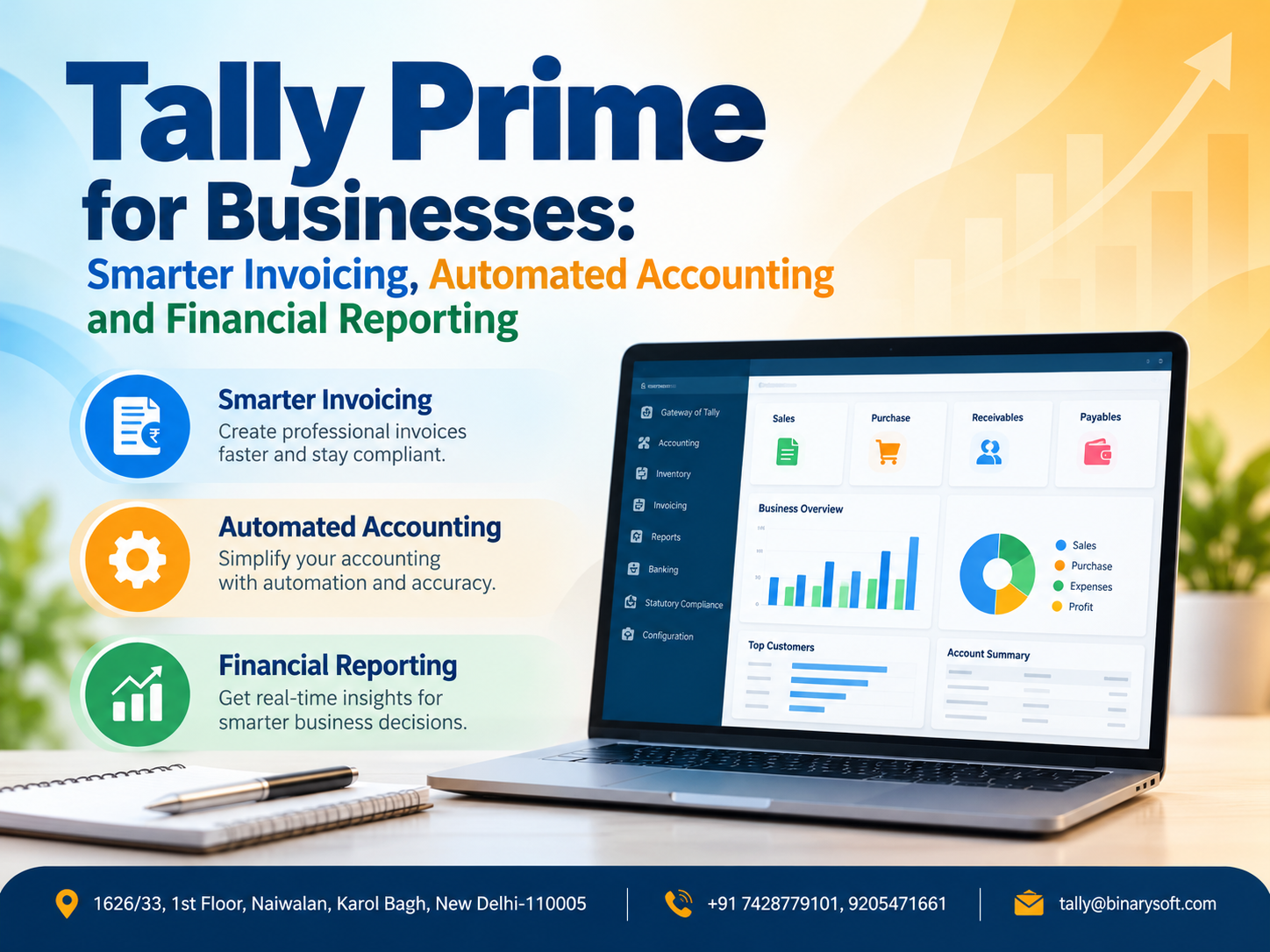
For many Indian small and medium enterprises, TallyPrime can provide an effective foundation for financial accounting, inventory management, banking, GST-related activities and business reporting.
The real value of ERP is not simply replacing manual registers with software. It is helping entrepreneurs build organizations that can expand confidently, manage resources responsibly and make better decisions.
1. What Is Strategic ERP and Why Does It Matter?
Enterprise Resource Planning, commonly known as ERP, refers to software and processes that help organizations coordinate business activities using integrated information.
Strategic ERP goes beyond recording daily transactions.
It focuses on aligning technology with long-term business objectives.
For example, a business planning to open three additional branches needs reliable inventory information, consistent accounting procedures, financial visibility and clearly defined employee responsibilities.
Without these foundations, expansion may increase operational confusion instead of profitability.
Important objectives of strategic ERP
-
Centralize important business information.
-
Standardize accounting and operational procedures.
-
Reduce repetitive manual work.
-
Improve inventory and financial accuracy.
-
Support better purchasing and sales decisions.
-
Strengthen customer and supplier management.
-
Improve reporting and internal accountability.
-
Prepare operations for future expansion.
Strategic ERP implementation should begin with business requirements rather than software features alone.
A company must understand its existing challenges, expected growth and operational priorities before choosing a suitable solution.
2. An Emotional Story: The Entrepreneur Who Nearly Lost Control of His Growing Business
At 10:30 PM, Amit was still sitting inside his wholesale office in Karol Bagh, New Delhi.
His employees had gone home hours earlier.
On his desk were unpaid supplier invoices, customer outstanding statements and several spreadsheets containing conflicting inventory figures.
Ten years earlier, Amit had started his business with a small investment and a dream of building something meaningful for his family.
His first office had only two employees.
Through hard work and customer relationships, he gradually expanded into wholesale distribution.
Eventually, the business began receiving orders from retailers across Delhi NCR.
Sales were increasing, and Amit believed he was finally achieving the success he had imagined.
But growth brought unexpected problems.
The warehouse team maintained stock information separately from the accounts department. Customer payments were difficult to reconcile. Purchase orders were sometimes placed without checking existing inventory.
One morning, an important customer complained that a confirmed order could not be delivered because the required products were unavailable.
Amit had already accepted an advance payment.
That evening, his young daughter asked, "Papa, why are you always working when everyone else is home?"
The question stayed with him.
He had started the business to provide his family with a better life, but the company had become so difficult to manage that he barely spent time with them.
Amit realized that the business needed stronger systems.
He introduced TallyPrime for accounting and inventory management, reorganized product records and established regular financial reporting procedures.
Employees were trained to record transactions consistently. Outstanding customer balances were reviewed systematically, and management began checking stock availability before confirming large orders.
The transformation was gradual.
However, the company developed clearer financial information and more dependable operating procedures.
Months later, Amit returned home before dinner.
His daughter smiled and asked whether he would help her with her school project.
For the first time in a long while, he could say yes without worrying about unfinished accounting work.
Business growth had finally begun supporting his life instead of controlling it.
This fictional story illustrates the emotional and operational challenges that growing Indian businesses commonly experience.
3. Why Traditional Business Management Systems Fail During Expansion
Businesses frequently outgrow the systems that supported their early development.
When operations are small, owners can personally monitor purchases, sales, inventory and payments.
As the number of customers, products and employees increases, this approach becomes unreliable.
Disconnected information
Different departments may maintain separate spreadsheets, creating inconsistent records.
Delayed reporting
Management may receive financial information several days or weeks after transactions occur.
Inventory discrepancies
Incorrect stock records can lead to shortages, excess purchases and delayed customer deliveries.
Cash flow problems
Businesses may generate substantial sales while struggling to collect outstanding payments.
Limited accountability
Without defined workflows, identifying the cause of transaction errors becomes difficult.
Strategic ERP helps address these challenges by creating consistent processes and improving information visibility.
4. How TallyPrime Supports Strategic ERP for Indian Businesses
TallyPrime provides integrated accounting and business management functionality suited to many Indian MSMEs.
It helps organizations maintain financial and inventory records within a structured application.
Financial accounting
Businesses can record purchases, sales, receipts, payments, journal entries and other accounting transactions.
Inventory management
Stock groups, stock items, units of measurement, godowns and inventory vouchers help businesses organize inventory information.
GST-related accounting
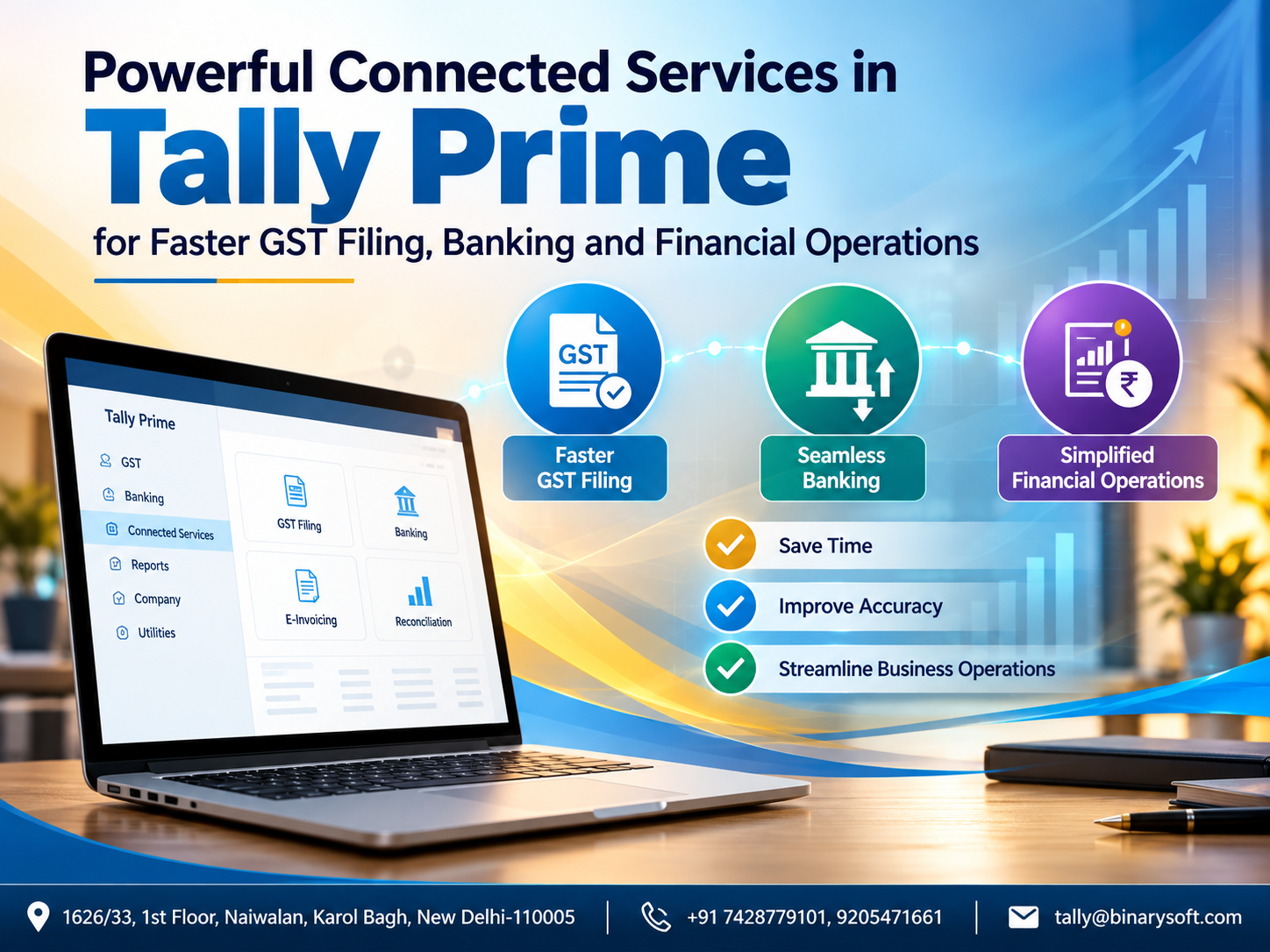
TallyPrime supports GST invoicing, tax classifications and relevant reporting workflows.
Banking and reconciliation
Businesses can maintain bank accounts, record transactions and reconcile bank statements using supported functionality.
Credit management
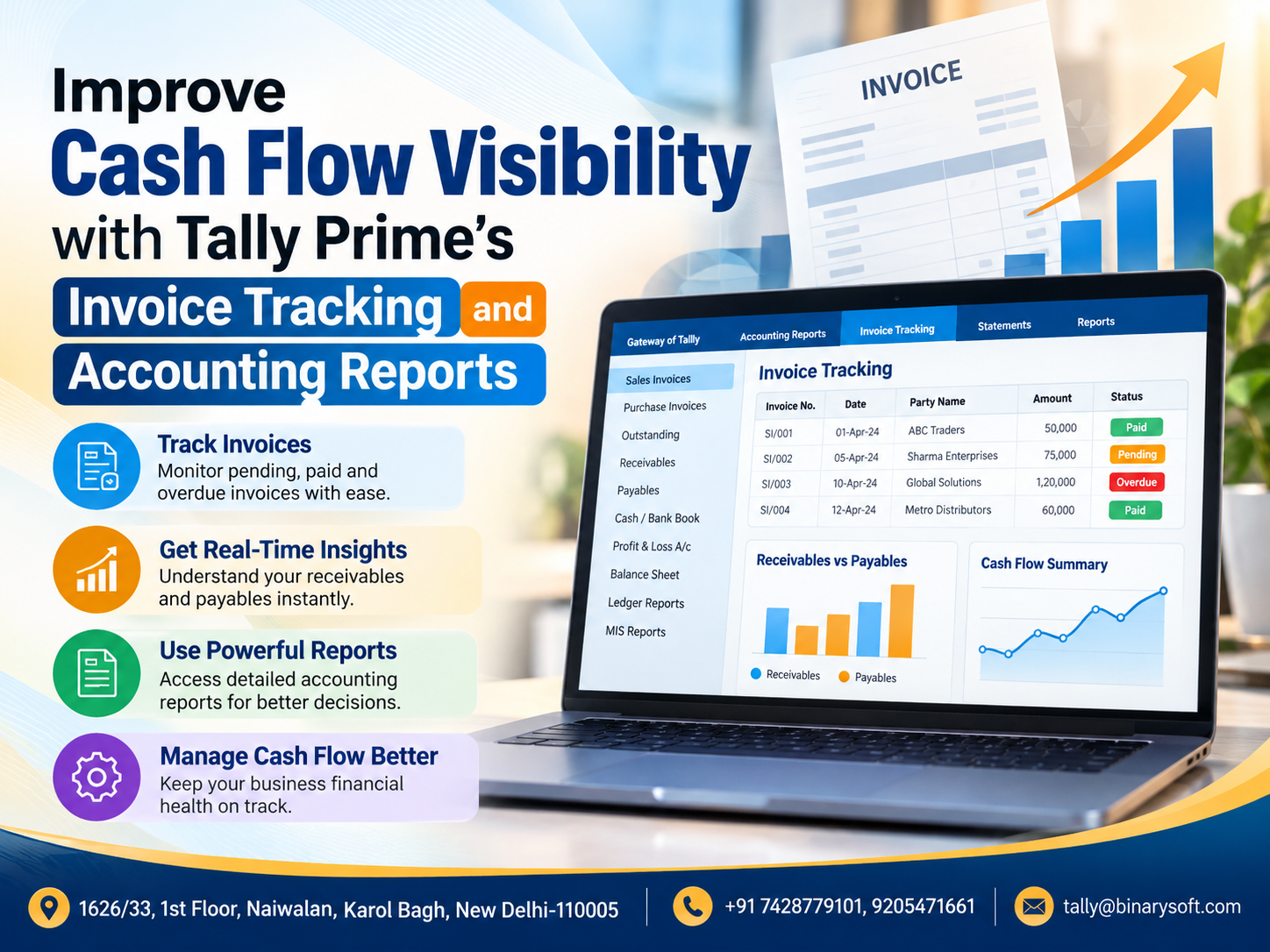
Bill-wise accounting and outstanding reports help organizations monitor customer receivables and supplier obligations.
Financial reporting
Management can review Profit & Loss Accounts, Balance Sheets, Cash Flow information and other relevant reports.
These capabilities make TallyPrime a practical foundation for businesses seeking stronger financial and inventory control.
However, advanced enterprise requirements such as comprehensive CRM, production scheduling, HR management or complex supply chain optimization may require additional applications or integrations.
5. Financial Visibility: The Foundation of Sustainable Business Growth
A growing company must understand more than its sales figures.
Management needs visibility into profitability, expenses, assets, liabilities and available cash.
Consider a distributor generating monthly sales of ₹50 lakh.
High revenue may appear encouraging, but the company could still experience financial pressure if customers delay payments or inventory purchases consume excessive working capital.
TallyPrime provides financial reports that help business owners investigate these issues.
|
Financial report
|
Management purpose
|
|---|
|
Profit & Loss Account
|
Evaluate income and expenses
|
|
Balance Sheet
|
Review financial position
|
|
Cash Flow
|
Understand cash movements
|
|
Outstanding Receivables
|
Monitor customer collections
|
|
Outstanding Payables
|
Plan supplier payments
|
|
Sales Register
|
Analyze recorded sales
|
|
Purchase Register
|
Review procurement transactions
|
|
Cost Centre Reports
|
Examine allocated costs
|
Regular reporting enables management to identify problems earlier and make decisions using recorded financial information.
6. Inventory Management: Supporting Growth Without Stock Confusion
Inventory is one of the largest investments for many trading and manufacturing businesses.
Poor stock control can create unnecessary costs.
Excess inventory ties up working capital, while shortages may lead to lost sales and dissatisfied customers.
TallyPrime supports stock item classification, inventory valuation, godown management and relevant batch tracking.
For example, a wholesaler operating two warehouses can maintain location-wise inventory records and review available quantities.
Businesses can also monitor stock movement and investigate slow-moving items.
Strategic inventory management should combine accurate software records with regular physical verification.
ERP improves visibility, but reliable results still depend on disciplined transaction entry and stock reconciliation.
7. Business Automation: Reducing Manual Work as Transactions Increase
Business expansion usually increases transaction volumes.
Without standardized processes, employees may spend excessive time entering information, preparing statements and reconciling records.
Automation can help reduce repetitive work.
TallyPrime supports suitable data import and export processes, along with integration capabilities that can be extended for specific requirements.
For example, a business receiving sales information from an external ordering platform may establish a validated import workflow.
However, automation should include duplicate prevention, transaction validation and reconciliation.
Automating incorrect processes will not produce reliable business information.
8. GST Compliance and Financial Discipline
Growing businesses must maintain consistent statutory records.
GST-related accounting becomes increasingly important as transaction volumes and customer networks expand.
TallyPrime supports GST invoicing, tax-related accounting and relevant reporting functions.
Businesses can maintain customer and supplier tax information, classify transactions and review reports before completing compliance procedures.
Feature availability may depend on the installed release and configuration.
ERP can support accurate recordkeeping, but businesses must still verify tax treatment and comply with applicable legal requirements.
9. Case Study One: A Delhi Wholesale Distributor Prepares for Multi-Branch Expansion
Illustrative case study based on typical wholesale business challenges.
Business background
A consumer electronics distributor in Delhi operated a central warehouse and supplied retailers across several markets.
The business planned to establish additional distribution locations.
Challenges
Inventory records were maintained in separate spreadsheets.
Customer payment information was not consistently updated, and management struggled to compare sales performance across operations.
ERP implementation
The company introduced TallyPrime for structured accounting and inventory management.
Stock items were standardized, godown records were configured and bill-wise outstanding tracking was implemented.
Management established periodic stock reconciliation and financial reporting procedures.
Illustrative results
The company gained clearer visibility into recorded inventory and receivables.
Purchasing and collection reviews became more systematic.
Management could evaluate expansion plans using more consistent financial information.
Key learning
Scalability requires standardized information and reliable processes before opening additional branches.
10. Case Study Two: A Manufacturing MSME Improves Production and Financial Control
Illustrative case study demonstrating practical ERP adoption.
Business background
An industrial components manufacturer in Faridabad supplied products to engineering companies.
The organization managed raw materials, production activities, finished goods and customer credit.
Challenges
Material consumption was recorded inconsistently.
Management experienced delays in identifying production-related expenditure and preparing financial reports.
Solution using TallyPrime
The company introduced appropriate stock groups, Bills of Materials and manufacturing journal procedures.
Cost centres were configured where useful for analyzing expenses.
The accounts department established regular inventory and financial reconciliation processes.
Illustrative results
Raw material consumption became easier to review.
Management developed clearer financial records and improved coordination between production and accounting personnel.
Key learning
Manufacturing businesses benefit when inventory, material consumption and financial records are managed through consistent procedures.
11. How Strategic ERP Improves Cash Flow Management
A profitable business can still experience cash shortages.
For example, a distributor may sell ₹40 lakh worth of products in a month but collect only ₹25 lakh during the same period.
If supplier payments and operating expenses are due immediately, the business may face working capital pressure.
TallyPrime helps organizations maintain customer outstanding records, supplier balances and cash and bank transactions.
Management can use these reports to plan collection activities and payment commitments.
Regular cash flow reviews become particularly important when expanding into new markets.
12. Multi-Location Operations and Cloud-Enabled Access
Growing businesses often operate across multiple offices, warehouses or branches.
TallyPrime provides inventory location management and accounting functionality that can support appropriately configured multi-location operations.
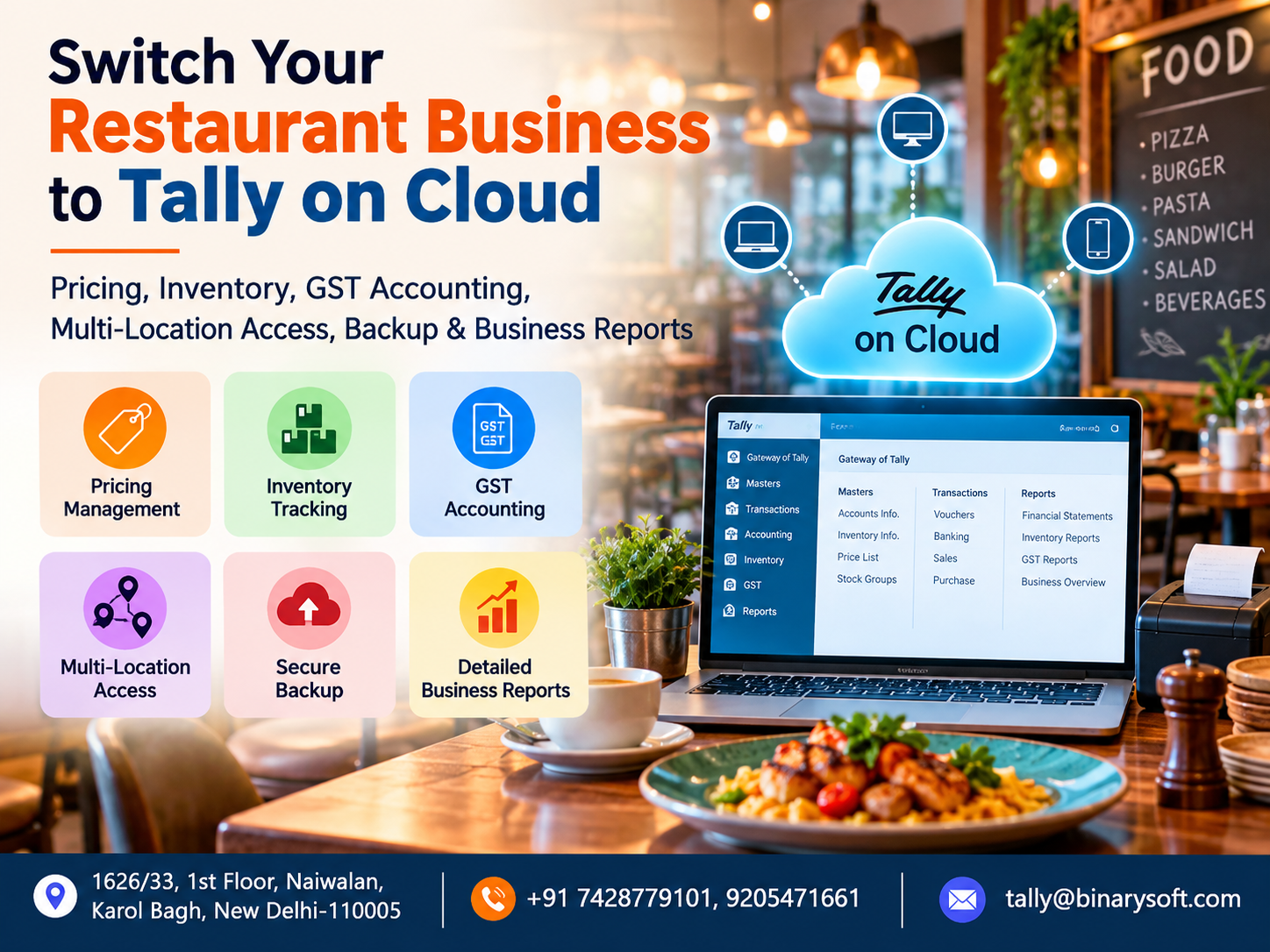
The application can also operate through suitable hosted environments, enabling authorized remote access.
However, cloud hosting does not automatically provide every capability of a comprehensive enterprise ERP.
Businesses should assess synchronization requirements, licensing, security, connectivity and reporting structures before selecting an architecture.
13. Step-by-Step Guide to Implementing Strategic ERP with TallyPrime
Step 1: Identify operational challenges
Review accounting delays, stock discrepancies, collection problems and reporting requirements.
Step 2: Define business objectives
Determine whether the primary goals are better financial visibility, faster billing, improved inventory control or expansion readiness.
Step 3: Organize master data
Clean customer, supplier, stock item and ledger information.
Step 4: Configure TallyPrime
Establish the company, accounting ledgers, inventory masters and applicable statutory settings.
Step 5: Set up workflows
Define procedures for purchases, sales, receipts, payments and stock movements.
Step 6: Introduce suitable integrations
Evaluate import and integration options where information must move between applications.
Step 7: Configure security
Assign appropriate user permissions and implement secure backup procedures.
Step 8: Train employees
Provide role-specific training to improve consistency.
Step 9: Test before full deployment
Verify opening balances, transaction entries, reports and reconciliation results.
Step 10: Review performance
Monitor data accuracy, reporting speed, inventory differences and collection efficiency.
14. Measuring the Return on ERP Investment
ERP investments should be evaluated against measurable improvements.
Important indicators include:
-
Time required to prepare monthly financial reports.
-
Inventory discrepancies identified during physical verification.
-
Customer outstanding collection periods.
-
Time spent on repetitive data entry.
-
Accuracy of purchase and sales records.
-
Cost of maintaining disconnected systems.
-
Ability to support additional transactions and locations.
For example, if a company reduces monthly reconciliation work from 50 hours to 20 hours, it saves 30 employee-hours.
The financial benefit depends on employee costs, implementation expenses and how the saved time is used.
Businesses should measure improvements over several months rather than expecting immediate returns.
15. Strategic ERP vs Traditional Business Management
|
Business requirement
|
Traditional disconnected processes
|
Strategic ERP approach
|
|---|
|
Accounting
|
Separate records and spreadsheets
|
Structured financial information
|
|
Inventory
|
Manual or inconsistent updates
|
Integrated stock records
|
|
Reporting
|
Time-consuming consolidation
|
Faster report preparation
|
|
Receivables
|
Manual follow-ups
|
Organized outstanding reports
|
|
Expansion
|
Repeated manual coordination
|
Standardized processes
|
|
Security
|
Inconsistent access practices
|
Configurable permissions
|
|
Decision-making
|
Delayed information
|
More timely business visibility
|
ERP effectiveness depends on implementation quality, employee training and accurate data entry.
16. Common ERP Implementation Mistakes Businesses Should Avoid
Choosing software without defining requirements: Businesses may invest in unnecessary functionality while overlooking essential workflows.
Migrating inaccurate data: Incorrect opening balances and duplicate masters can undermine reporting.
Insufficient employee training: Employees may continue using informal processes even after ERP implementation.
Ignoring reconciliation: Accounting and inventory reports should be checked against supporting records.
Weak security practices: Access permissions and backup procedures must be established before critical data is entrusted to the system.
Expecting software to solve every problem: ERP supports management decisions but cannot replace clear responsibilities, operational discipline or business judgment.
17. The Future of Scalable Business Management in India
Indian MSMEs are increasingly evaluating automation, digital payments, cloud infrastructure and data-driven reporting.
As organizations expand, the ability to maintain reliable financial and operational information will remain essential.
Businesses may also explore AI-assisted document processing, forecasting and analytical tools.
However, advanced technology should be introduced only after establishing accurate data and dependable procedures.
TallyPrime can provide a structured accounting and inventory foundation, while additional applications may support specialized operational requirements.
The most successful businesses will be those that combine practical technology with clear strategies and disciplined execution.
Conclusion: Strategic ERP Turns Business Growth into Sustainable Success
Business growth creates opportunities, but it also introduces complexity.
Without accurate accounting, reliable inventory information and organized financial processes, expansion can place unnecessary pressure on employees and management.
Strategic ERP helps businesses create consistent systems that support growth.
TallyPrime contributes through financial accounting, inventory management, GST-related processes, banking, receivable tracking and business reporting.
For Indian MSMEs, the right approach is to begin with genuine operational requirements, implement suitable functionality and improve processes continuously.
ERP should not simply help a business become bigger.
It should help the business become stronger, more efficient and better prepared for the future.
Powered by Binarysoft Technologies
Authorized Tally Partner
Location: 1626/33, 1st Floor, Naiwalan, Karol Bagh, New Delhi – 110005, INDIA
Contact us: +91 7428779101, 9205471661
Email us: tally@binarysoft.com (10:00 AM – 6:00 PM, Mon–Fri)