Introduction: Why Invoice and Purchase Order Management Matters More Than Ever
In 2026, Indian businesses are handling growing transaction volumes, digital payments, multiple suppliers and increasingly demanding customer expectations. Yet many small and medium enterprises still depend on spreadsheets, handwritten purchase registers and disconnected billing applications.
A business may receive hundreds of supplier invoices every month while simultaneously issuing sales invoices, tracking outstanding payments and coordinating warehouse deliveries. When these activities are managed separately, mistakes become more likely.
A missing purchase order can delay procurement. An incorrect invoice can create GST reconciliation problems. Duplicate supplier payments can reduce available working capital. Delayed customer collections can affect salaries and daily operating expenses.
These challenges demonstrate why invoice and purchase order management should be treated as essential business functions rather than routine paperwork.
Modern software helps businesses connect purchasing, inventory, billing, accounting and financial reporting through structured processes.
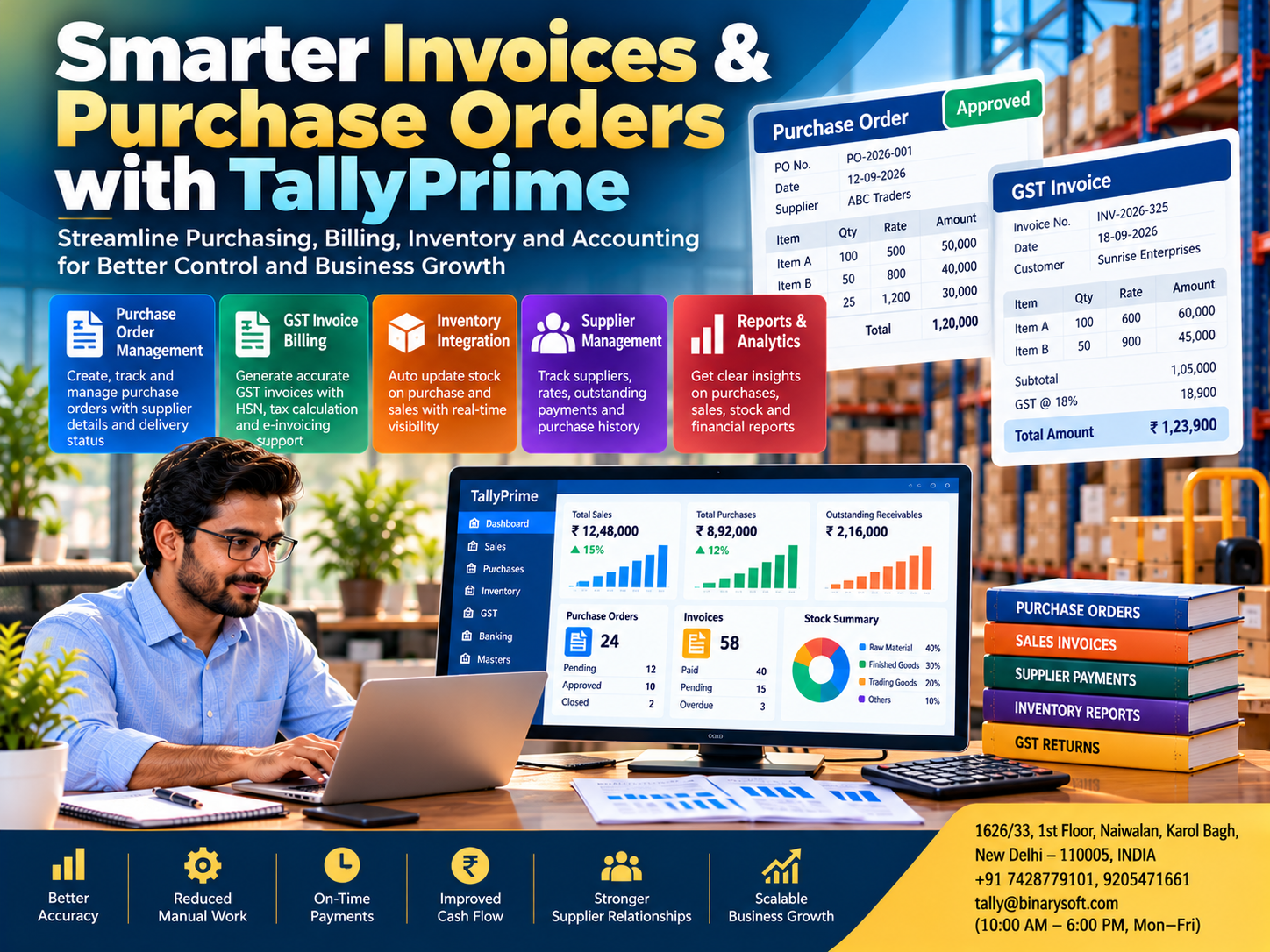
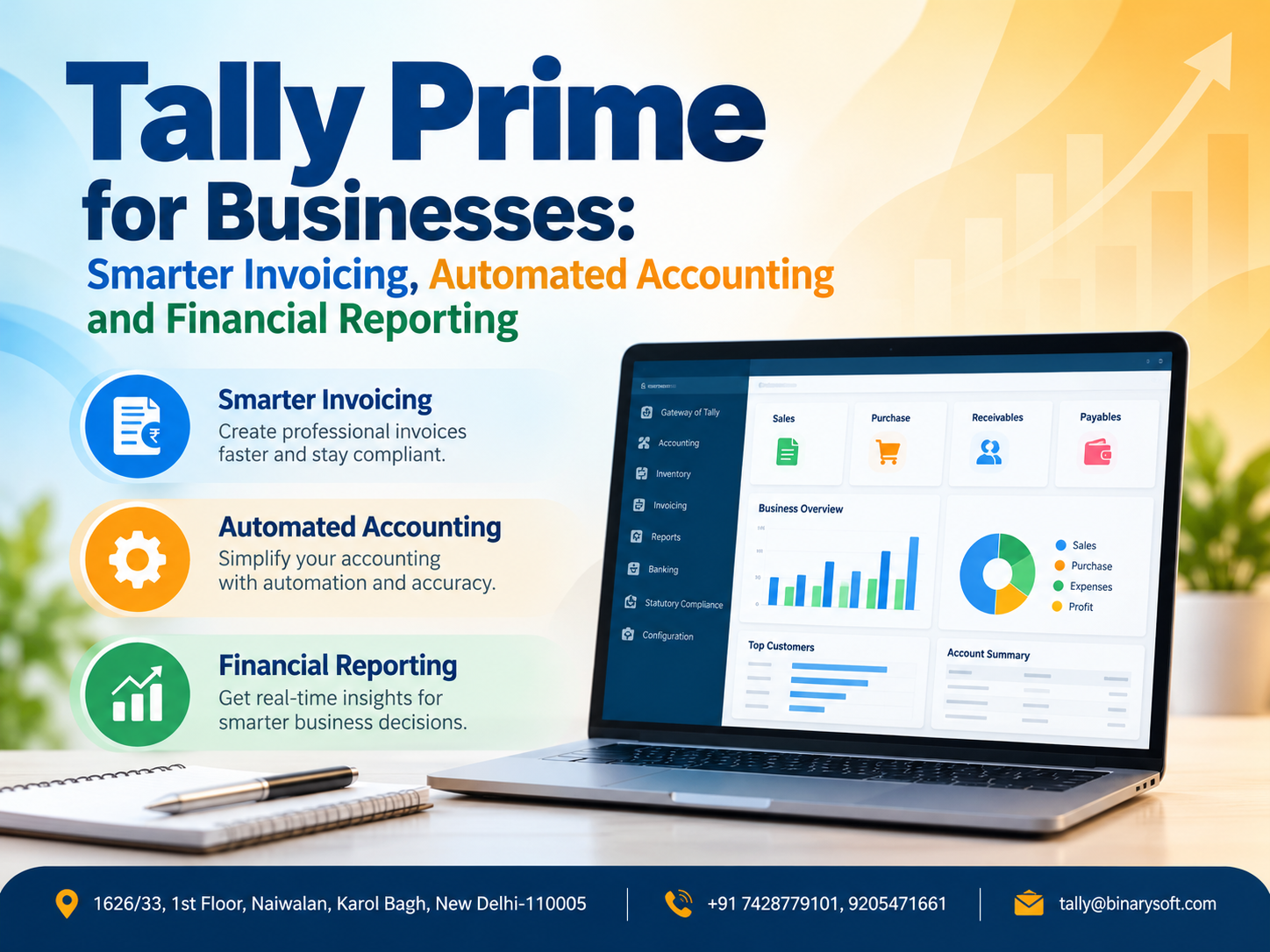
TallyPrime supports this approach with purchase orders, sales orders, invoicing, inventory vouchers, bill-wise accounting, GST-related functionality and financial reports.
For growing Indian businesses, the objective is simple: reduce administrative confusion, maintain accurate transactions and create a reliable foundation for profitable growth.
1. Understanding Invoice and Purchase Order Management
Invoices and purchase orders serve different purposes within a business transaction.
A purchase order (PO) is a document issued by a buyer to a supplier specifying the products or services required, quantities, agreed prices and other purchasing conditions.
An invoice is a document issued by a seller requesting payment for goods or services supplied.
A purchase order generally represents an authorized purchasing commitment, while an invoice records the amount billed by the supplier.
Example of a purchase transaction
A wholesale distributor needs 100 cartons of electrical accessories.
The purchasing department issues a purchase order containing the supplier name, item details, quantity, rate and expected delivery date.
When the goods arrive, the warehouse verifies the received quantity.
The supplier subsequently submits an invoice.
The accounts department compares the documents before recording the payable amount.
A structured process helps ensure that the business pays for goods or services that were properly ordered and received.
2. An Emotional Story: The Small Business Owner Who Nearly Missed His Employees' Salaries
At 9:45 PM, Rajiv was still sitting inside his wholesale office in Karol Bagh, New Delhi.
His employees had left hours earlier, but he remained surrounded by supplier invoices, payment receipts and purchase registers.
Rajiv had started his electrical goods business with a modest investment and a promise to his father that he would build a company known for honesty and dependable service.
Over fifteen years, the business had grown from a small shop into a wholesale operation supplying retailers across Delhi NCR.
But growth had introduced serious administrative problems.
Purchase orders were sometimes communicated through phone calls and messaging applications. Supplier invoices arrived by email, paper and PDF. Payments were recorded in separate spreadsheets.
One morning, Rajiv discovered that the accounts department had paid the same supplier invoice twice.
Meanwhile, another supplier had stopped dispatching goods because an earlier payment remained unsettled.
The business had sufficient sales, but available cash was becoming difficult to manage.
That evening, Rajiv's wife asked whether the company would be able to pay its employees before Diwali.
He remained silent.
He knew that several employees depended on those salaries to support their families.
Rajiv decided that the business needed more than additional staff. It needed organized financial procedures.
The company introduced structured purchase orders, supplier invoice verification and bill-wise accounting through TallyPrime.
Warehouse employees began confirming receipts against approved purchase orders. The accounts team established regular supplier reconciliation and payment reviews.
Gradually, duplicate entries became easier to identify, purchasing records improved and management gained clearer visibility into outstanding liabilities.
A few months later, Rajiv completed the monthly salary payments without the anxiety he had previously experienced.
He returned home and told his wife that the accounts were finally under control.
For him, the greatest achievement was not the software itself.
It was being able to protect the people who trusted his business.
This is an illustrative fictional story reflecting common challenges experienced by growing Indian enterprises.
3. Why Manual Invoice and Purchase Order Processes Become Inefficient
Small businesses often begin with basic invoicing methods.
As operations expand, the same methods may create unnecessary complexity.
Missing or duplicate invoices
Invoices received through different communication channels may be misplaced or entered more than once.
Unapproved purchases
Employees may place orders without checking budgets, inventory availability or management authorization.
Incorrect supplier balances
Delayed recording of purchase invoices can create differences between supplier statements and accounting records.
Inventory mismatches
Goods may arrive without corresponding purchase documentation, making stock verification difficult.
Payment delays
Accounts departments may struggle to identify which invoices are due, disputed or already settled.
Limited financial visibility
Management may not know the total value of pending orders, recorded liabilities or overdue customer invoices.
Digital tools can reduce these problems when combined with clear procedures and employee accountability.
4. Essential Features of Good Invoice Management Software
The best invoicing software should support the actual requirements of the business.
Professional invoice creation
Businesses should be able to prepare accurate invoices containing customer details, item descriptions, quantities, rates, taxes and payment terms.
GST-related functionality
For Indian businesses, relevant GST information, HSN or SAC classifications and applicable tax calculations are important.
Customer outstanding tracking
The software should help identify unpaid invoices and support collection planning.
Credit and debit notes
Businesses may need to record returns, price adjustments and other permitted corrections.
Invoice numbering and records
Consistent numbering and reliable transaction histories support internal control and audit preparation.
Reporting
Management should be able to review sales, receivables, tax information and customer transaction history.
TallyPrime provides these capabilities through its accounting and invoicing functions, subject to appropriate configuration.
5. Important Features of Purchase Order Management Software
Purchase order management focuses on controlling procurement activities before supplier invoices are processed.
A suitable system should support purchase order creation, supplier identification, item quantities, agreed rates and delivery requirements.
Businesses should also evaluate order status tracking, partial deliveries, purchase invoice matching and outstanding purchase commitments.
TallyPrime supports purchase order vouchers and related inventory workflows.
For example, a distributor can issue a purchase order for 500 units and subsequently record partial receipts.
Relevant order reports can help the business review outstanding quantities.
Advanced procurement functions such as multi-level electronic approvals, supplier bidding portals and complex contract management may require additional applications or customization.
6. How TallyPrime Simplifies Invoice and Purchase Order Management
TallyPrime connects several important business functions within one accounting and inventory environment.
Sales invoicing
Businesses can create sales vouchers containing customer, product, quantity, rate and tax information.
Purchase order recording
Purchase orders help maintain information about planned purchases and supplier commitments.
Purchase accounting
Supplier invoices can be recorded through purchase vouchers, creating the relevant financial and inventory effects.
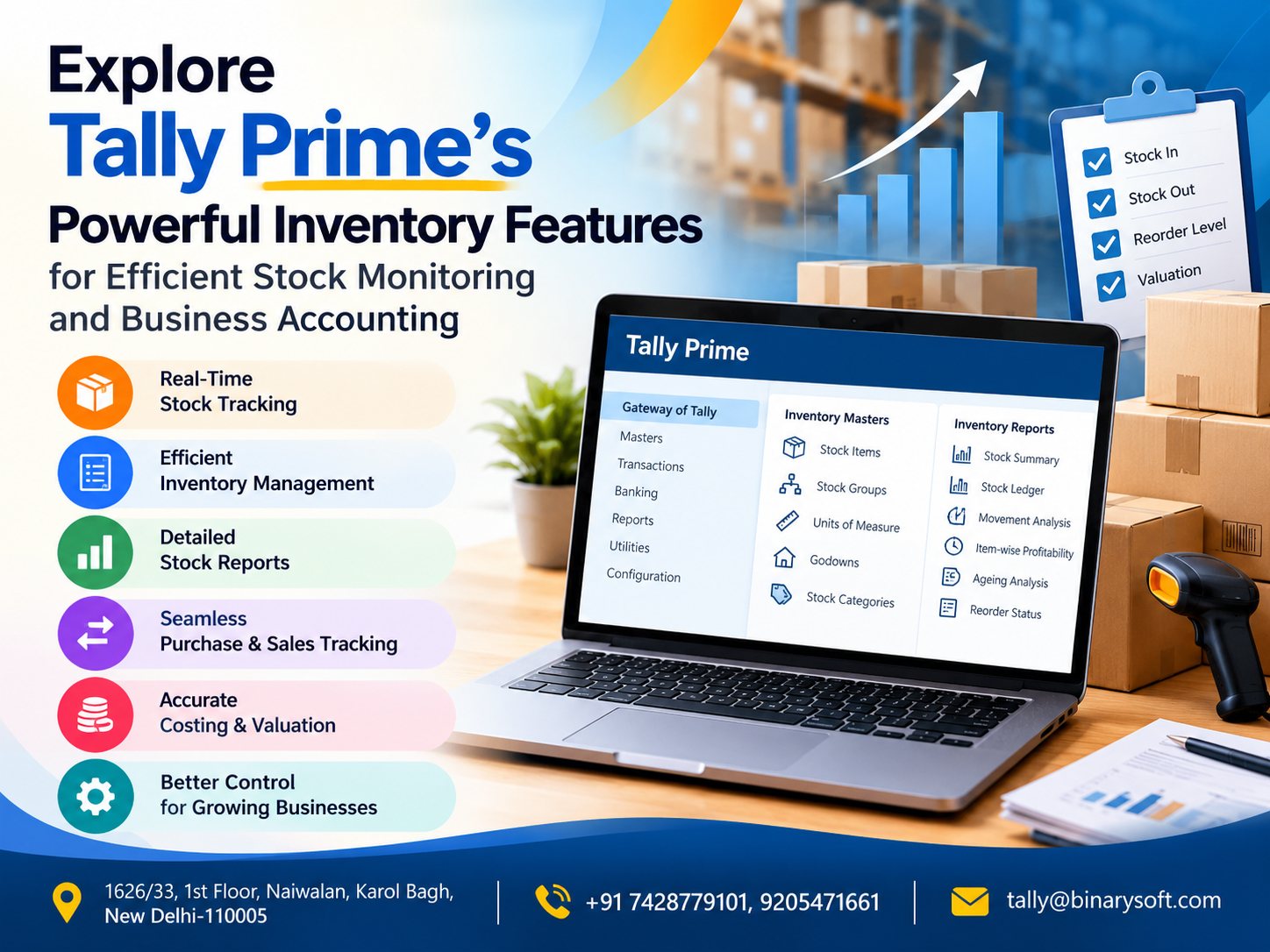
Inventory tracking
Stock items and godowns help businesses maintain records of quantities purchased, sold and transferred.
Outstanding management
Bill-wise accounting enables organizations to monitor unpaid customer and supplier balances.
Banking
Banking and reconciliation features support verification of payments and receipts.
Financial reporting
Management can review purchase registers, sales registers, outstanding balances and financial statements.
These functions reduce the need to maintain completely separate accounting and stock records.
7. Purchase Order to Payment: A Practical Workflow
An organized procurement process should connect the original purchase requirement with the eventual supplier payment.
PURCHASE-TO-PAY PROCESS
Step 2
Approved Purchase Order
Step 5
Document Verification
Each stage should have appropriate checks and authorization before the next stage is completed.
Step 1: Identify purchase requirements
The purchasing department determines the products and quantities required.
Step 2: Issue an authorized purchase order
An approved purchase order records the agreed supplier, quantity, rate and delivery conditions.
Step 3: Verify goods received
Warehouse employees compare delivered quantities with relevant purchase documentation.
Step 4: Record the supplier invoice
The accounts department records the invoice after appropriate verification.
Step 5: Match documents
The business compares the purchase order, receipt records and supplier invoice.
This is commonly called three-way matching.
TallyPrime provides relevant order, inventory and accounting records; a fully automated three-way matching and approval engine may require additional configuration or integration.
Step 6: Complete payment and reconciliation
The payment is recorded against the relevant supplier bill, and the bank transaction is reconciled.
This process helps prevent unauthorized purchases and incorrect payments.
8. How Purchase Order Management Improves Inventory Control
Purchasing decisions directly affect inventory investment.
If businesses order products without checking existing stock, they may accumulate unnecessary inventory.
On the other hand, delayed purchasing can result in stock shortages and lost customer orders.
Purchase order management helps businesses plan procurement using available inventory information.
For example, a distributor selling electrical accessories may review stock levels before placing a replenishment order.
TallyPrime supports stock summaries, godown-wise information and relevant order reports.
These reports can help management identify products requiring attention.
However, advanced automatic reorder optimization and demand forecasting may require additional tools or customization.
9. Case Study One: A Delhi Wholesale Trader Improves Invoice Accuracy
Illustrative case study based on common wholesale business challenges.
Business background
A wholesale electrical goods distributor operating in Bhagirath Palace, Delhi, supplied products to retailers and contractors.
The company handled numerous supplier purchases and customer invoices every month.
Challenges
Purchase orders were maintained in spreadsheets.
Warehouse employees recorded incoming stock separately, and supplier invoices were entered into accounting records later.
Management frequently experienced delays when verifying purchase quantities and supplier balances.
Implementation
The company introduced structured purchase order and purchase accounting procedures using TallyPrime.
Stock items and supplier ledgers were standardized.
Warehouse staff began verifying goods against relevant purchase orders, and the accounts department established a document-matching process before recording payments.
Illustrative outcomes
Purchase information became easier to trace.
Management gained clearer visibility into pending orders and recorded supplier liabilities.
The company also improved coordination between purchasing, warehouse and accounting teams.
Key learning
Reliable purchase order management helps wholesalers maintain better procurement discipline and reduce avoidable accounting discrepancies.
10. Case Study Two: A Manufacturing Company Streamlines Supplier Payments
Illustrative case study demonstrating procurement and accounting improvements.
Business background
A small manufacturing company in Faridabad purchased raw materials, packaging supplies and maintenance components from several vendors.
Challenges
Supplier invoices were received through multiple channels.
The accounts department struggled to identify which bills were due and which purchase orders had been partially fulfilled.
Duplicate invoice references occasionally required investigation.
Solution
The company introduced a standardized purchasing workflow using TallyPrime.
Purchase orders were recorded before procurement, and inventory receipts were verified against supplier documentation.
Bill-wise accounting was used to track payable balances.
Management also introduced regular supplier statement reconciliation.
Illustrative outcomes
The company developed more organized purchasing records and improved visibility into supplier obligations.
Accounts personnel could investigate outstanding invoices more efficiently.
Management gained better information for planning payment commitments.
Key learning
Connecting purchase orders, inventory receipts and supplier accounting improves financial discipline and operational coordination.
11. GST Invoice Management and Compliance in India
GST-related invoicing requires accurate transaction details and applicable tax treatment.
Businesses must consider supplier and customer GST information, HSN or SAC classifications, taxable values and relevant tax rates.
TallyPrime supports GST-related invoicing and accounting.
Illustrative GST invoice
Assume an intra-state sale of taxable goods worth ₹50,000, with an applicable GST rate of 18%.
|
Particulars
|
Amount
|
|---|
|
Taxable value
|
₹50,000
|
|
CGST at 9%
|
₹4,500
|
|
SGST at 9%
|
₹4,500
|
|
Invoice total
|
₹59,000
|
This example is for explanation only. Actual GST treatment depends on the product, place of supply and applicable rules.
Businesses should also assess whether e-invoicing and e-way bill requirements apply to their transactions.
TallyPrime can support relevant processes where available, but statutory applicability and filing accuracy remain the taxpayer's responsibility.
12. Managing Customer Outstanding Invoices and Cash Flow
Sales do not always result in immediate cash receipts.
Businesses offering credit terms must monitor unpaid invoices carefully.
For example, a distributor may generate monthly sales of ₹30 lakh but receive only ₹18 lakh during the same period.
The difference may create pressure when supplier payments and operating expenses become due.
TallyPrime provides bill-wise accounting and outstanding receivable reports.
Management can use these reports to identify overdue customer balances and plan collection activities.
A disciplined process should include accurate invoice references, agreed credit terms, regular customer reconciliation and professional follow-up procedures.
13. Supplier Payment Management and Purchase Accounting
Supplier payments should be based on verified obligations.
A business should know which invoices are recorded, which are disputed and which have already been paid.
TallyPrime supports supplier ledgers, bill-wise outstanding reports, payment vouchers and banking records.
These features help organizations maintain an organized view of payable amounts.
Businesses should also establish controls for vendor bank account changes and unusual payment requests.
A fraudulent payment instruction can cause financial loss even when the underlying accounting records are accurate.
14. Comparing Invoice and Purchase Order Management Tools
Different businesses require different levels of functionality.
|
Tool category
|
Main purpose
|
Suitable businesses
|
|---|
|
Spreadsheet software
|
Basic invoice and PO tracking
|
Very small operations
|
|
Dedicated invoicing software
|
Billing and customer payment tracking
|
Service providers and retailers
|
|
Procurement management software
|
Purchasing approvals and supplier coordination
|
Procurement-intensive businesses
|
|
Inventory management software
|
Stock movement and warehouse records
|
Traders and distributors
|
|
TallyPrime
|
Accounting, invoicing, orders, inventory and financial reporting
|
Many Indian MSMEs
|
|
Comprehensive ERP platforms
|
Wider departmental and enterprise workflows
|
Larger or more complex organizations
|
Businesses should select software based on transaction volume, integration requirements, compliance needs and implementation costs.
15. How to Implement Invoice and Purchase Order Management in TallyPrime
Step 1: Review current processes
Identify how purchase orders, supplier invoices, sales invoices and payments are currently handled.
Step 2: Organize master records
Create accurate customer ledgers, supplier ledgers, stock items and relevant units of measurement.
Step 3: Configure accounting and inventory features
Enable the required order processing, invoicing and inventory functions in TallyPrime.
Step 4: Establish purchase order procedures
Define who can request, review and authorize purchases.
Step 5: Standardize invoice recording
Ensure that invoices contain accurate transaction information and are entered consistently.
Step 6: Introduce verification controls
Compare purchase orders, goods receipts and supplier invoices before approving payments.
Step 7: Configure outstanding tracking
Use bill-wise accounting where appropriate to monitor customer and supplier balances.
Step 8: Train employees
Provide practical training to purchasing, warehouse, sales and accounting teams.
Step 9: Reconcile records
Review supplier statements, customer balances, stock quantities and bank transactions.
Step 10: Monitor improvements
Measure processing time, invoice errors, duplicate entries and payment delays.
16. Invoice and Purchase Order Automation: Opportunities and Limitations
Automation can help businesses reduce repetitive administrative work.
For example, approved transaction data may be imported from external systems using supported integration methods.
TallyPrime provides import, export and integration capabilities, including suitable Excel, XML and other supported workflows.
Custom integrations can be developed for specific requirements.
However, automation should not bypass necessary approvals or accounting verification.
Businesses must ensure that imported information is complete, correctly classified and free from duplicates.
17. Important Security Practices for Invoice and Purchase Management
Invoices and purchase orders contain commercially sensitive information.
Businesses should protect supplier details, customer information, pricing arrangements and payment records.
Important safeguards include restricted user access, secure backups, reliable authentication and verification of payment instructions.
TallyPrime supports configurable user permissions and security-related functionality.
These controls should be combined with secure devices, updated software and employee awareness.
18. How Better Invoice Management Supports Business Growth
Reliable invoice and purchase order processes contribute to long-term business development.
When purchasing information is accurate, businesses can plan procurement more confidently.
When supplier balances are organized, management can schedule payments more effectively.
When customer invoices are recorded consistently, collection follow-ups become easier.
And when accounting and inventory information is connected, management can make decisions using more reliable records.
The greatest benefit is not simply faster paperwork.
It is improved control over the business.
Conclusion: Build a More Organized Business with Smarter Invoice and Purchase Order Management
Invoices and purchase orders are essential components of business operations.
Poorly managed documents can create stock discrepancies, payment delays, GST-related errors and financial uncertainty.
Modern digital tools help businesses organize these processes and improve coordination between departments.
TallyPrime provides useful capabilities for invoicing, purchase orders, inventory accounting, supplier payments, customer outstanding balances and financial reporting.
However, successful implementation requires more than software installation.
Businesses must establish approval procedures, verify transactions, train employees and reconcile records regularly.
For Indian MSMEs planning sustainable growth, accurate invoice and purchase order management can become an important foundation for financial stability and operational efficiency.
Powered by Binarysoft Technologies
Authorized Tally Partner
Location: 1626/33, 1st Floor, Naiwalan, Karol Bagh, New Delhi – 110005, INDIA
Contact us: +91 7428779101, 9205471661
Email us: tally@binarysoft.com (10:00 AM – 6:00 PM, Mon–Fri)