Call CA Tally HelpDesk
+91 9205471661,
7428779101

Running a successful business requires more than increasing sales. Every invoice, payment, expense, and financial transaction must be recorded accurately to protect profitability and maintain customer trust.
In 2026, Indian businesses face growing expectations for faster billing, GST compliance, timely collections, and reliable financial reporting. Even a small invoicing mistake can create payment disputes, affect cash flow, or increase accounting workloads.
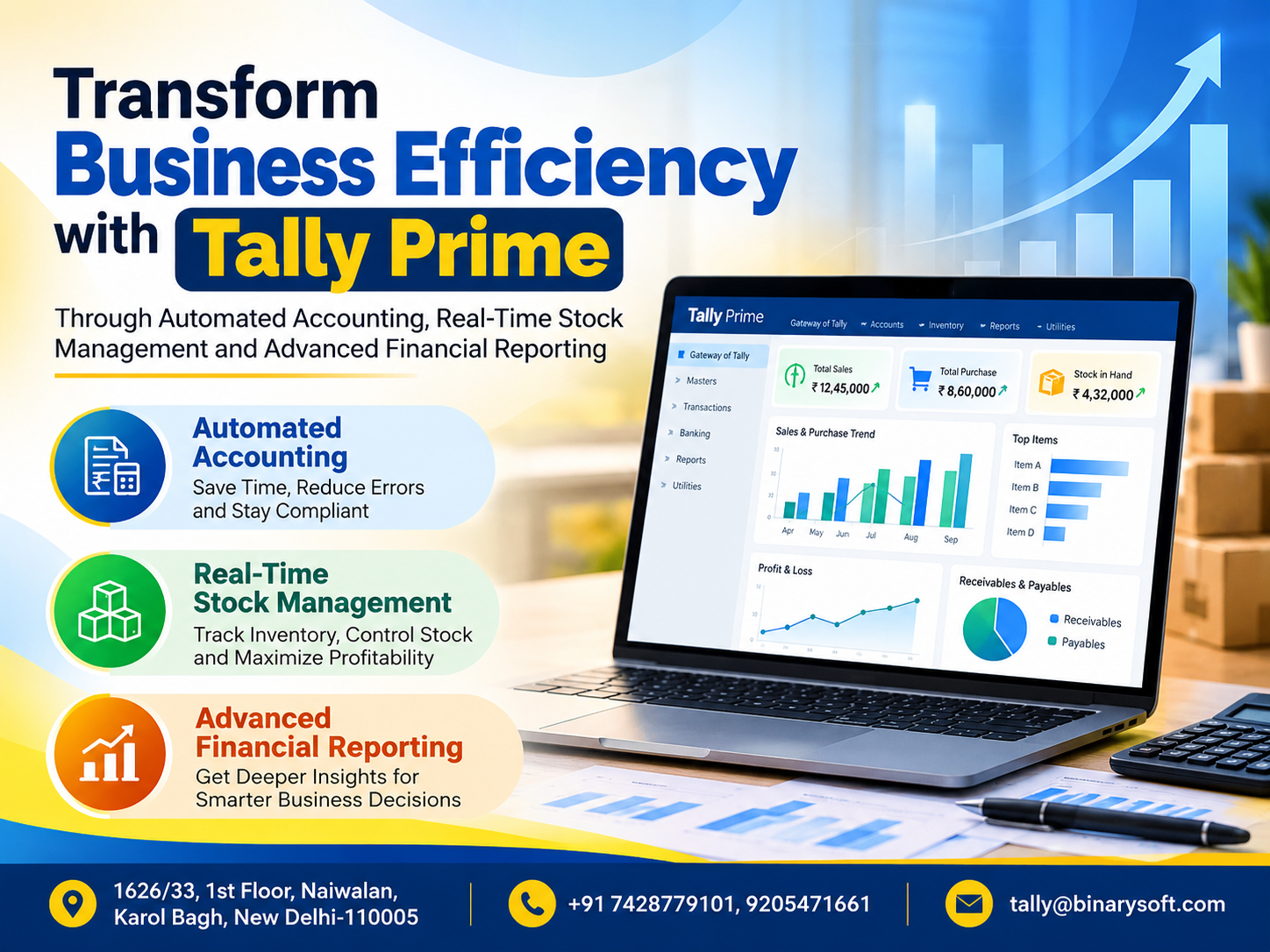
Tally Prime helps businesses overcome these challenges by bringing billing, accounting, inventory, taxation, and financial reporting into one integrated system.
From generating professional invoices to monitoring outstanding payments and reviewing profitability, Tally Prime enables business owners to maintain better control over daily operations.
Whether you manage a retail shop, wholesale distribution business, manufacturing unit, or service company, accurate accounting can transform the way you make financial decisions.
The real advantage is not simply faster billing. It is having confidence that every transaction contributes to a clearer picture of your business.
A Business Owner's Story: When One Billing Mistake Threatened Years of Hard Work
Rajesh operated a successful electrical goods distribution business in Delhi.
For nearly fifteen years, he had built strong relationships with retailers, contractors, and suppliers. His business was growing, but his accounting processes had not kept pace.
His staff prepared invoices manually, maintained inventory in spreadsheets, and recorded customer payments separately.
During a particularly busy month, a large customer received an invoice containing incorrect quantities and pricing.
The difference was approximately ₹48,000.
The customer disputed the invoice and delayed payment until the issue could be resolved.
Meanwhile, Rajesh needed money to pay suppliers, employee salaries, and warehouse expenses.
What appeared to be a simple billing mistake quickly became a serious cash flow problem.
One evening, while reviewing unpaid invoices, Rajesh realized something troubling.
He knew how much his business was selling, but he could not confidently determine how much money was actually available.
His accountant recommended implementing Tally Prime.
The business began recording sales invoices, inventory movements, receipts, and expenses within one accounting system.
Gradually, invoice discrepancies reduced, outstanding balances became easier to track, and financial reports became available without waiting for manual spreadsheet updates.
Rajesh could now review customer dues before approving additional credit sales.
Most importantly, he regained confidence in his business decisions.
This illustrative story reflects a challenge faced by many growing businesses: sales growth alone cannot guarantee financial stability without accurate billing and disciplined accounting.
1. Understanding Billing Accuracy and Financial Control
Billing accuracy means ensuring that every invoice contains correct information, including customer details, product descriptions, quantities, prices, discounts, taxes, and payment terms.
Financial control involves monitoring how money enters, moves through, and leaves a business.
Both are closely connected.
An incorrect invoice may lead to delayed collections, inaccurate tax calculations, customer dissatisfaction, and misleading financial reports.
Similarly, poorly maintained accounting records can make it difficult to identify outstanding receivables, unnecessary expenses, or declining profitability.
Tally Prime helps connect these activities through an integrated accounting environment.
When transactions are recorded correctly, businesses can maintain consistency between invoices, ledgers, inventory records, and financial statements.
This reduces repetitive work and improves visibility across departments.
2. How Tally Prime Improves Billing Accuracy
Professional Invoice Generation
Tally Prime allows businesses to create structured sales invoices containing essential transaction details.
Invoices can include:
-
Customer and billing information
-
Product or service descriptions
-
Quantities and units of measurement
-
Selling prices and applicable discounts
-
GST details and tax amounts
-
Payment terms and references
-
Additional invoice information
Businesses can configure invoice formats according to their operational requirements.
Standardized invoice preparation reduces the likelihood of missing information and improves consistency.
Automatic Calculation of Invoice Values
Manual billing often involves repeated calculations.
Employees may need to calculate item totals, discounts, taxable values, and GST amounts.
Tally Prime performs calculations based on the transaction details and configured tax settings.
For example, consider a business selling goods worth ₹50,000 with an applicable GST rate of 18%.
The invoice calculation would be:
Taxable Value: ₹50,000
GST at 18%: ₹9,000
Total Invoice Value: ₹59,000
When the correct tax classification and settings are applied, Tally Prime calculates the invoice values automatically.
This reduces calculation errors and saves time.
Consistent Accounting Entries
One major benefit of integrated billing is that sales transactions can update the relevant accounting records.
Instead of preparing an invoice and then separately entering the transaction into another accounting system, businesses can record the transaction through a connected workflow.
This improves ledger consistency and reduces duplicate data entry.
3. Integrated Accounting for Better Financial Management
Tally Prime supports double-entry accounting, helping businesses maintain systematic financial records.
Sales, purchases, receipts, payments, expenses, and other transactions can be recorded using appropriate vouchers.
These entries contribute to financial statements and business reports.
General Ledger Management
Ledgers help organize financial transactions under relevant accounts.
Businesses can maintain separate ledgers for customers, suppliers, banks, expenses, income, and taxes.
This makes it easier to review account balances and transaction histories.
Accounts Receivable Management
Outstanding customer payments can create serious financial pressure.
Tally Prime provides receivables reports that help businesses identify unpaid invoices and review outstanding amounts.
Businesses can use these reports to prioritize payment follow-ups and evaluate customer credit exposure.
Accounts Payable Management
Supplier payments are equally important.
Tally Prime helps businesses monitor outstanding purchase bills and payment obligations.
This supports better planning and reduces the risk of overlooking important supplier dues.
Expense Tracking
Expenses such as rent, electricity, salaries, transportation, and office maintenance affect profitability.
Recording these transactions under appropriate ledgers allows businesses to understand where money is being spent.
Regular expense analysis can reveal opportunities to improve operational efficiency.
4. GST Billing and Tax Management with Tally Prime
GST compliance is an important part of financial management for Indian businesses.
Incorrect GST calculations or incomplete invoice information can create reconciliation difficulties and additional compliance work.
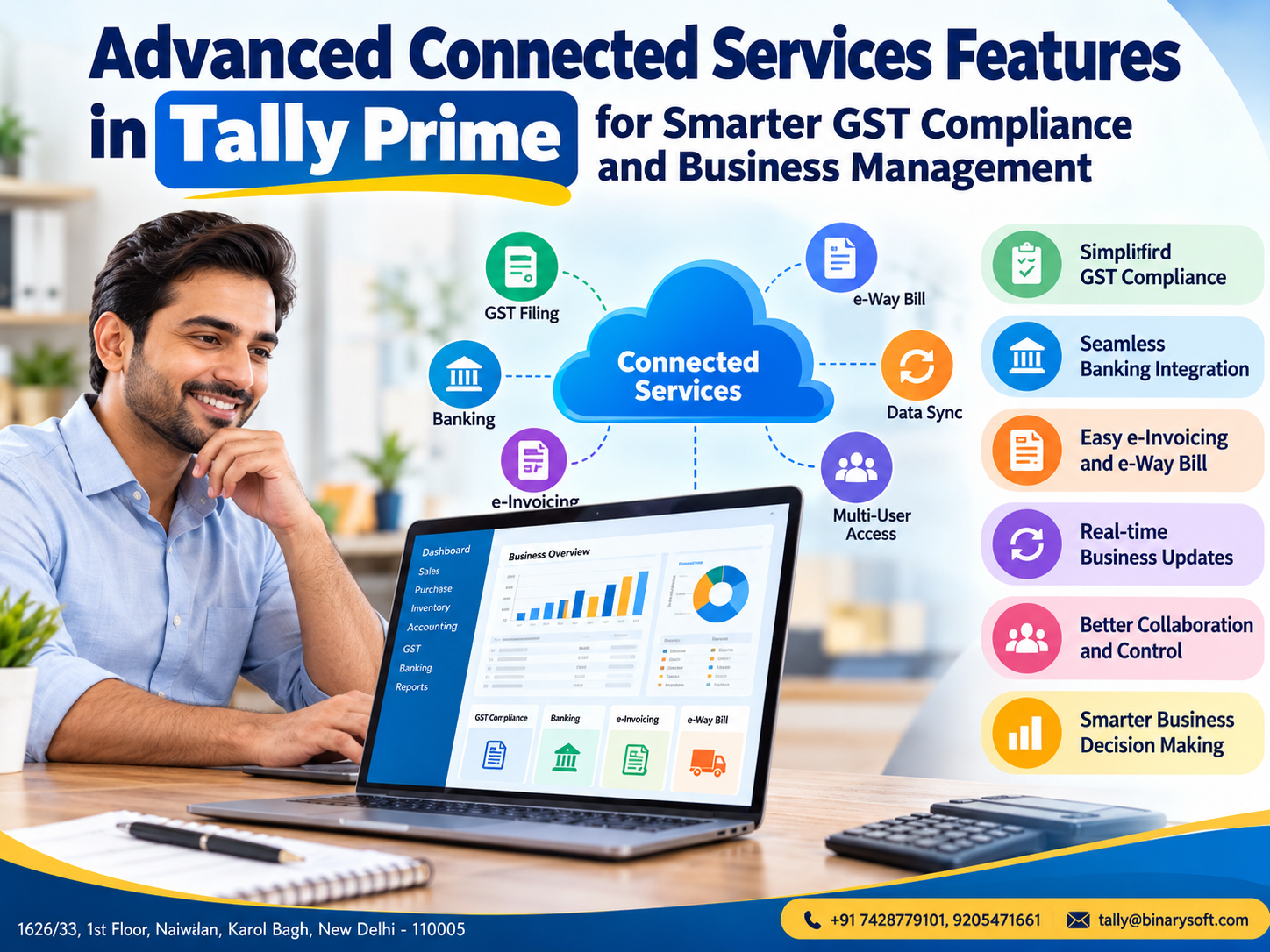
Tally Prime supports GST-related accounting and reporting activities.
Businesses can configure relevant GST details, tax rates, and classifications.
Depending on the transaction and applicable requirements, GST invoices may involve CGST, SGST, IGST, or other relevant tax components.
GST-Ready Invoice Preparation
Businesses can generate invoices containing applicable GST information.
Correctly configured tax settings help ensure consistent calculations across transactions.
GST Reports
Tally Prime provides GST-related reports that help businesses review transaction data before preparing returns.
These reports can assist in identifying discrepancies and validating accounting information.
GST Reconciliation
Where supported by the installed release and configured connected services, businesses can compare accounting records with available GST data.
This helps identify differences requiring investigation.
However, automated accounting does not eliminate the need to verify tax classifications, invoice details, eligibility conditions, and applicable compliance requirements.
Accurate GST accounting begins with correct transaction entry and regular review.
5. Inventory and Billing Integration
For businesses dealing in physical products, inventory accuracy is essential.
A business may generate substantial sales but still experience losses due to incorrect stock records.
Tally Prime integrates inventory management with billing activities.
When inventory-linked sales transactions are recorded, stock quantities can be updated according to the configured inventory system.
This helps businesses monitor product availability and movement.
Key Inventory Capabilities
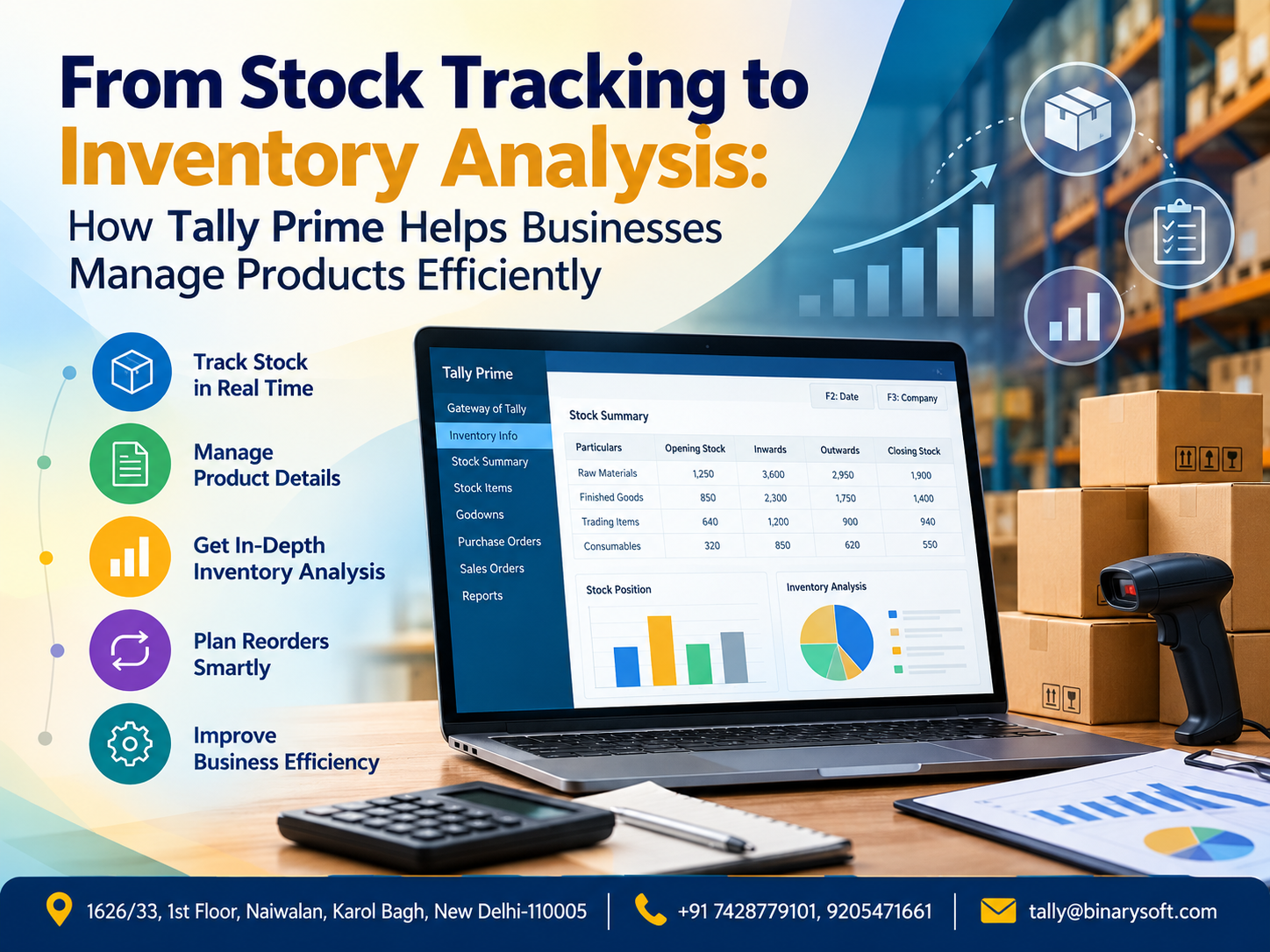
Businesses can maintain stock items, stock groups, units of measurement, godowns, and inventory vouchers.
Depending on configuration, they can also track batches, expiry dates, and other inventory details.
Inventory reports help businesses identify slow-moving products, fast-selling items, and stock valuation information.
For wholesalers and distributors, this integration reduces the need to reconcile separate billing and inventory spreadsheets.
6. Stronger Cash Flow Control Through Accurate Accounting
Cash flow determines whether a business can meet its daily financial obligations.
A profitable business can still experience financial difficulties when customers delay payments.
Tally Prime provides accounting reports that help business owners understand cash and bank balances, receivables, payables, and other financial commitments.
Monitoring Customer Outstanding Amounts
Businesses can review pending customer balances and identify invoices requiring follow-up.
Reviewing Bank Transactions
Bank reconciliation helps compare recorded accounting transactions with bank statement information.
Depending on the release and banking facilities available, supported import and reconciliation workflows can reduce manual effort.
Planning Payments
By reviewing supplier outstanding reports and available funds, businesses can make more informed payment decisions.
These capabilities support better cash flow discipline, although cash forecasting and payment decisions still require business judgment.
7. Case Study One: Wholesale Distributor Reduces Billing Errors
Business Background
A wholesale stationery distributor handled approximately 600 invoices every month.
The company supplied products to retailers, schools, and corporate customers.
Its billing and accounting processes relied heavily on spreadsheets and manual verification.
Challenges
The business experienced incorrect product rates, duplicate entries, mismatched customer balances, and delayed payment follow-ups.
The accounting team spent considerable time reconciling invoices with sales records.
Tally Prime Implementation
The distributor introduced Tally Prime for sales invoicing, customer ledger management, inventory tracking, and outstanding reporting.
Product masters were standardized, customer ledgers were reviewed, and staff received training on transaction entry.
Illustrative Results
After three months, the company measured the following operational improvements:
| Performance Indicator | Before | After |
|---|
| Average invoice preparation time |
8 minutes |
3 minutes |
| Monthly invoices requiring correction |
30 |
8 |
| Customer outstanding review |
Weekly manual process |
Daily report |
| Inventory reconciliation |
Separate spreadsheets |
Integrated records |
| Monthly accounting review |
4 days |
2 days |
These figures represent an illustrative implementation scenario, not independently verified customer results.
Business Impact
The distributor improved billing consistency and reduced repetitive accounting work.
Management also gained faster access to customer balances and inventory information.
The biggest improvement was greater confidence in daily transaction records.
8. Case Study Two: Manufacturing Company Improves Financial Visibility
Business Background
A small manufacturing company produced packaging materials for local businesses.
It purchased raw materials, managed production activities, and supplied finished goods on credit.
Despite increasing sales, the owner struggled to understand monthly profitability.
Challenges
The company maintained purchasing records, production information, sales invoices, and expenses across different files.
This created difficulties in monitoring material consumption, outstanding customer payments, and operational costs.
Tally Prime Implementation
The business introduced structured accounting and inventory workflows.
Raw materials and finished products were organized using appropriate stock classifications.
Purchase and sales transactions were recorded systematically.
Expense ledgers were standardized, and management began reviewing financial reports regularly.
Illustrative Results
Within six months, the company experienced improved record accuracy and faster reporting.
Monthly financial review time reduced from approximately five days to two days.
Customer outstanding information became easier to access.
The company also improved its ability to compare material purchases, stock movements, and operating expenses.
Business Impact
Management could make purchasing and pricing decisions using more reliable financial information.
The owner no longer depended entirely on manually prepared spreadsheets to understand business performance.
This example demonstrates how integrated accounting can improve financial visibility when supported by disciplined data entry and regular reconciliation.
9. Step-by-Step Guide: How to Use Tally Prime for Accurate Billing
Businesses can begin improving billing accuracy by following a structured implementation process.
Step 1: Create or Configure Your Company
Open Tally Prime and create a company or select an existing company.
Enter the appropriate company details, financial year, books beginning date, and other relevant information.
Enable the accounting and inventory features required for the business.
Step 2: Configure GST Information
Where applicable, enable GST features and enter the company's registration details.
Review relevant tax classifications and configurations.
Ensure the settings match the nature of business transactions.
Step 3: Create Customer and Supplier Ledgers
Create ledgers for customers and suppliers under the appropriate groups.
Enter opening balances carefully when migrating existing accounting data.
Configure bill-wise tracking where required.
Step 4: Create Stock Items
For inventory-based businesses, create stock items with suitable names, units, classifications, and tax details.
Maintain consistent product descriptions to reduce billing confusion.
Step 5: Record a Sales Invoice
Navigate to the sales voucher using the relevant menu or voucher shortcut.
Select the customer ledger.
Choose the products or services being billed.
Enter quantities, rates, discounts, and other applicable details.
Review the tax calculations and invoice total.
Save the transaction after verification.
Step 6: Record Customer Receipts
When payment is received, record the receipt using the appropriate voucher.
Allocate the payment against the relevant outstanding invoice where bill-wise tracking is enabled.
This helps maintain accurate customer balances.
Step 7: Review Financial Reports
Regularly examine sales registers, outstanding reports, cash and bank balances, and financial statements.
Investigate unusual balances or discrepancies promptly.
A consistent review process is essential for maintaining accurate records.
10. Financial Reports That Support Better Business Decisions
Tally Prime provides financial reports that help business owners evaluate performance.
Profit and Loss Account
The Profit and Loss Account summarizes income and expenses for a selected period.
It helps management understand profitability and identify significant expense categories.
Balance Sheet
The Balance Sheet presents the financial position of the business through assets, liabilities, and capital.
It supports assessment of financial stability.
Cash Flow Statement
Cash flow reporting helps businesses review cash movements and understand liquidity.
Trial Balance
The Trial Balance summarizes ledger balances and assists in reviewing accounting records.
Sales and Purchase Registers
These reports provide transaction-level information about sales and purchasing activities.
Together, these reports help businesses move from reactive accounting to more informed financial management.
11. Benefits of Tally Prime for Different Business Sectors
Retail Businesses
Retailers can use Tally Prime for sales billing, stock management, purchase recording, and financial reporting.
Wholesale Distributors
Distributors benefit from customer-wise outstanding tracking, inventory management, and structured invoicing.
Manufacturing Companies
Manufacturers can use appropriate inventory and accounting features to monitor materials, production-related transactions, and expenses.
Service Providers
Consultants, agencies, and professional service businesses can manage service invoices, receipts, expenses, and customer balances.
Growing Enterprises
Businesses handling larger transaction volumes can benefit from standardized accounting procedures, user access controls, and regular financial reporting.
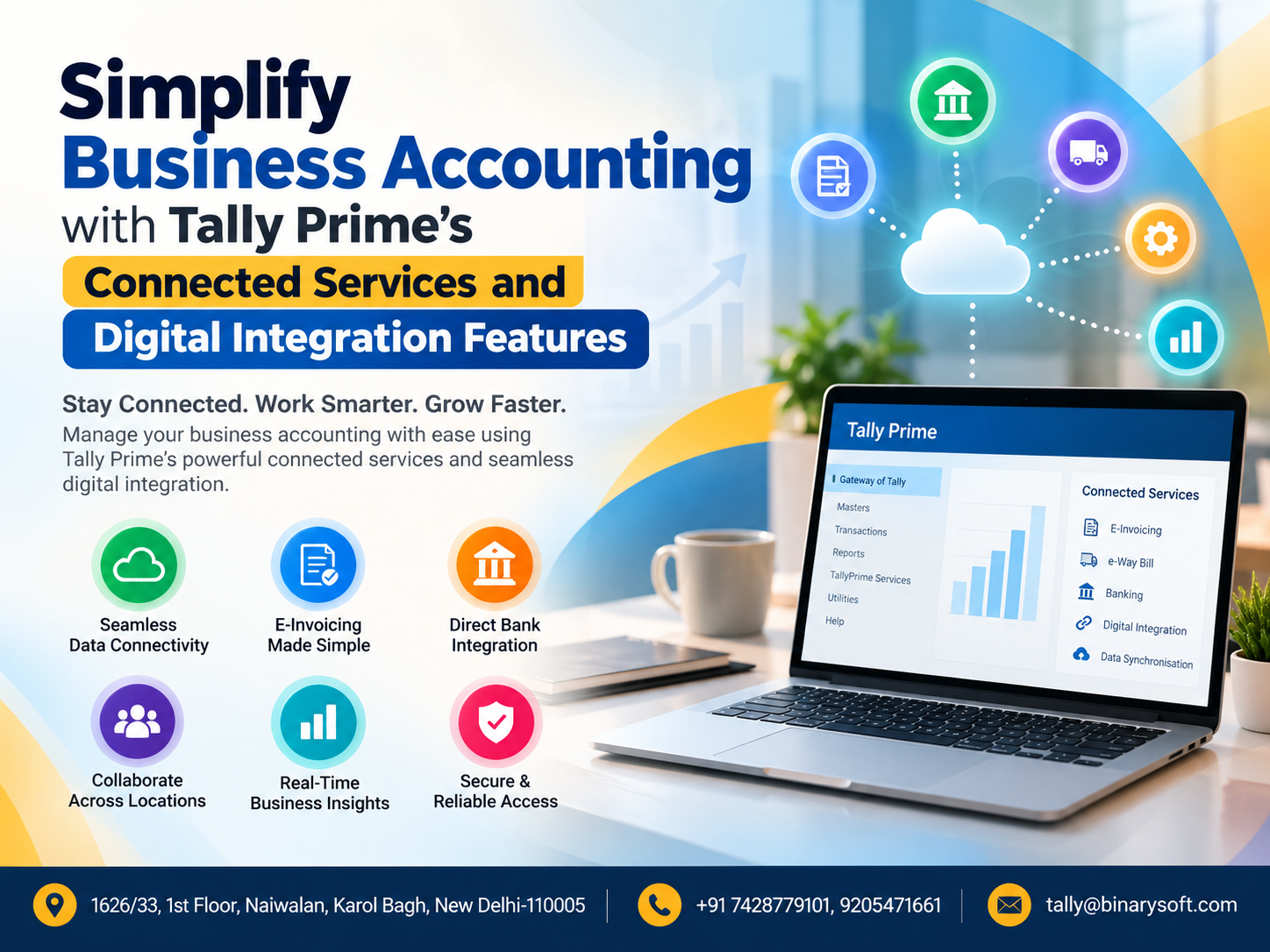
12. Tally Prime on Cloud: Greater Flexibility for Modern Businesses
Many businesses operate from multiple offices or require authorized employees to access accounting systems from different locations.
A properly configured Tally Prime cloud-hosting environment can provide remote access to the accounting application.
This can help business owners review accounts while travelling and enable distributed teams to work through a centrally managed environment.
Potential benefits include centralized application access, reduced dependence on a single office computer, and easier coordination between authorized users.
Cloud deployment must be planned carefully.
Performance, simultaneous-user access, backups, licensing, security, and availability depend on the selected hosting infrastructure and configuration.
Businesses should implement strong passwords, suitable access permissions, secure connections, and tested backup procedures.
Cloud hosting can improve accessibility, but accounting accuracy still depends on proper processes and responsible data management.
13. Best Practices for Maintaining Billing Accuracy
Businesses should establish consistent accounting procedures rather than relying entirely on software automation.
Important practices include:
-
Maintain accurate customer and supplier masters.
-
Review GST classifications and tax settings regularly.
-
Standardize product names and units of measurement.
-
Verify invoice quantities, rates, and discounts.
-
Use appropriate user permissions and approval processes.
-
Reconcile bank accounts and customer balances regularly.
-
Review outstanding invoices and payment allocations.
-
Maintain reliable backups and test restoration procedures.
-
Train employees on correct voucher entry.
-
Review financial reports before making major decisions.
These practices help reduce errors and strengthen financial control.
14. Why Businesses Should Prioritize Accounting Automation in 2026
Business owners increasingly need timely access to reliable financial information.
Manual accounting systems can become difficult to manage as transaction volumes grow.
Integrated accounting software helps reduce repeated data entry and improves consistency between business records.
Tally Prime supports this transition by combining important accounting functions within a single environment.
However, automation should be treated as a tool for improving processes rather than replacing professional review.
Businesses still need appropriate internal controls, accurate source documents, and regular reconciliation.
The strongest results come when reliable software is combined with well-trained employees and clearly defined accounting responsibilities.
Conclusion: Accurate Billing Creates the Foundation for Financial Growth
Every successful business depends on accurate financial information.
Incorrect invoices, delayed payment tracking, inconsistent inventory records, and incomplete accounting reports can gradually weaken profitability.
Tally Prime helps businesses address these challenges through integrated invoicing, accounting, inventory management, GST-related features, and financial reporting.
By standardizing daily transactions and regularly reviewing financial information, business owners can reduce avoidable errors and improve operational control.
The benefits extend beyond accounting efficiency.
Accurate records support customer trust, better cash flow decisions, improved expense visibility, and more confident business planning.
For organizations looking to modernize their accounting operations in 2026, Tally Prime offers a practical foundation for building more disciplined financial processes.
The ultimate objective is not merely to create invoices faster.
It is to build a business where every transaction is reliable, every payment is traceable, and every financial decision is supported by meaningful information.
Get Professional Tally Prime Assistance from Binarysoft Technologies
Businesses planning to implement Tally Prime, improve accounting workflows, or explore cloud-hosted accounting solutions can seek professional assistance for configuration, training, and ongoing support.
Powered by Binarysoft Technologies
Authorized Tally Partner
Location:
1626/33, 1st Floor, Naiwalan, Karol Bagh, New Delhi – 110005, INDIA
Contact Us:
+91 7428779101, 9205471661
Email Us:
tally@binarysoft.com
Business Hours:
10:00 AM – 6:00 PM, Monday to Friday
Frequently Asked Questions
How does Tally Prime improve billing accuracy?
Tally Prime improves billing accuracy through structured invoice entry, automatic calculations based on configured settings, standardized item details, and integration with accounting records.
Can Tally Prime automatically calculate GST on invoices?
Yes. Tally Prime can calculate applicable GST amounts based on correctly configured tax settings, transaction details, and classifications.
Is Tally Prime suitable for small businesses?
Yes. Tally Prime supports accounting and billing requirements for many small businesses, including retailers, wholesalers, service providers, and manufacturers.
Can Tally Prime track outstanding customer payments?
Yes. Businesses can maintain bill-wise receivables and review outstanding reports to identify unpaid customer invoices.
CA. Naksh Bafna works on bookkeeping, financial controls, and taxation for small and growing enterprises. His focus is on making accounting processes systematic, understandable, and easier to manage throughout the financial year.