Call CA Tally HelpDesk
+91 9205471661,
7428779101
Why Businesses Need Smarter Billing Automation
Every business depends on accurate billing and reliable financial records. Whether you operate a retail shop, wholesale distribution company, manufacturing unit or professional services organisation, invoicing plays an important role in daily operations.
However, traditional billing methods often involve repetitive data entry, manual tax calculations, invoice corrections and time-consuming reconciliation.
As transaction volumes increase, these activities become difficult to manage.
A small billing mistake can create customer disputes, delay payments and affect financial reporting. Repeated errors may also damage customer relationships and increase administrative expenses.
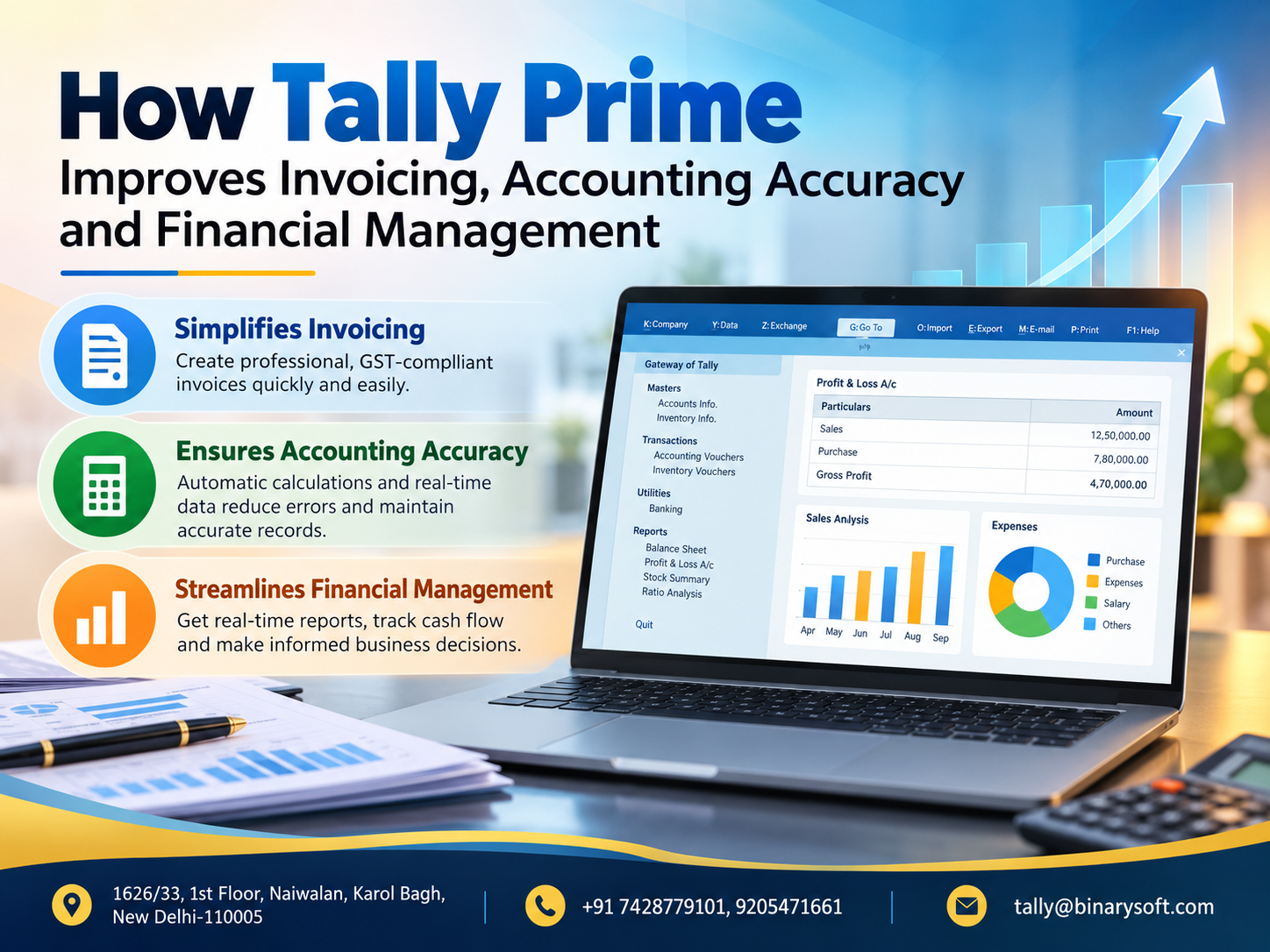
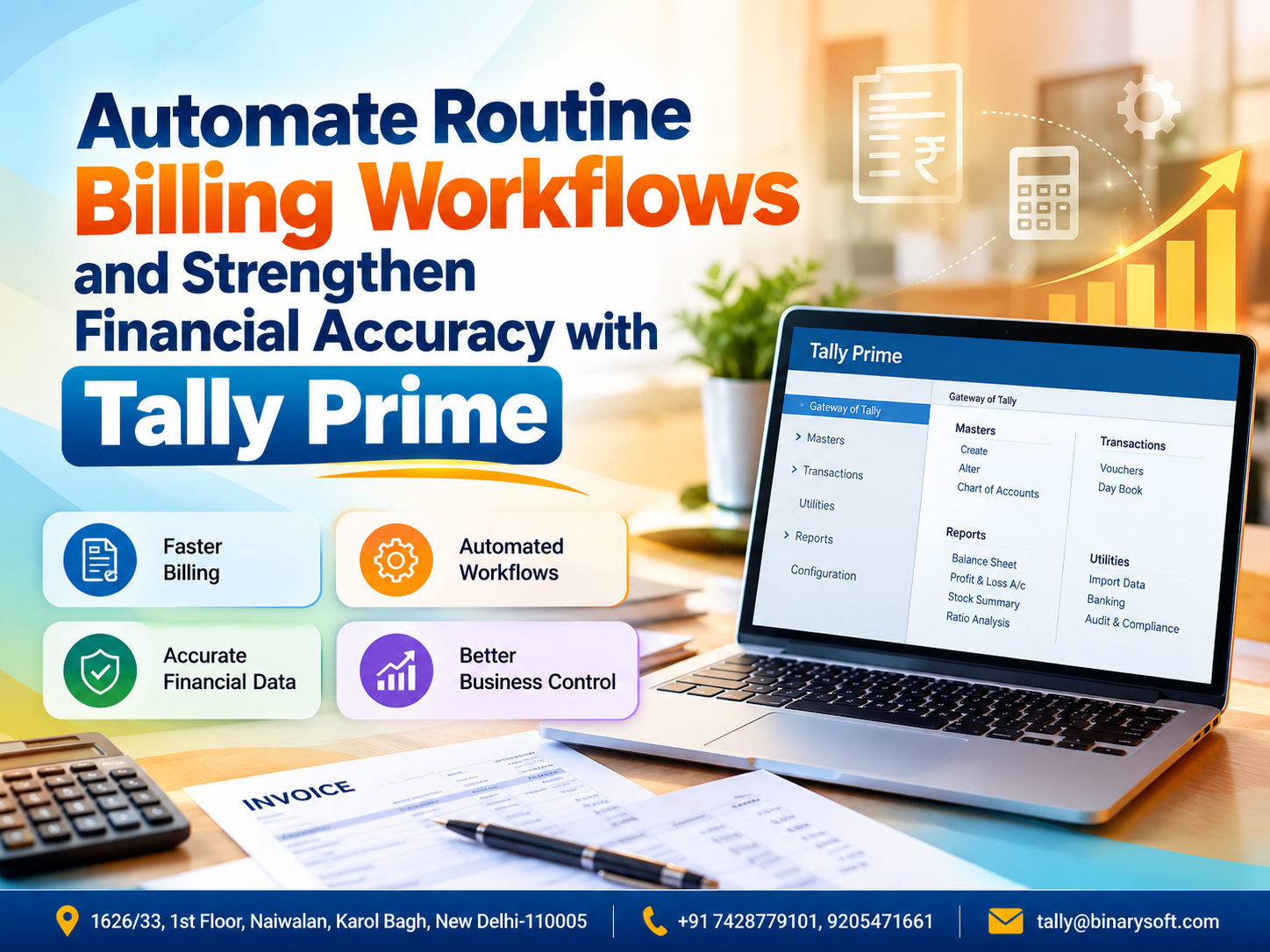
Tally Prime helps businesses streamline routine billing workflows through integrated invoicing, accounting automation, GST calculations, inventory management and financial reporting.
Instead of maintaining separate records for sales, customer balances, inventory and taxation, businesses can manage these activities within a connected accounting environment.
With properly configured features, Tally Prime can reduce repetitive accounting work, improve transaction consistency and help employees focus on more valuable business activities.
This article explores how businesses can use Tally Prime to simplify billing, improve financial accuracy and support sustainable growth.
1. A Business Owner's Story: When One Billing Mistake Changed Everything
The Invoice That Almost Cost a Family Business Its Biggest Customer
For nearly eighteen years, Sandeep Arora had operated a successful electrical equipment distribution business in Delhi.
He started with a small shop, limited capital and a dream of building a financially secure future for his family.
Through dedication and strong customer relationships, his business gradually expanded.
He began supplying electrical products to contractors, retailers and construction companies.
As orders increased, his accounts team struggled to manage the growing volume of invoices.
Most billing activities involved manually entering product details, checking prices, calculating GST and updating customer records.
One afternoon, Sandeep received an angry telephone call from one of his largest customers.
The customer had received an invoice containing incorrect quantities and tax calculations.
The difference was substantial enough to delay payment approval.
Worse, the customer questioned whether previous invoices were also inaccurate.
Sandeep immediately investigated.
His accountant had entered an incorrect quantity while preparing several invoices during a particularly busy afternoon.
The mistake was unintentional, but its consequences were serious.
That evening, Sandeep returned home exhausted.
His young son asked why he had missed their planned family dinner.
Sandeep struggled to explain that a single accounting mistake had placed an important customer relationship at risk.
He realised that his employees were working hard, but the business processes were not supporting them.
The following week, Sandeep decided to improve his billing operations.
His team configured Tally Prime with organised stock items, customer ledgers, applicable GST details and standardised invoice formats.
Inventory-linked invoicing reduced repeated product entry, while integrated accounting helped maintain consistent transaction records.
The team also introduced invoice verification and regular reconciliation procedures.
Over time, billing became more organised and employees spent less time correcting avoidable mistakes.
Most importantly, Sandeep regained confidence in the financial information supporting his business.
He learned that automation is not about replacing people. It is about giving hardworking employees better tools to perform their responsibilities accurately.
This illustrative story demonstrates how improved billing processes can protect customer trust and reduce business stress.
2. Understanding Billing Automation in Tally Prime
Billing automation involves using software to reduce repetitive invoicing and accounting activities.
It does not necessarily mean that every invoice is created or approved without human involvement.
Instead, automation helps businesses minimise repeated calculations, standardise transaction processing and connect related financial records.
Tally Prime supports these objectives through integrated accounting and invoicing capabilities.
Important Billing Automation Features
Businesses can use Tally Prime for:
-
GST-compliant invoice preparation.
-
Automatic tax calculations based on configuration.
-
Inventory-linked billing.
-
Customer and supplier ledger integration.
-
Price lists and multiple price levels.
-
Sales and purchase order processing.
-
Credit and debit notes.
-
Bill-wise payment tracking.
-
Accounting voucher integration.
-
Bank reconciliation.
-
Financial reporting.
-
Invoice printing and supported sharing options.
These capabilities can reduce administrative effort when configured and used correctly.
3. Create GST-Compliant Invoices More Efficiently
GST invoicing is an essential responsibility for many Indian businesses.
Invoices must contain applicable transaction details and reflect the correct tax treatment.
Manual calculations can increase the possibility of errors.
How Tally Prime Simplifies GST Billing
Tally Prime allows businesses to configure GST-related information, including registration details, applicable tax rates, HSN or SAC classifications and relevant transaction settings.
When an invoice is prepared, the software calculates applicable taxes based on the configured details.
Example of GST Invoice Calculation
| Particulars | Amount |
|---|
| Product Value |
₹50,000 |
| GST at 18% |
₹9,000 |
| Total Invoice Value |
₹59,000 |
For an eligible intra-state transaction, the tax may be divided between CGST and SGST.
For an eligible inter-state transaction, IGST may apply.
Actual tax treatment depends on applicable GST rules.
Business Benefits
Automated calculations reduce repetitive arithmetic and support consistent invoice preparation.
However, businesses must verify GST classifications and maintain accurate master data.
Correct software configuration is essential because automated calculations are only as reliable as the information entered into the system.
4. Reduce Repetitive Data Entry with Integrated Accounting
Traditional billing processes often require the same transaction to be entered into multiple records.
A sales invoice may need separate entries in the sales register, customer ledger, inventory register and tax records.
This creates unnecessary work.
Tally Prime integrates these activities.
How Integrated Accounting Works
When a sales invoice is recorded correctly, the relevant accounting ledgers are updated.
If inventory items are included, corresponding stock movements are also reflected.
Customer outstanding balances can be maintained through bill-wise accounting.
Example
A wholesale distributor sells 100 units of a product.
The invoice records the product quantity, selling price, applicable tax and customer details.
The transaction updates the relevant sales and customer accounting records.
Where inventory tracking is enabled, stock records are also updated.
This reduces the need to maintain separate manual registers.
Financial Advantages
Integrated accounting helps improve consistency between invoicing, stock records and financial reports.
It also allows accountants to review transactions without repeatedly transferring information between spreadsheets.
5. Improve Billing Speed with Product Masters and Price Lists
Businesses frequently sell the same products to different customers.
Entering product descriptions, units and prices repeatedly can slow down billing.
Tally Prime allows businesses to maintain stock item masters and price lists.
Stock Item Masters
Businesses can define product names, units of measurement and other relevant inventory details.
These records can be selected while preparing invoices.
Multiple Price Levels
Businesses may maintain different selling prices for retailers, wholesalers and distributors.
For example:
| Customer Category | Selling Price |
|---|
| Retail Customer |
₹1,500 |
| Wholesale Customer |
₹1,400 |
| Distributor |
₹1,325 |
| Institutional Buyer |
₹1,275 |
Suitable price levels can be configured according to business requirements.
Benefits
Using organised product masters and price lists can reduce repetitive typing and improve pricing consistency.
It also helps employees prepare invoices more efficiently during busy periods.
6. Connect Billing with Inventory Management
Billing accuracy depends partly on maintaining reliable stock information.
When inventory and invoicing are managed separately, businesses may sell products that are not physically available.
Tally Prime supports integrated inventory accounting.
Inventory-Linked Invoicing
When stock-item-based invoices are recorded, the relevant inventory movement is reflected in accounting records.
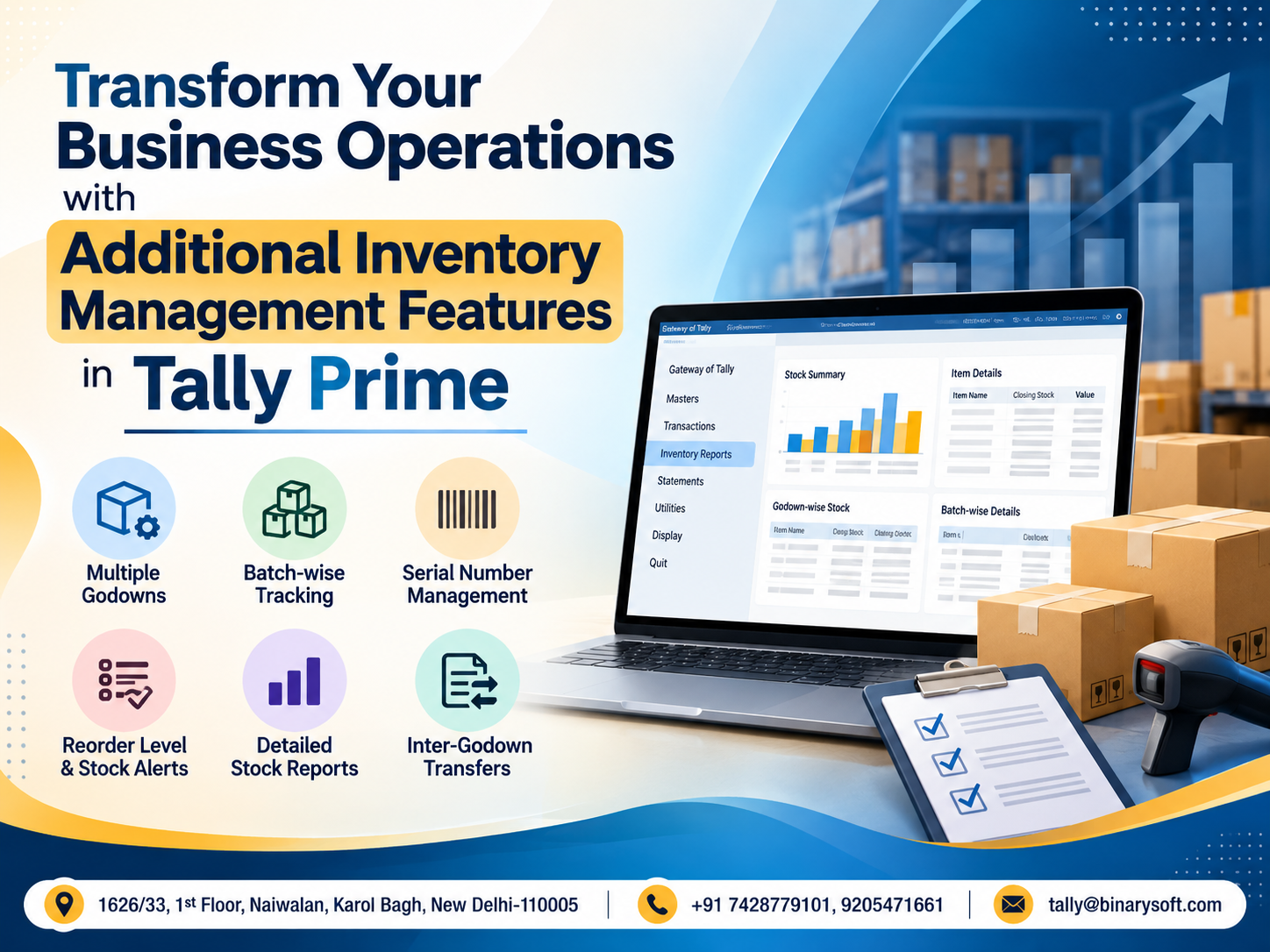
Multiple Godowns
Businesses can maintain inventory across different warehouses or branches.
Batch-Wise Tracking
Applicable businesses can track products according to batches, manufacturing dates and expiry dates.
Stock Reports
Stock Summary and other inventory reports help businesses review recorded stock availability.
Practical Benefits
Integrated billing and inventory management helps reduce inconsistencies between sales and stock records.
Businesses can also make better purchasing decisions by reviewing inventory information.
Physical stock verification remains important because software records do not automatically guarantee actual stock accuracy.
7. Simplify Sales Orders and Delivery Workflows
Businesses often receive customer orders before delivering goods or issuing final invoices.
Maintaining these transactions manually can create confusion.
Tally Prime supports sales order processing and related inventory workflows.
Sales Order Management
Businesses can record customer orders with relevant product quantities and commercial details.
Delivery Notes
Delivery notes can be used to record the movement of goods before final invoicing where the workflow requires it.
Sales Invoices
Invoices can be prepared with reference to relevant order or delivery information.
Advantages
This structured process helps businesses maintain consistency between customer orders, dispatches and invoices.
It is particularly useful for wholesale distributors, manufacturers and businesses handling large customer orders.
8. Improve Customer Payment Tracking with Bill-Wise Accounting
Preparing an accurate invoice is only the beginning of the financial process.
Businesses must also ensure that customer payments are received and recorded correctly.
Tally Prime provides bill-wise accounting to track individual invoices and outstanding amounts.
Example of Outstanding Invoices
| Invoice | Amount | Payment Received | Balance |
|---|
| INV-201 |
₹75,000 |
₹50,000 |
₹25,000 |
| INV-202 |
₹45,000 |
₹45,000 |
₹0 |
| INV-203 |
₹90,000 |
₹30,000 |
₹60,000 |
The accounts team can identify unpaid amounts and review outstanding balances.
Receivables Ageing
Outstanding reports help businesses analyse invoices according to their age.
This supports collection planning.
Payment Follow-Ups
Businesses can use outstanding information to contact customers regarding pending payments.
Fully automated reminder schedules may require additional configuration or integration.
9. Strengthen Financial Accuracy with Bank Reconciliation
Businesses receive payments through bank transfers, UPI, cheques and other methods.
Differences between bank statements and accounting records can affect financial accuracy.
Tally Prime provides bank reconciliation capabilities.
Common Reconciliation Problems
Businesses may encounter missing entries, duplicate transactions, unpresented cheques and bank charges.
Regular reconciliation helps identify these differences.
How Tally Prime Helps
Supported bank statement import and reconciliation features can reduce manual comparison work.
Feature availability depends on the software release, bank and configuration.
Benefits
Regular bank reconciliation improves confidence in recorded balances and supports better cash management.
10. Manage Credit Notes, Debit Notes and Billing Adjustments
Businesses occasionally need to correct or adjust transactions.
Customers may return products, receive approved discounts or report billing differences.
Tally Prime supports credit notes and debit notes for relevant accounting adjustments.
Credit Notes
Credit notes may be used for eligible sales returns or other applicable adjustments.
Debit Notes
Debit notes may be used for eligible purchase returns or relevant adjustments.
Maintaining Accurate Records
Properly recording adjustments helps maintain consistency between invoices, customer balances and accounting reports.
Businesses should also verify applicable GST documentation and reporting requirements.
11. Case Study One: Improving Billing Efficiency in a Wholesale Business
Business Background
A wholesale electrical goods distributor in Delhi processed approximately 1,500 invoices every month.
The company supplied products to retailers and contractors.
Challenges
Employees manually entered product information and frequently checked prices against separate spreadsheets.
Invoice preparation was slow, and billing corrections consumed valuable working hours.
Tally Prime Implementation
The company organised stock item masters and configured customer-specific price levels.
GST details were reviewed and standardised.
Inventory-linked invoicing was introduced, and employees received training.
Illustrative Results
In this example, average invoice preparation time decreased from approximately six minutes to three minutes.
The accounts team also experienced fewer pricing inconsistencies.
Customer payment reconciliation became easier because invoices and receipts were maintained through bill-wise accounting.
Key Learning
Standardised product records and integrated billing can improve efficiency and reduce repetitive administrative work.
This case study is illustrative. Actual results depend on implementation quality, transaction complexity and employee training.
12. Case Study Two: Improving Financial Accuracy in a Manufacturing Company
Business Background
A medium-sized furniture manufacturer supplied products to retailers and corporate customers.
The company managed raw materials, finished goods and customer orders.
Challenges
Sales orders, delivery records and invoices were maintained separately.
This occasionally created differences between dispatched quantities and billed quantities.
Management also struggled to obtain timely information about customer outstanding balances.
Tally Prime Implementation
The company introduced structured sales order processing, delivery documentation and inventory-linked invoicing.
Customer ledgers were organised, and bill-wise accounting was implemented consistently.
Monthly bank reconciliation and financial reviews became part of the accounting process.
Illustrative Results
The business improved consistency between order processing, inventory records and invoicing.
Employees spent less time investigating transaction differences.
Management also gained clearer visibility into outstanding customer invoices.
Key Learning
Connecting billing with inventory and accounting processes can strengthen operational control.
This case study is illustrative and does not represent verified customer performance.
13. How to Automate Routine Billing Workflows in Tally Prime
Businesses can follow a structured implementation process to improve billing efficiency.
Step 1: Create and Configure the Company
Set up the business with accurate company information, financial year and accounting details.
Step 2: Configure GST Settings
Enable applicable GST features and verify tax classifications.
Step 3: Create Customer and Supplier Ledgers
Maintain accurate party information and relevant accounting details.
Step 4: Organise Stock Items
Create stock groups, units of measurement and individual product masters.
Step 5: Configure Price Lists
Establish appropriate price levels for different customer categories.
Step 6: Enable Inventory-Linked Billing
Use suitable invoice modes to connect sales transactions with inventory records.
Step 7: Configure Bill-Wise Accounting
Track individual customer invoices and payment adjustments.
Step 8: Use Sales Orders Where Required
Record customer orders and connect them with relevant delivery and billing transactions.
Step 9: Reconcile Bank Transactions
Review bank statements and investigate discrepancies.
Step 10: Review Financial Reports
Monitor sales, customer outstanding balances, cash flow and profitability.
Step 11: Establish Invoice Verification
Introduce approval or review procedures appropriate to the business.
Step 12: Train Employees
Ensure employees understand invoice preparation, corrections, payment adjustments and reporting procedures.
Successful billing automation depends on accurate configuration, consistent processes and regular review.
14. Improve Business Decisions with Financial Reports
Accurate billing records support reliable financial reporting.
Tally Prime provides several reports that help business owners understand financial performance.
Sales Reports
Businesses can review recorded sales transactions and analyse performance.
Profit and Loss Account
This report helps evaluate income, expenses and profitability.
Balance Sheet
The balance sheet provides information about assets, liabilities and capital.
Outstanding Reports
Businesses can monitor unpaid customer invoices and supplier obligations.
Cash Flow Statement
Cash flow information helps management understand recorded cash movements.
Inventory Reports
Businesses can analyse stock quantities, values and movements.
Together, these reports help management identify financial problems and make better operational decisions.
15. Use Tally Prime Cloud for Flexible Billing and Accounting
Businesses operating across multiple locations may require remote access to accounting information.
Tally Prime can be deployed in a compatible cloud-hosting environment.
Remote Accessibility
Authorised employees can access the hosted accounting application through supported remote connections.
Centralised Records
Cloud hosting can reduce dependence on a single office computer.
Multi-Location Operations
Businesses can support authorised accounting work across branches, subject to licensing and configuration.
Backup and Security
Hosting arrangements may include managed backups and security controls.
Businesses should verify backup schedules, data protection measures and recovery procedures before selecting a hosting plan.
Cloud hosting improves accessibility but does not eliminate the need for proper accounting controls.
16. Why Choose Binarysoft Technologies for Tally Prime?
Businesses need accounting systems that support their actual operational requirements.
Binarysoft Technologies, an Authorized Tally Partner, helps organisations explore Tally Prime billing, accounting and cloud-hosting solutions.
Businesses can discuss requirements involving GST invoicing, inventory management, customer outstanding tracking, financial reporting and remote access.
A properly planned implementation can help employees use the available software features more effectively.
Whether you manage a retail store, wholesale distribution business, manufacturing company or service organisation, Tally Prime can support more structured financial operations.
17. Conclusion: Build a More Accurate and Efficient Billing System
Billing is more than generating invoices.
It connects sales, customer relationships, inventory, taxation, payment collection and financial reporting.
When billing processes are inefficient, businesses may experience delayed payments, accounting inconsistencies and unnecessary administrative expenses.
Tally Prime helps businesses automate routine billing activities, reduce repetitive data entry and strengthen financial accuracy through integrated accounting features.
GST calculations, organised product masters, price lists, inventory-linked invoicing, bill-wise accounting and financial reports can make daily operations more efficient.
However, software automation works best when supported by accurate records, employee training and regular financial reviews.
For businesses planning to modernise their accounting processes, Tally Prime offers a practical foundation for better financial control and sustainable growth.
Simplify Your Billing and Accounting with Binarysoft Technologies
Powered by Binarysoft Technologies
Authorized Tally Partner
Location:
1626/33, 1st Floor, Naiwalan, Karol Bagh, New Delhi – 110005, INDIA
Contact Us:
+91 7428779101, 9205471661
Email Us:
tally@binarysoft.com
Business Hours:
10:00 AM – 6:00 PM, Monday to Friday
Contact Binarysoft Technologies to discuss Tally Prime billing automation, GST invoicing, accounting configuration, implementation and cloud-hosting requirements.
Frequently Asked Questions
What is billing automation in Tally Prime?
Billing automation involves using Tally Prime features to simplify invoice preparation, tax calculations, accounting entries and related financial processes.
CA. Ankit Vardiya works closely with traders, wholesalers, and service businesses on accounting automation, GST reporting, and audit readiness. His professional exposure to day-to-day business operations allows him to translate complex accounting concepts into practical guidance for Indian business owners.