Call CA Tally HelpDesk
+91 9205471661,
7428779101
Introduction: Why Privacy and Data Protection Matter More Than Ever
Every business collects and maintains valuable information. Customer names, contact details, sales invoices, supplier records, bank transactions, financial statements and employee information are all essential to everyday operations.
As organizations increasingly rely on digital accounting systems, protecting this information has become a critical business responsibility.
A small retailer may maintain hundreds of customer records. A wholesale distributor may store years of purchase and sales information. A consultancy firm may manage confidential billing details and financial documents belonging to corporate clients.
If such information is accessed without authorization, accidentally deleted or improperly shared, the consequences can be serious.
Businesses may experience financial disruption, customer dissatisfaction, reputational damage and potential regulatory obligations.
This is why a clear privacy policy and effective data protection practices are important.
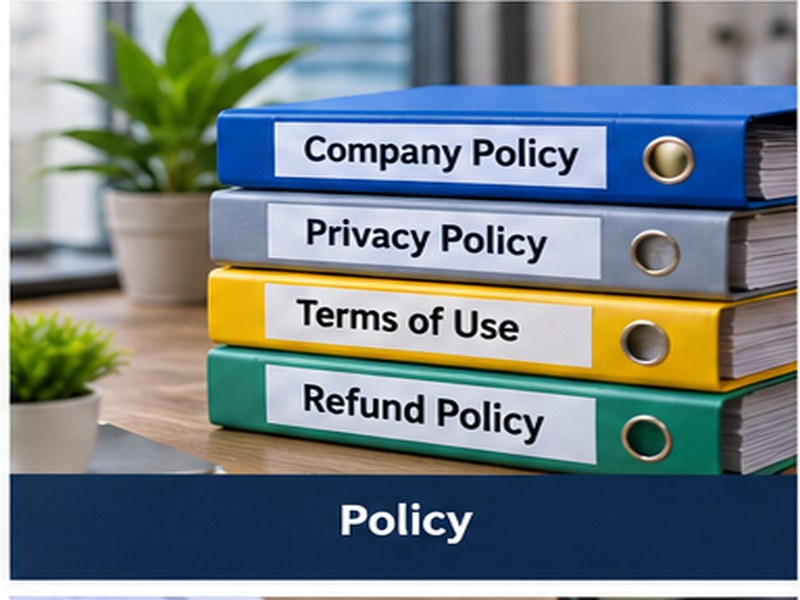
A privacy policy explains how an organization collects, uses, shares, stores and protects personal information. It should also describe relevant individual rights and how people can contact the organization about their data.
Accounting security involves related but distinct responsibilities, including controlling access to financial records, maintaining backups and protecting business information from unauthorized changes.
Tally Prime provides accounting security features such as user management, security levels and controlled access to relevant functions.
However, accounting software alone cannot guarantee complete privacy protection.
Businesses also need appropriate policies, employee training, secure infrastructure and responsible information-handling procedures.
This guide explains the importance of privacy policies, common data security risks, practical protection measures and how Tally Prime can support a more secure accounting environment.
1. What Is a Privacy Policy?
A privacy policy is a document explaining an organization's practices for handling personal information.
It generally describes the types of information collected, why that information is required, how it is processed and with whom it may be shared.
For example, a business website may collect information when visitors submit an enquiry, request a product demonstration or contact customer support.
A privacy policy should accurately explain what happens to that information.
Common information covered by a privacy policy
-
Personal and business contact information.
-
Website enquiry and registration details.
-
Customer support communications.
-
Billing and transaction-related information.
-
Cookies and website analytics, where used.
-
Data storage and security practices.
-
Third-party service providers.
-
Applicable retention periods.
-
Individual privacy rights.
-
Contact details for privacy-related requests.
A privacy policy should reflect the organization's actual activities rather than make promises that cannot be verified.
2. An Emotional Story: When a Small Business Owner Realized the Value of Data Security
The Financial Records That Represented Twenty Years of Hard Work
For more than twenty years, Amit Verma managed a family-owned trading business in Delhi.
His father had established the company with limited savings, a small warehouse and a commitment to building lasting customer relationships.
Over time, Amit expanded the business and introduced computerized accounting.
The company maintained customer balances, supplier records, inventory information and financial statements digitally.
Amit believed that storing everything on a computer was enough to keep the information safe.
Unfortunately, the company had not established a consistent backup routine or clear rules about employee access.
One morning, an office computer developed a serious storage problem.
Several important accounting files became inaccessible.
The accounts team struggled to retrieve transaction information, and employees could not immediately verify some customer balances.
Amit felt overwhelmed.
The missing records represented years of transactions, supplier relationships and business decisions.
He remembered his father's handwritten registers and wondered whether the move to digital accounting had created new risks.
Fortunately, the company eventually recovered much of its information from an older backup, although some recent entries required reconstruction.
The incident changed Amit's approach to financial management.
He introduced regular backups, assigned individual user accounts and reviewed access permissions.
He also established procedures for protecting customer information and securely maintaining accounting records.
The experience taught him an important lesson.
Financial data is more than information stored on a computer. It represents the trust of customers, the work of employees and the history of a business.
This illustrative story demonstrates why data protection must be treated as an ongoing responsibility.
3. Why Every Business Needs a Clear Privacy Policy
A privacy policy helps customers and other individuals understand how their information is handled.
It also encourages businesses to examine their own data practices.
Building customer trust
Customers are more likely to feel confident sharing information when an organization clearly explains its privacy practices.
Improving transparency
A policy describes why information is collected and how it may be used.
Supporting regulatory compliance
Applicable privacy laws may require businesses to provide specific notices and implement appropriate safeguards.
Establishing internal accountability
Documented practices help employees understand how personal information should be handled.
Managing third-party relationships
Businesses can identify external providers involved in processing, hosting or supporting customer information.
A privacy policy should be supported by actual operational practices.
Publishing a document alone does not establish compliance or guarantee data security.
4. Types of Information Businesses Commonly Collect
Different businesses collect different categories of information depending on their operations.
|
Information category
|
Examples
|
Typical business purpose
|
|---|
|
Contact Information
|
Name, email, telephone
|
Enquiries and customer communication
|
|
Business Information
|
Company name, address, GSTIN
|
Billing and customer records
|
|
Transaction Information
|
Invoices, payments, purchases
|
Accounting and financial management
|
|
Employee Information
|
Employment and payroll details
|
Payroll administration
|
|
Website Information
|
Cookies and usage data
|
Website functionality and analytics
|
|
Support Information
|
Service requests and correspondence
|
Customer assistance
|
|
Financial Records
|
Ledgers and bank transaction details
|
Accounting and reconciliation
|
Businesses should collect information appropriate to legitimate, clearly explained purposes.
Sensitive information should receive additional protection according to its nature and applicable requirements.
5. How Businesses Should Collect Personal Information
Responsible data collection begins with transparency.
Organizations should explain why information is required before or when it is collected, as applicable.
For example, a website contact form may request a visitor's name, email address and telephone number to respond to an enquiry.
Businesses should avoid requesting unnecessary information.
Important principles
Purpose limitation: Collect information for clearly defined purposes.
Data minimization: Avoid collecting more information than reasonably necessary.
Accuracy: Maintain appropriate procedures for correcting inaccurate information.
Security: Protect information from unauthorized access and misuse.
Retention management: Avoid keeping information indefinitely without a valid reason.
Transparency: Explain relevant data-handling practices in understandable language.
These principles support responsible information management and should be implemented according to applicable law.
6. How Tally Prime Helps Protect Accounting Information
Tally Prime includes security-related capabilities that can help businesses manage access to accounting records.
User management
Businesses can create individual user accounts for authorized employees.
Security levels
Administrators can configure security levels and permissions for relevant functions.
Restricted access
Users can be given access appropriate to their responsibilities.
Controlled accounting workflows
Properly configured permissions can help reduce unauthorized changes to accounting records.
Audit-related review
Available audit and verification features, depending on the version and configuration, can support examination of certain accounting activities.
Backup support
Tally Prime provides data backup and restore functionality, which businesses should incorporate into a broader backup strategy.
These features are useful, but they do not replace operating-system security, secure networking, access monitoring or disaster recovery planning.
7. Understanding User Access Control in Tally Prime
Not every employee requires access to every financial record.
For example, a sales employee may need to prepare invoices without being authorized to change important accounting configurations.
Similarly, a warehouse employee may require access to inventory information without needing to view confidential financial details.
Tally Prime's user management functionality can help businesses establish appropriate permissions.
Practical access-control process
-
Identify the responsibilities of each employee.
-
Create appropriate security levels.
-
Assign permissions according to business requirements.
-
Create individual user accounts.
-
Avoid unnecessary administrator access.
-
Review permissions when employee responsibilities change.
-
Revoke access when an employee leaves the organization.
This approach follows the principle of least privilege: users should receive only the access necessary to perform their responsibilities.
8. Protecting Customer and Supplier Information
Customer and supplier records are essential business assets.
They may contain contact information, billing addresses, tax registration details, transaction histories and outstanding balances.
Unauthorized disclosure can damage commercial relationships.
Businesses should restrict access to these records, use secure communication channels and maintain accurate information.
Customer information should not be shared with unrelated parties without an appropriate legal basis.
For accounting purposes, Tally Prime helps organize customer and supplier information through relevant ledgers and transactions.
However, the business remains responsible for deciding who may access or share this information.
9. Data Backup and Disaster Recovery
Data backup is one of the most important elements of accounting security.
Hardware failures, accidental deletion, malware and other incidents can interrupt access to financial records.
A reliable backup strategy should include regular backups, secure storage and periodic restoration testing.
Recommended backup practices
Daily or scheduled backups: Choose a frequency appropriate to transaction volumes and recovery requirements.
Multiple copies: Maintain more than one protected copy of important records.
Separate storage: Avoid keeping every backup on the same device as the original data.
Restricted access: Prevent unauthorized users from modifying or deleting backups.
Restoration testing: Periodically confirm that backup files can be restored successfully.
Recovery documentation: Establish procedures for restoring operations after an incident.
Tally Prime's backup and restore capabilities can form part of this strategy.
For remote or cloud-hosted deployments, businesses should also evaluate the hosting provider's backup and recovery arrangements.
10. Case Study One: Improving Financial Data Security in a Wholesale Business
Illustrative case study based on common trading-business security requirements
Business Background
A wholesale electrical goods distributor in Karol Bagh, New Delhi, employed sales executives, warehouse employees and accounting personnel.
The company maintained customer invoices, supplier accounts and inventory information digitally.
Challenges
Several employees used shared accounting credentials.
Management had limited control over which employees could access sensitive financial information.
The company also lacked a documented backup schedule.
Tally Prime Implementation
The business reviewed its accounting security requirements.
Individual user accounts and appropriate security levels were configured.
Access to sensitive functions was restricted according to employee responsibilities.
The company introduced regular backups and periodic checks of important accounting records.
Business Improvements
Management established clearer accountability for accounting activities.
Employees received access more closely aligned with their responsibilities.
The company also developed a more consistent approach to protecting financial records.
Key Lesson
Effective accounting security requires a combination of software permissions, clear responsibilities and reliable backup procedures.
11. Case Study Two: Protecting Customer Information in a Consultancy Firm
Illustrative case study based on professional-service operations
Business Background
A management consultancy in Gurugram handled confidential client information, invoices and financial records.
Its employees frequently worked from different locations.
Challenges
Client documents were shared through multiple communication channels.
The company had not clearly defined retention periods or access responsibilities.
Management wanted to improve information security without disrupting everyday operations.
Implementation
The consultancy established procedures for collecting and sharing client information.
Accounting access was restricted according to employee responsibilities.
The company also reviewed document storage, backup practices and confidentiality arrangements.
Tally Prime was used to maintain structured accounting records with suitable access controls.
Business Benefits
The organization developed clearer information-handling procedures.
Employees understood which records they were authorized to access.
Management also gained a more consistent approach to protecting client-related financial information.
Key Lesson
Privacy protection depends on both technology and responsible organizational practices.
12. Privacy Policies and Cloud-Based Accounting
Cloud-hosted accounting environments can provide remote access to business records.
However, remote access introduces additional security responsibilities.
Businesses should evaluate how their accounting environment is hosted, who can access it and how information is protected.
Important considerations
Authentication: Use strong authentication mechanisms and multifactor authentication where supported.
Encryption: Protect information during transmission and storage using appropriate technologies.
Hosting security: Evaluate the security practices of the infrastructure provider.
Access monitoring: Review relevant access records and investigate unusual activity.
Backup and recovery: Confirm how data can be recovered after an incident.
Data location: Understand where information is stored and whether applicable legal requirements affect its processing.
Tally Prime may be accessed through suitable remote or cloud-hosted arrangements, but the security of those arrangements depends on the deployment and service provider.
13. Cookies and Website Privacy
Business websites may use cookies and similar technologies to support functionality, analytics or other services.
A cookie is a small piece of information stored by a website through a user's browser.
Different cookies serve different purposes.
Essential cookies
These support necessary website functions, such as maintaining sessions or remembering certain settings.
Analytics cookies
These may help website operators understand visitor activity and website performance.
Preference cookies
These may remember selected language or display preferences.
Advertising cookies
Where used, these may support advertising-related activities.
A website privacy or cookie notice should accurately identify the technologies used and explain relevant purposes.
Consent and preference-management requirements depend on applicable law and the specific processing involved.
Businesses should not claim that cookies are absent or disabled without verifying their website configuration.
14. Third-Party Services and Data Sharing
Businesses frequently rely on external providers for hosting, email, customer support, payment processing and technical services.
These relationships may involve the processing of personal information.
Organizations should identify relevant third parties and understand what information is shared.
Service agreements should address confidentiality, security responsibilities and appropriate data-handling requirements.
Businesses should also evaluate whether third parties may use subcontractors or process information in other jurisdictions.
A privacy policy should accurately explain relevant categories of recipients and purposes for sharing personal information.
It should not promise that information is never shared if legitimate business operations involve external processors.
15. Employee Responsibilities in Data Protection
Technology alone cannot prevent every privacy incident.
Employees play an important role in protecting business information.
Organizations should establish clear rules for handling customer records, accounting data and confidential documents.
Employees should understand how to identify suspicious emails, protect passwords and avoid unauthorized information sharing.
Training should also address secure file transfers and the appropriate use of personal devices.
When an employee changes responsibilities or leaves the organization, access permissions should be reviewed promptly.
Regular awareness sessions help maintain a stronger security culture.
16. Data Retention and Secure Disposal
Businesses should determine how long different categories of information need to be retained.
Some records must be preserved for statutory, contractual or legitimate business purposes.
Other information may no longer be necessary after the original purpose has been fulfilled.
A retention policy should identify the relevant categories of records and the applicable retention criteria.
When information is no longer required, businesses should use appropriate deletion or disposal procedures.
Deleting an accounting entry without authorization is not an acceptable substitute for a formal retention policy.
Accounting records must also be preserved according to applicable financial and tax requirements.
17. Privacy Rights and Data Protection Requirements in India
Indian businesses should consider the Digital Personal Data Protection Act, 2023, applicable rules and other relevant legal requirements, including their commencement and transitional provisions.
Depending on which provisions are in force and the nature of processing, obligations may concern notice, consent, security safeguards, breach notification, individual rights and grievance redressal.
Businesses should verify the current legal position before publishing compliance claims.
Important privacy considerations
Individuals may have applicable rights concerning access to information about processing, correction, erasure and grievance redressal.
These rights are subject to the provisions, exceptions and implementation dates of relevant law.
Businesses should establish procedures for receiving and responding to privacy requests.
A legally compliant privacy notice must reflect actual processing activities and applicable statutory requirements.
Professional legal review is recommended before publishing a formal privacy policy.
18. Common Data Security Mistakes Businesses Should Avoid
One common mistake is allowing multiple employees to use the same accounting login.
Another is maintaining backups only on the computer that stores the original records.
Some businesses send sensitive customer information through unsecured communication channels.
Others fail to remove access when employees leave.
Weak passwords, outdated software and incomplete employee training can create additional risks.
Businesses may also publish generic privacy policies that do not reflect their actual information-handling practices.
These problems can be reduced through clear procedures, regular reviews and appropriate technical safeguards.
19. Best Practices for Stronger Accounting Data Protection
Businesses should treat data protection as a continuing process.
Maintain accurate accounting records and restrict access to authorized personnel.
Use individual accounts and appropriate security levels.
Establish regular backups and test restoration procedures.
Keep software and operating systems updated.
Protect computers and networks against malware and unauthorized access.
Review third-party service providers and confidentiality agreements.
Train employees in responsible information handling.
Document procedures for responding to security incidents.
Review privacy notices whenever data collection or processing practices change.
These measures help create a more reliable environment for managing financial information.
20. How Tally Prime Supports Secure Business Operations
Tally Prime helps businesses maintain structured accounting and inventory records while offering configurable access controls.
Its security-related features can help organizations limit access to accounting functions according to employee responsibilities.
Financial reporting and available verification capabilities can support management oversight.
Backup and restore functionality can assist with business continuity planning.
However, businesses should understand the limits of application-level security.
Tally Prime cannot independently protect every email attachment, cloud account, employee device or external storage system.
A comprehensive security approach must address the entire business environment.
21. Why Choose Binarysoft Technologies for Tally Prime Security and Accounting Support?
Binarysoft Technologies, an Authorized Tally Partner, helps businesses understand and configure Tally Prime for accounting, inventory management and financial reporting requirements.
Organizations can seek assistance with company configuration, user management, security levels, backup procedures and relevant accounting workflows.
Businesses can also discuss suitable approaches for organizing financial records and restricting access to sensitive accounting information.
The objective is to help organizations maintain more reliable accounting processes while strengthening operational control.
Conclusion: Protecting Business Information Is Protecting Business Trust
Privacy and data security are essential responsibilities for organizations of every size.
Customer information, financial records, supplier details and employee data represent valuable assets that require appropriate protection.
A clear privacy policy helps explain how personal information is handled.
Strong security procedures help reduce the risk of unauthorized access, accidental loss and improper disclosure.
Tally Prime supports accounting security through user management, configurable permissions and relevant data-management capabilities.
However, complete data protection requires more than software.
Businesses must also establish appropriate policies, maintain secure infrastructure, train employees and regularly review their practices.
For small businesses, these measures can help protect customer relationships and financial continuity.
For growing organizations, they provide a stronger foundation for responsible digital operations.
Protecting information is not simply a technical responsibility. It is a commitment to the customers, employees and business partners who place their trust in an organization.
Powered by Binarysoft Technologies
Authorized Tally Partner
Location: 1626/33, 1st Floor, Naiwalan, Karol Bagh, New Delhi – 110005, INDIA
Contact us: +91 7428779101, 9205471661
Email us: tally@binarysoft.com
Business Hours: 10:00 AM – 6:00 PM, Monday–Friday
Frequently Asked Questions
Does Tally Prime provide data security features?
Yes. Tally Prime provides user management and configurable security features that can help restrict access to accounting information.
Can Tally Prime help protect customer financial records?
Its access controls can help restrict unauthorized use of relevant accounting information, but additional organizational and infrastructure security measures are necessary.
Is cloud-hosted accounting completely secure?
No system is completely risk-free. Security depends on hosting arrangements, authentication, access controls, maintenance and other safeguards.
What information should a business privacy policy include?
It should accurately explain the information collected, processing purposes, relevant sharing, retention practices, applicable rights and privacy contact procedures.
CA. T.R Venkat is a Chartered Accountant with extensive experience in accounting systems, GST compliance, and MSME advisory. He has worked closely with Indian traders and businesses on inventory control and accounting process improvement. His writing draws from real operational challenges faced by growing enterprises.